
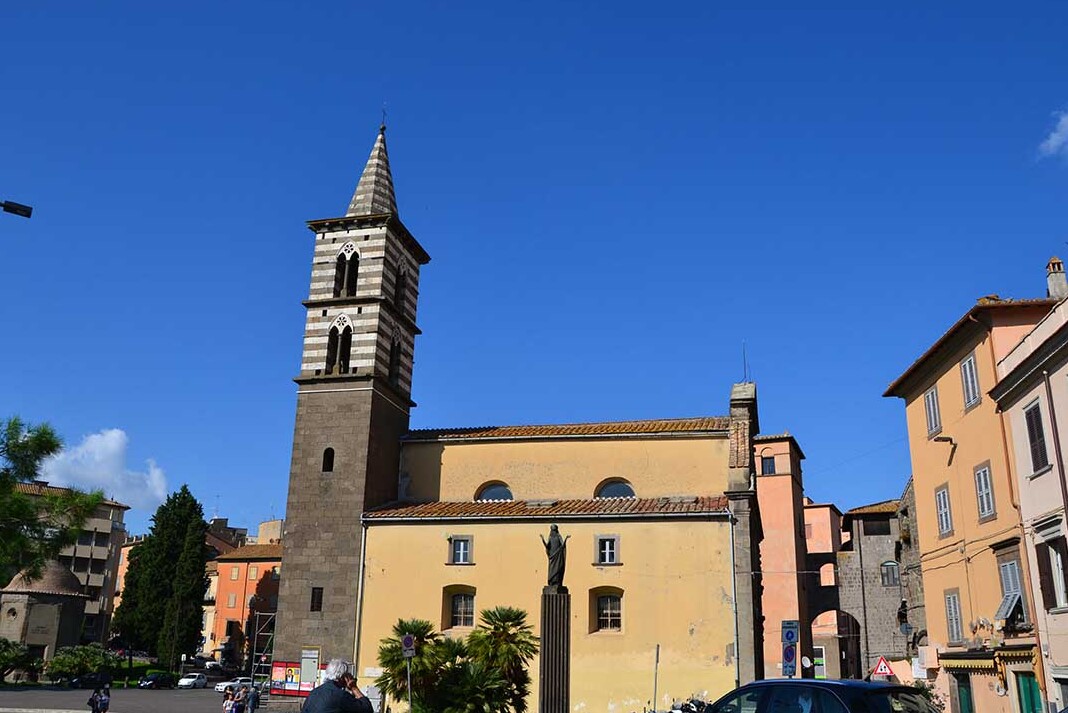

Nestled in the heart of Viterbo, the Church of San Giovanni Battista degli Almadiani stands as a testament to Renaissance architecture and the rich tapestry of local history. Established in 1510 at the behest of John the Baptist Almadiani, the protonotary of Pope Leo X, this church was part of a grand vision to establish a convent and a place of worship for the Carmelite Order in the city.
The church's architect, Bernardino da Viterbo, imbued it with a sense of harmony and elegance that reflects the ideals of the Renaissance. The structure features three expansive naves, elegantly divided by towering peperino columns, a volcanic stone typical of the region. The interplay of light and space within the church creates a serene atmosphere, inviting visitors to ponder the beauty of both the architecture and the spiritual significance of the site.
As you approach the church, you cannot miss the striking bell tower adorned with decorative two-colored bands. Though constructed later than the church itself, this addition enhances the overall charm of the building and serves as a landmark for the surrounding area. Over the years, the church has undergone various renovations, adapting to the changing needs of the community while preserving its historical essence. Some of the church’s original liturgical furnishings can be admired today at the Civic Museum of Viterbo, which showcases the artistic heritage of the region.
Beyond its architectural beauty, the Church of San Giovanni Battista is deeply intertwined with the local culture and traditions of Viterbo. The Carmelite Order has played a significant role in the spiritual life of the community, influencing local customs and celebrations. One notable event is the Festa di Santa Rosa, held annually in September. This festival honors the patron saint of Viterbo and includes a spectacular procession where a massive illuminated float bearing the statue of Santa Rosa is carried through the streets, drawing crowds from all over Italy.
Gastronomy in Viterbo also reflects the city's rich cultural heritage. Local delicacies such as pici—a handmade pasta typically served with garlic and olive oil—and porchetta, a flavorful roasted pork seasoned with herbs, are must-tries when visiting. Pair your meal with a glass of Est! Est!! Est!!! di Montefiascone, a white wine that boasts a long history and is often considered the drink of choice for those exploring the region.
For those curious about lesser-known aspects of the church, there are intriguing stories that might surprise even seasoned travelers. Legend has it that the church was initially intended to serve as a space for the Carmelite monks to retreat and meditate but also became a vibrant center for community gatherings and celebrations. Additionally, the Carmelite Order is known for its deep contemplative practices, which have influenced the spiritual landscape of Viterbo.
The best time to visit the Church of San Giovanni Battista is during the spring and early fall, when the weather is pleasant, and the city’s vibrant life is in full swing. When exploring the church, take time to appreciate the intricate details of its interior, including the beautiful frescoes that adorn the walls and the stunning altarpiece, which tells stories of the Baptist's life.
Visitors should also consider wandering through the surrounding streets of Viterbo, where medieval charm is palpable. The cobblestone alleys and ancient buildings create a picturesque backdrop for a leisurely stroll.
In conclusion, the Church of San Giovanni Battista degli Almadiani is not just a place of worship; it is a cultural landmark that encapsulates the essence of Viterbo’s history, artistry, and community spirit. As you immerse yourself in this enchanting city, be sure to explore the rich culinary offerings and partake in local traditions that make Viterbo a truly unique destination. For a personalized itinerary that uncovers all the hidden gems of Viterbo, consider using the Secret World app.


