
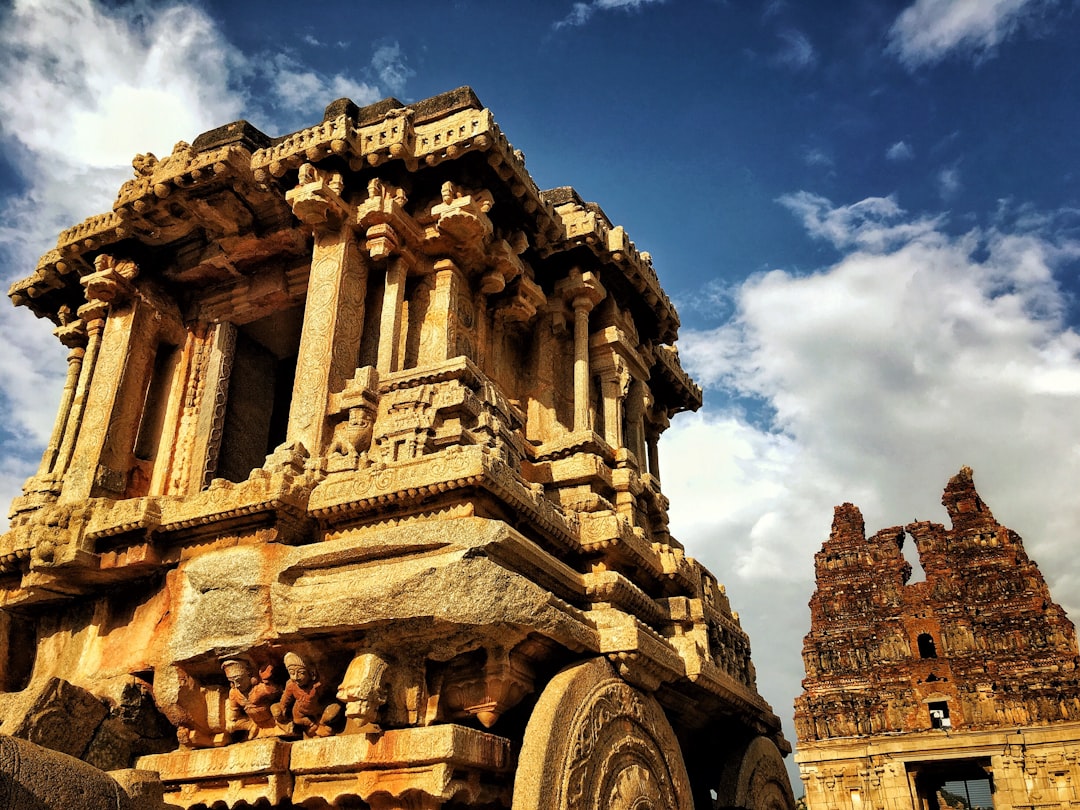

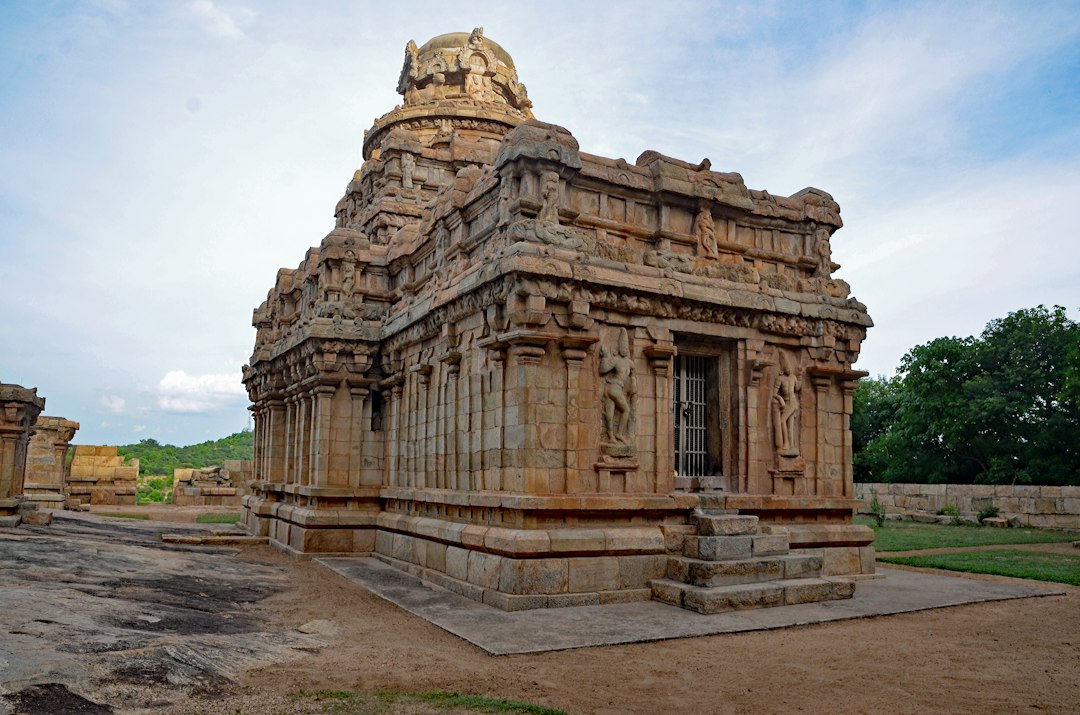
When the sun begins to set towards the horizon and the golden light pours over the plains of Hampi, the granite blocks of the Vittala complex ignite with a warm orange that seems to emanate from within the stone itself. It is not an optical illusion: it is the nature of the local granite, extracted from the surrounding hills and worked by the master craftsmen of the Vijayanagara Empire in the 15th century, that reacts to the slanting light with an almost supernatural brightness. It is at this moment that the temple reveals its true soul.
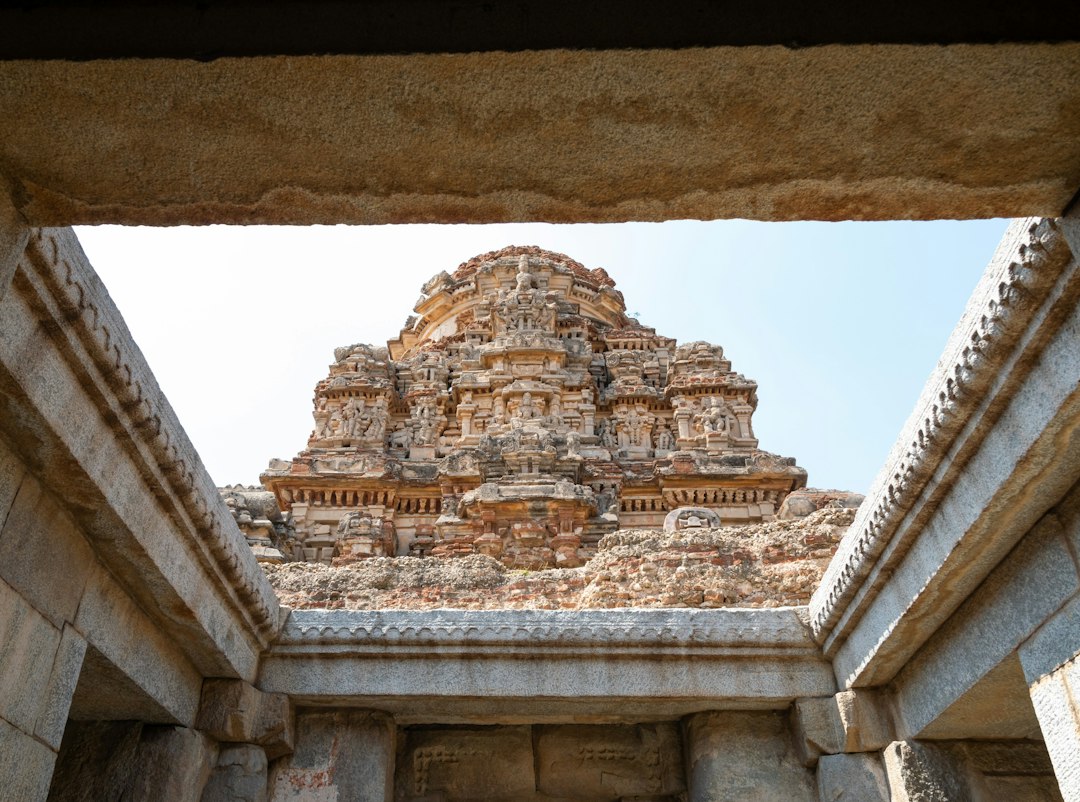
The Shree Vijaya Vittala Temple complex, dedicated to Vittala — a form of the god Vishnu — was primarily built during the reign of Krishnadevaraya, one of the most powerful rulers of the Vijayanagara dynasty, who reigned from 1509 to 1529. Under his patronage, Hampi became one of the richest and most populous urban centers in Asia, and the Vittala temple was its highest artistic and religious expression.
The Stone Chariot: An Icon of Dravidian Architecture
The most photographed element of the entire site is undoubtedly the stone chariot located in the main courtyard of the temple. It is a ratha — a processional chariot — entirely carved from granite, with wheels that once could actually rotate on their axis. The wheels, about one and a half meters tall each, are decorated with petals and millimeter-precise geometric patterns. The chariot was originally dedicated to Garuda, the mythological creature that is half man and half eagle, the vehicle of Vishnu, and served as a secondary sanctuary within the sacred enclosure.
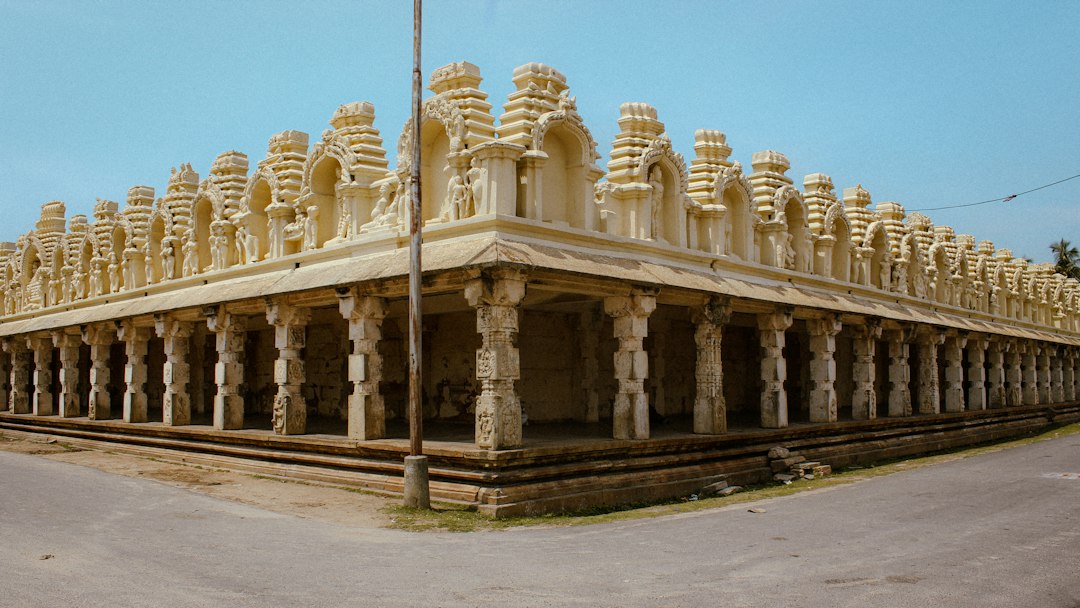
What strikes you when approaching is the stylistic coherence of the whole: the chariot is not an isolated element but interacts with the gopuram towers and the mandapa — the hypostyle halls — that surround it, creating a unified architectural composition. Every surface is covered with bas-reliefs depicting elephants, horses, figures of dancers, and mythological scenes drawn from the great Indian epic poems.
The musical columns: stone that sounds
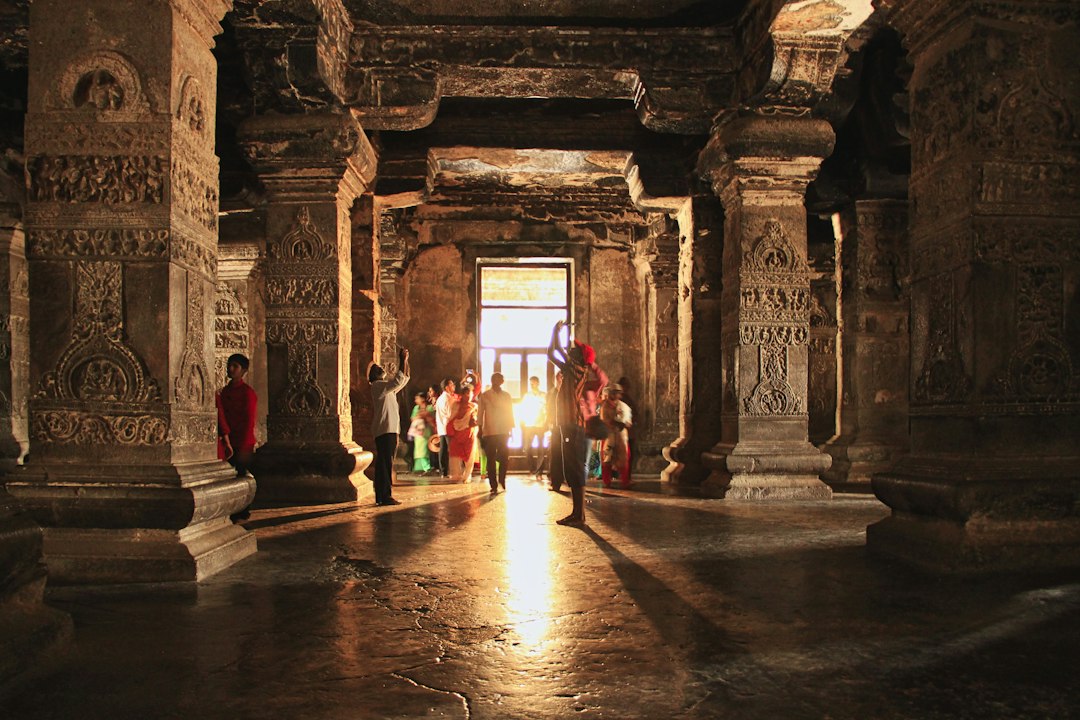
Inside the hall of musical columns — known as Ranga Mandapa — is one of the most extraordinary acoustic experiments of medieval Indian architecture. The 56 granite columns of the main mandapa have been crafted in such a way that, when gently struck with the fingers, they produce sounds corresponding to different musical notes. The columns are grouped in clusters, and each group emits a different timbre, reproducing traditional Indian instruments such as the mridanga, the flute, and bells.
Indian authorities have now limited direct contact with the columns to preserve them from wear, but authorized local guides demonstrate the phenomenon with special instruments. It is worth stopping to listen: the sound that emerges from the granite is surprisingly clear and resonant, and remains difficult to explain even for the engineers who have studied it. The construction technique is attributed to the Vijayanagara stone carvers, but no single specific craftsman is documented.
The context: Hampi and the ruins of the Tungabhadra River
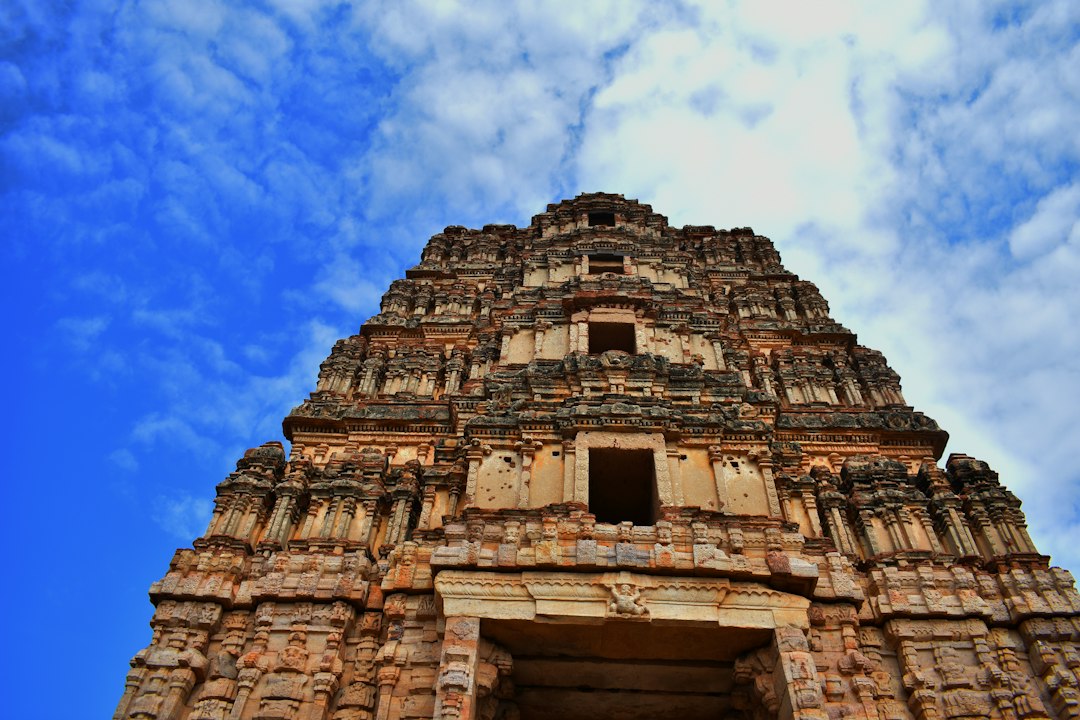
The Vittala temple is located in the northeastern part of the Hampi site, a UNESCO World Heritage site since 1986, about a kilometer from the Royal Bazaar that once led directly to the complex. Along this path, one encounters the remains of shops, fountains, and column bases that allow one to imagine the commercial vibrancy of what was one of the most prosperous capitals of the Indian subcontinent before the destruction by the Deccan sultanates in 1565.
The surrounding landscape is dominated by enormous rounded granite boulders that emerge from the plain like natural sculptures, with the Tungabhadra River flowing a few hundred meters north of the temple. This geological scenario is not accidental: the Vijayanagara builders deliberately chose this territory for the immediate availability of building material, which was extracted, transported, and worked on site.
Practical tips for the visit
The entrance ticket to the Vittala complex currently costs 600 Indian rupees for foreign visitors (about 6-7 euros), while the fee for Indian citizens is significantly reduced. The site is open from 8:30 AM to 5:30 PM and the average visit time is about two hours, but those who want to photograph the musical columns and the chariot calmly should plan for at least three hours.
The best time to visit is late afternoon, starting from 3:30 PM, when the side light enhances the three-dimensionality of the bas-reliefs and the granite takes on the amber tone for which the site is famous. It is advisable to avoid the central hours of the day between November and March, when the sun is still intense and the reflection on the light granite can make even simple observation difficult. To reach the temple from the main area of Hampi, one can take a motor rickshaw or walk through the Royal Bazaar in about twenty minutes, enjoying the remains of the historical path.


