



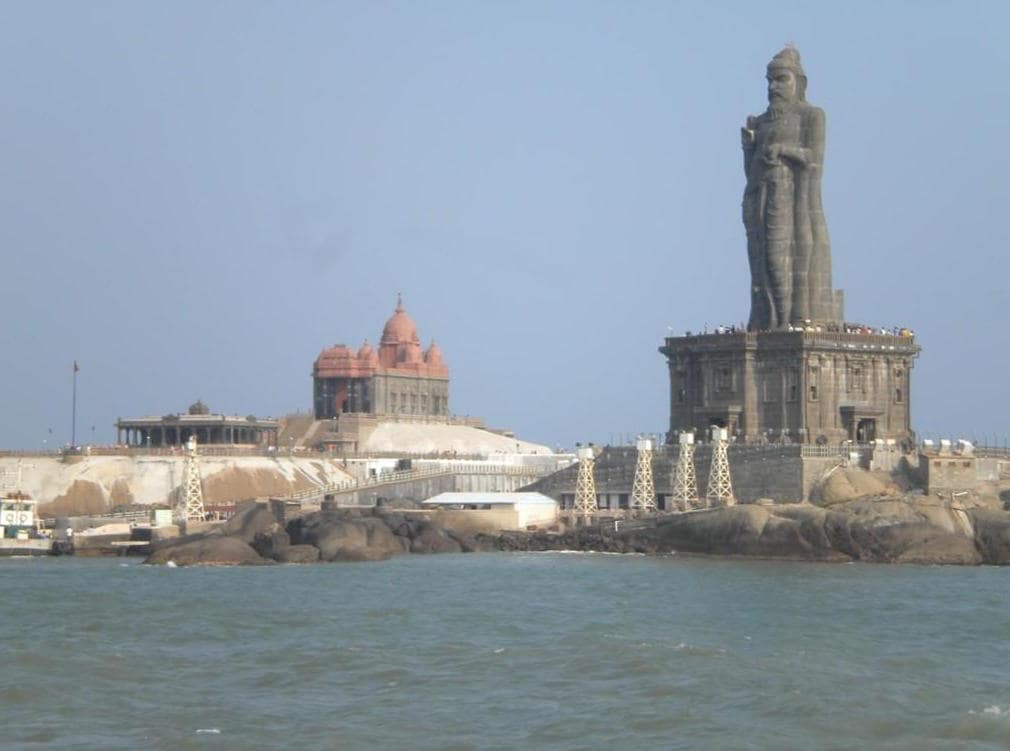
The Vivekananda Rock Memorial stands like a sentinel against the backdrop of the Lakshadweep Sea, a majestic tribute to one of India’s most revered spiritual leaders, Swami Vivekananda. Located about 500 meters off the coast of Kanyakumari, this monumental edifice draws visitors not only for its spiritual significance but also for its stunning vistas and rich history.

### History and Origins
The origins of the Vivekananda Rock Memorial can be traced back to the late 19th century. It was here that Swami Vivekananda, after spending two days in deep meditation, is said to have attained enlightenment before his journey to the Parliament of Religions in Chicago in 1893. This moment was pivotal, marking the introduction of Indian spirituality to the Western world.

The memorial was inaugurated on September 2, 1970, and was built under the guidance of the Vivekananda Rock Memorial Committee, which aimed to immortalize Vivekananda’s teachings and ideals. The site is not just a memorial but a place of pilgrimage for those who seek inspiration from Vivekananda’s life and philosophy. Additionally, local legends claim that the rock was blessed by Goddess Devi Kumari, adding a layer of sacredness to this already revered spot.
### Art and Architecture
Architecturally, the Vivekananda Rock Memorial is a blend of traditional Indian styles, prominently featuring Dravidian architecture. The two main structures, the Shripada Mandapam and the Vivekananda Mandapam, showcase intricate stone carvings and ornate pillars that reflect the craftsmanship of skilled artisans.
The Vivekananda Mandapam is particularly noteworthy for its grand entrance and the statue of Swami Vivekananda, which is positioned within the hall. The round structure is adorned with motifs that symbolize peace and enlightenment. Visitors are often struck by the harmony between the memorial and the natural surroundings, as the waves crash against the rocks, creating a tranquil atmosphere that enhances the spiritual experience.
### Local Culture and Traditions
Kanyakumari is a vibrant tapestry of cultural traditions and rituals. The area is known for its annual festivals, such as Vivekananda Jayanti, celebrated on January 12, which marks Swami Vivekananda's birthday. During this time, devotees flock to the memorial to pay their respects, engaging in various spiritual activities, including chanting and meditation.
Local customs also include the Kumari Amman Temple, located nearby, dedicated to the goddess Kumari, believed to be an incarnation of Goddess Parvati. This temple, along with the memorial, forms a significant spiritual circuit for pilgrims and tourists alike, offering a glimpse into the local belief systems that celebrate the divine feminine.
### Gastronomy
The culinary offerings in Kanyakumari are a delightful exploration of Tamil Nadu’s rich gastronomical heritage. Visitors can indulge in local delicacies such as Kanyakumari fish curry, a spicy dish made with fresh catch from the sea, and idli, a fermented rice dish that is a staple breakfast item.
Street food is a must-try, with vendors offering snacks like sundal, a savory chickpea salad, and murukku, a crunchy rice snack. Don’t miss out on the local filter coffee, renowned for its strong flavor and aroma, which perfectly complements the region’s vibrant food culture.
### Lesser-Known Curiosities
While many tourists are drawn to the main attractions of the Vivekananda Rock Memorial, several hidden gems are often overlooked. For instance, the rock itself is home to a small meditation cave, where visitors can experience a profound sense of peace. Additionally, the memorial is reputed to have been constructed using stone from the nearby hills, symbolizing the unity of nature and spirituality.
Another intriguing fact is the underwater geological structure of the area. The rocks surrounding the memorial are remnants of ancient volcanic activity, making them not just sacred but also geologically significant. This blend of spirituality and natural history adds depth to the visitor experience.
### Practical Visitor Information
The best time to visit the Vivekananda Rock Memorial is between October and March, when the weather is cooler and more pleasant for exploration. It is advisable to take a ferry from the mainland, which offers a scenic ride across the azure waters, enhancing the journey to this spiritual haven.
Visitors should wear comfortable footwear as navigating the rocky terrain can be challenging. Ensure you take time to explore the surrounding areas, including the Thiruvalluvar Statue, another iconic structure that stands majestically nearby, symbolizing Tamil literature and culture.
As you plan your visit to this remarkable site, consider downloading the Secret World app for a personalized AI itinerary that will help you discover the beauty of Kanyakumari.
