



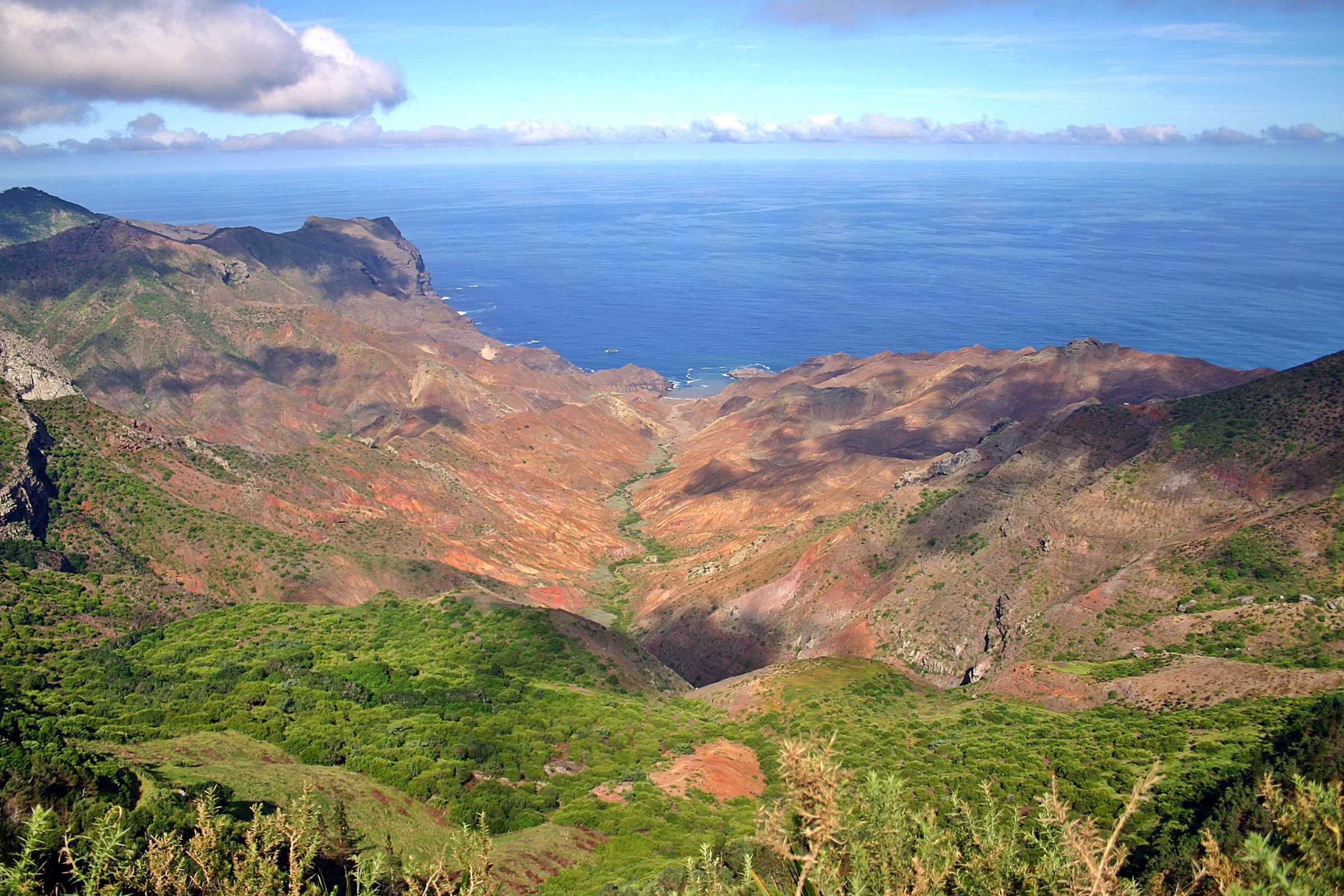
The volcanic coastline of Sandy Bay on St Helena Island is a mesmerizing blend of natural beauty and rich history, offering visitors a glimpse into the island's unique character. Nestled in the southern part of the island, Sandy Bay is a valley that gracefully descends from the heights of the Diana’s Peak range to meet the Atlantic Ocean. The contrast between lush agricultural land and arid coastal rock formations creates a striking landscape that captivates the senses.
History and origins
Discovered by the Portuguese navigator João da Nova in 1502, St Helena remained uninhabited for centuries until it was claimed by the British in 1659. The island served as a vital stopover for ships sailing to and from India. The establishment of a garrison and settlements began in the late 17th century, with Sandy Bay becoming one of the island’s key agricultural zones. The valley's fertile soil allowed for the cultivation of crops, marking its significance in the island's early economy. Additionally, the British East India Company utilized the island as a strategic military base, especially during the Napoleonic Wars, when Napoleon Bonaparte was exiled there in 1815, famously residing at Longwood.
Art and architecture
While Sandy Bay itself may not boast grand architectural marvels, the island's influence is evident in its colonial structures scattered across St Helena. Notable architectural styles include Georgian and Victorian influences, seen in buildings such as the Governor's Residence in Jamestown. The island's art scene is largely inspired by its natural surroundings, with local artists showcasing landscapes and seascapes that capture the rugged beauty of the volcanic coastline. Local crafts, such as woodwork and pottery, reflect the island's rich cultural heritage, often incorporating elements of St Helena's unique flora and fauna.
Local culture and traditions
The culture of St Helena is a vibrant tapestry woven from various influences, including African, British, and Portuguese traditions. One of the most celebrated events is Saint Helena Day, held annually on the first Saturday in May, which honors the island's patroness, Saint Helena of Constantinople. The festivities include traditional music, dancing, and local cuisine, providing a window into the islanders’ spirited way of life. Additionally, the local custom known as "The Long Walk" involves community gatherings where residents engage in many outdoor activities, including fishing and picnicking along the beach.
Gastronomy
Sandy Bay offers a glimpse into the culinary delights of St Helena. The local diet is heavily influenced by the island’s agricultural produce, with dishes featuring locally grown coffee, bananas, and an array of fresh seafood. Traditional foods such as fish cakes, made from the day’s catch, and corned beef, reflect the island's colonial history. The St Helena gin, often infused with local botanicals, provides a refreshing complement to these dishes. A visit to Sandy Bay is incomplete without trying the island's famous pudding, a sweet treat made with local ingredients that showcases the island’s culinary creativity.
Lesser-known curiosities
Sandy Bay is not only known for its picturesque landscapes but also for its intriguing history. Many visitors might be surprised to learn that the beach is primarily composed of black volcanic sand, a remnant of the island’s volcanic origins. This unique feature sets it apart from typical tropical beaches. Additionally, although swimming in the bay is discouraged due to a dangerous undercurrent, the area is a hotspot for fishing enthusiasts, who often reel in a variety of species from the rocky outcrops. The island’s isolation means that it is home to many endemic species, making it a paradise for nature lovers and bird watchers.
Practical visitor information
The best time to visit Sandy Bay is during the dry season, from December to April, when the weather is warm and sunny, ideal for outdoor activities. Visitors should take care to bring sunscreen and a hat, as the sun can be intense even on cooler days. Exploring the valley and the beach provides opportunities for picnics and photography, particularly at sunrise or sunset when the landscape transforms into a palette of vibrant colors. Local guides offer tours, sharing insights into the island’s history and ecology, enriching your experience.
To make the most of your visit and discover hidden gems, consider using the Secret World app to plan a personalized AI itinerary tailored to your interests.
