
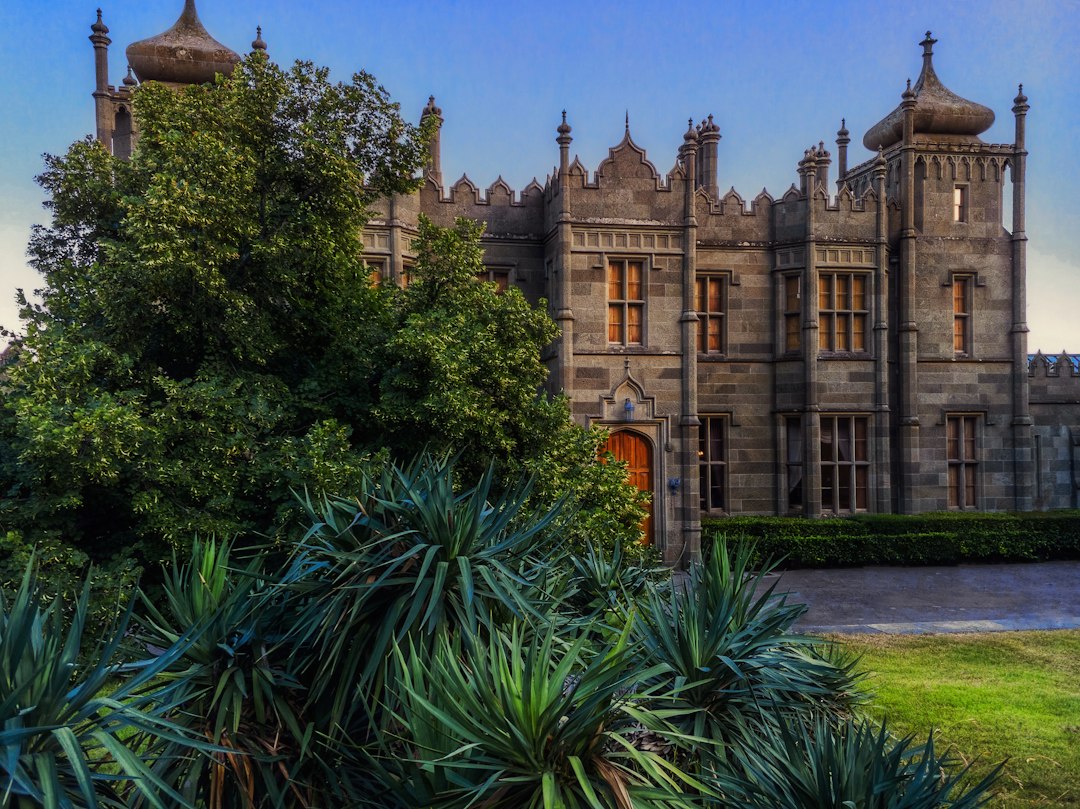

White marble lions arranged along the southern staircase welcome visitors to the Vorontsov Palace in Alupka, Crimea, with an elegance that seamlessly blends Victorian Europe and medieval Islamic architecture. This building is not just a simple noble residence: it is the result of an ambitious architectural project commissioned by Count Mikhail Vorontsov, the governor-general of New Russia, in the first half of the 19th century.
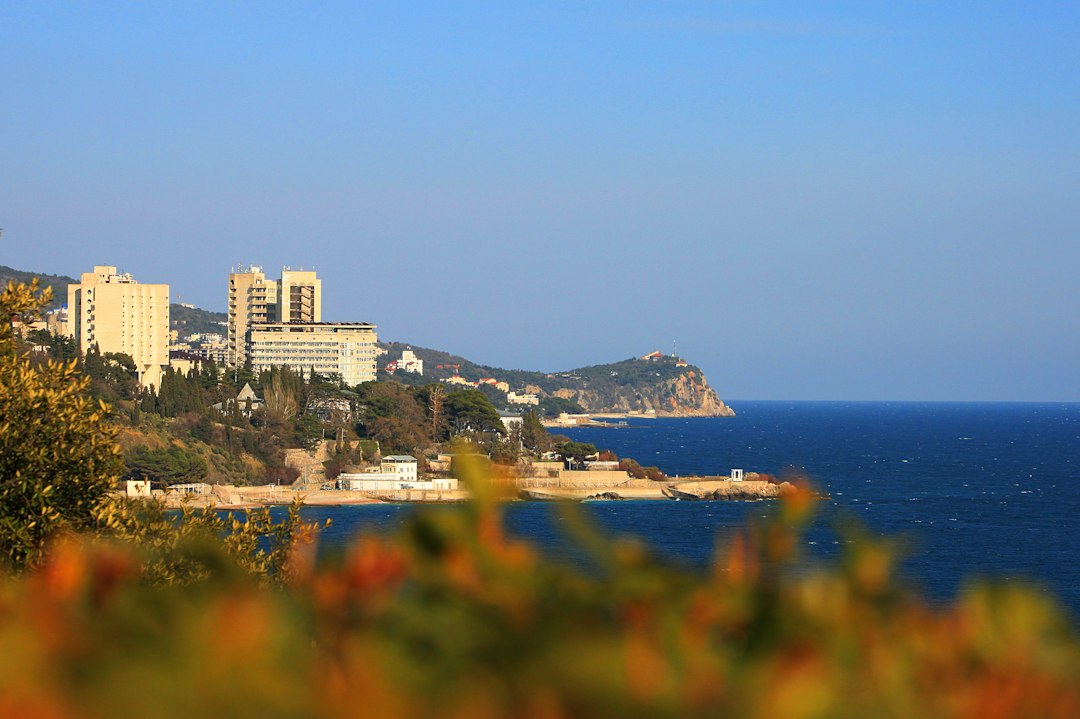
The construction work lasted about twenty years, from 1828 to 1848, and was entrusted to the British architect Edward Blore, already known for having worked on Buckingham Palace in London. Blore never personally visited Crimea, yet he managed to design a complex that integrates with extraordinary naturalness into the landscape: to the north rises the neo-Gothic facade made of local gray-green diabase, while on the southern side, overlooking the Black Sea, dominates a Moorish-style portal inspired by the decorations of the Alhambra in Granada, with Arabic inscriptions that read "There is no victor but Allah."
The architecture: two faces of a single building
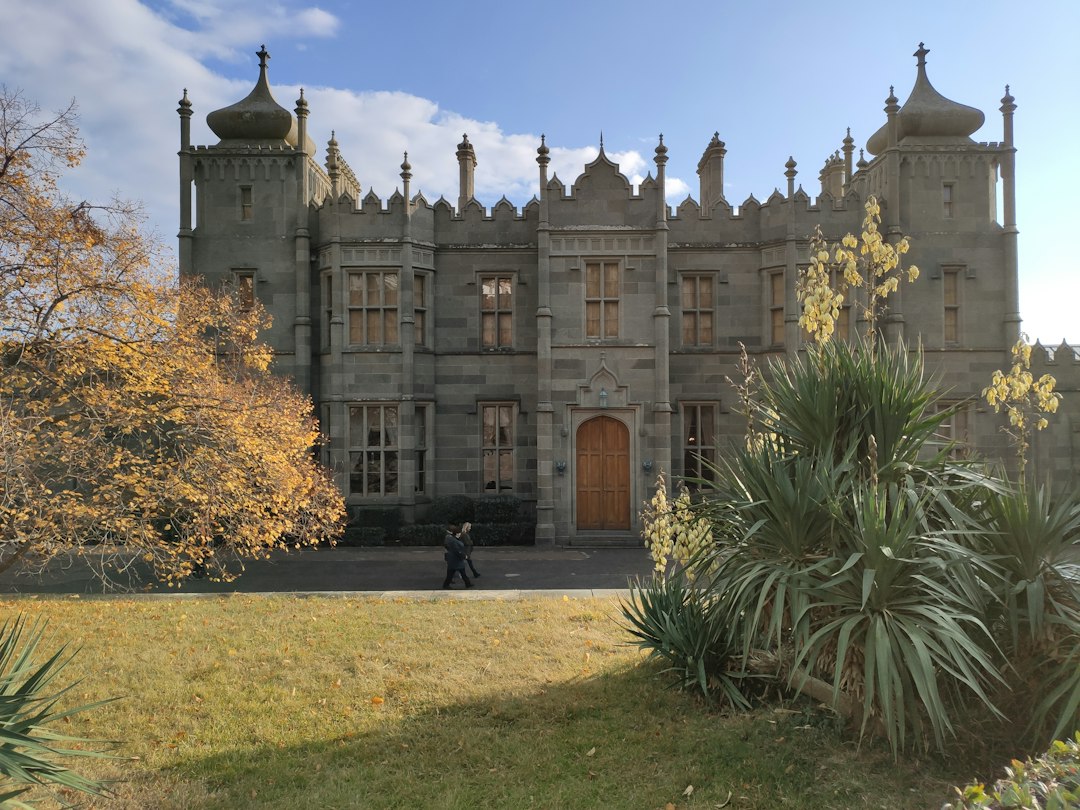
What makes the Vorontsov Palace visually unique is its double stylistic identity, visible already from the outside while walking around the perimeter of the building. The northern facade, with its crenellated towers and pointed windows, recalls English medieval castles. Just a few steps south lead to a completely different world: horseshoe arches, stalactites of carved stone, and that famous Arabic inscription that frames the main entrance towards the sea.
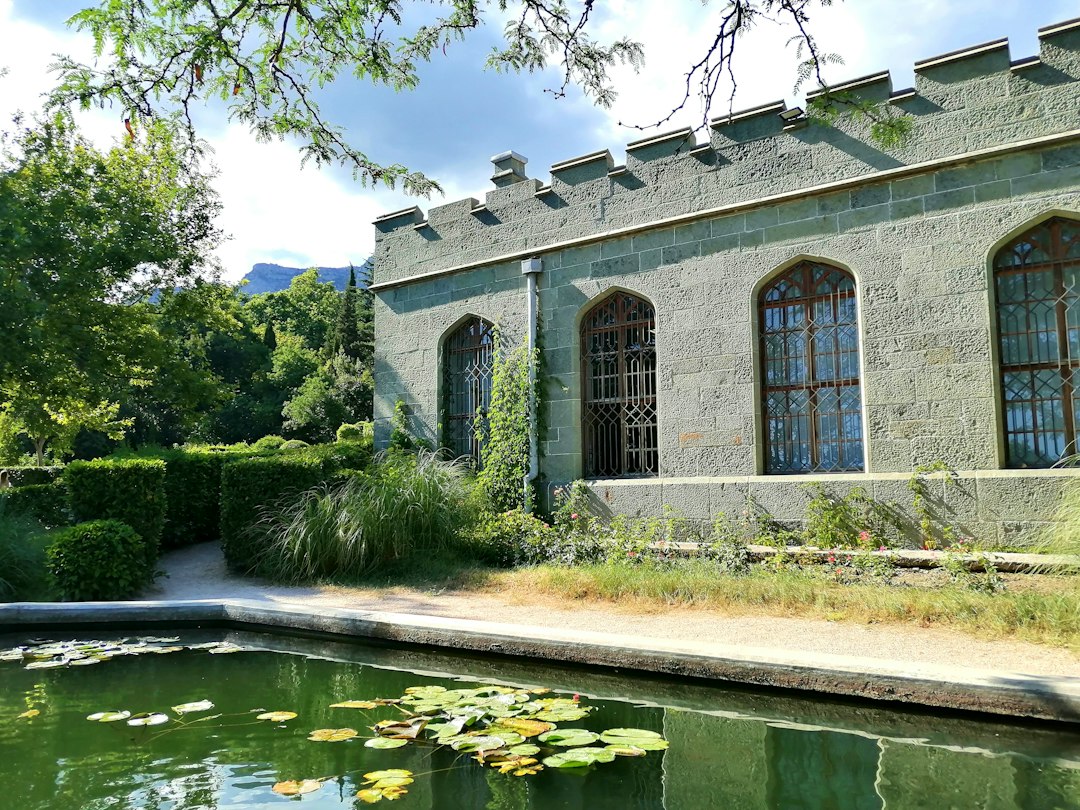
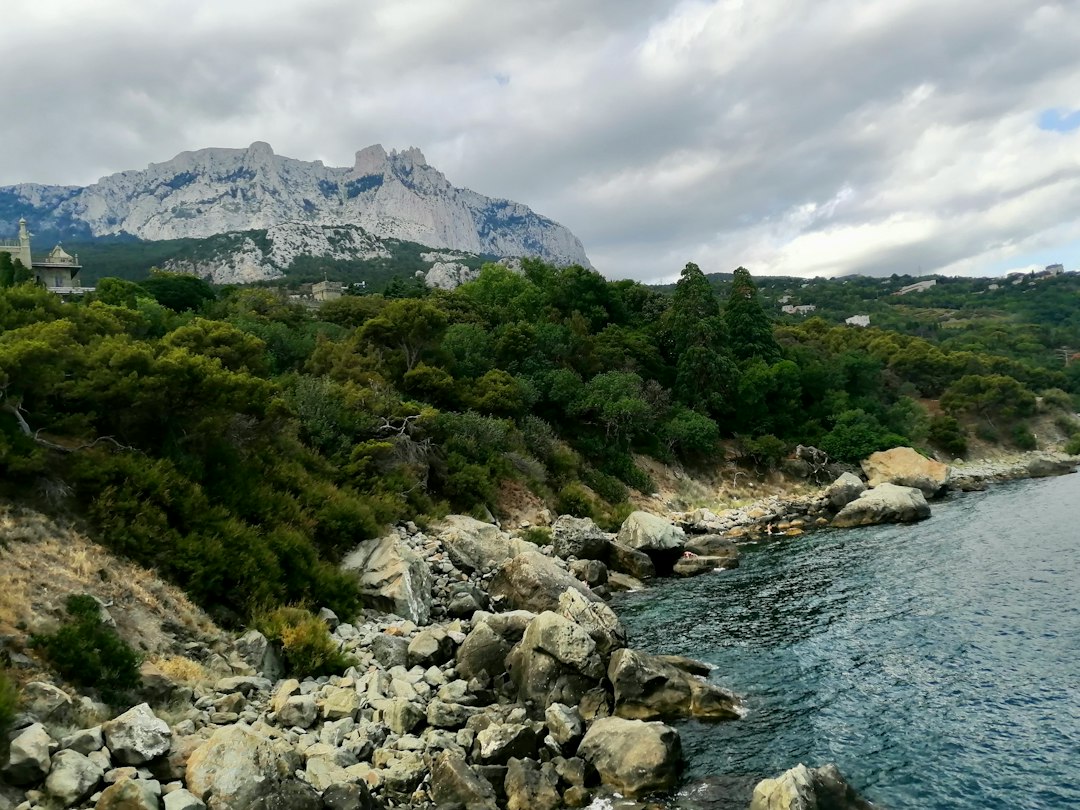
The palace is entirely built of Crimean diabase, a dark volcanic stone extracted locally, which gives the building a severe yet organic appearance compared to the rock of Mount Ai-Petri that rises behind it. The complex includes six main blocks connected to each other, with a total area of about 150 rooms. The interiors preserve original furnishings from the era, paintings from the European school, and a library that contains thousands of volumes.
The artistic treasures of the interiors
Inside, the main hall impresses with its coffered wooden ceiling and white marble fireplaces decorated with floral motifs. The exhibition rooms house a collection of English and Russian furniture from the 19th century, porcelain, crystal, and family portraits that document the life of the Russian imperial aristocracy. Particularly noteworthy is the Blue Room, with its original tapestries and Bohemian crystal chandeliers.
The palace was used as a residence during the Yalta Conference of 1945, when it hosted the British delegation led by Winston Churchill. This historical episode has left documented traces in the halls, with photographs and memorabilia displayed in some rooms dedicated to that period.
The park: a romantic garden among rocks and cypress trees
No less important than the building is the landscape park that surrounds it, designed by the German botanist Karl Kebach and developed over an area of about 40 hectares. The park hosts over two hundred species of plants from all over the world, with Lebanon cedars, magnolias, Mediterranean cypress trees, and ancient oaks creating different environments depending on the slope. Artificial ponds, stone bridges, and natural caves complete a path that can take up to two hours to explore at a leisurely pace.
The southern terraces of the park offer direct views of the Black Sea and represent one of the most photographed viewpoints along the entire coast of Crimea. The Lion Staircase, with its three pairs of white Carrara marble sculptures — sleeping, awake, and roaring — is the most recognizable symbol of the palace and the most recurring subject in visitors' photographs.
Practical information for the visit
The palace is located in Alupka, about 20 kilometers west of Yalta, accessible by bus or taxi from the city. The minimum recommended time for a complete visit — both interiors and exteriors with the park — is three hours. The interiors are visited with a separate ticket from the park, so it is advisable to check the available options at the entrance. The best light for photographing the southern facade is in the morning hours, when the sun directly illuminates the Moorish portal without shadows cast by the towers. It is recommended to wear comfortable shoes: the park's terrain is uneven and the paths between the rocks require caution, especially after rain when the volcanic stone becomes slippery.


