
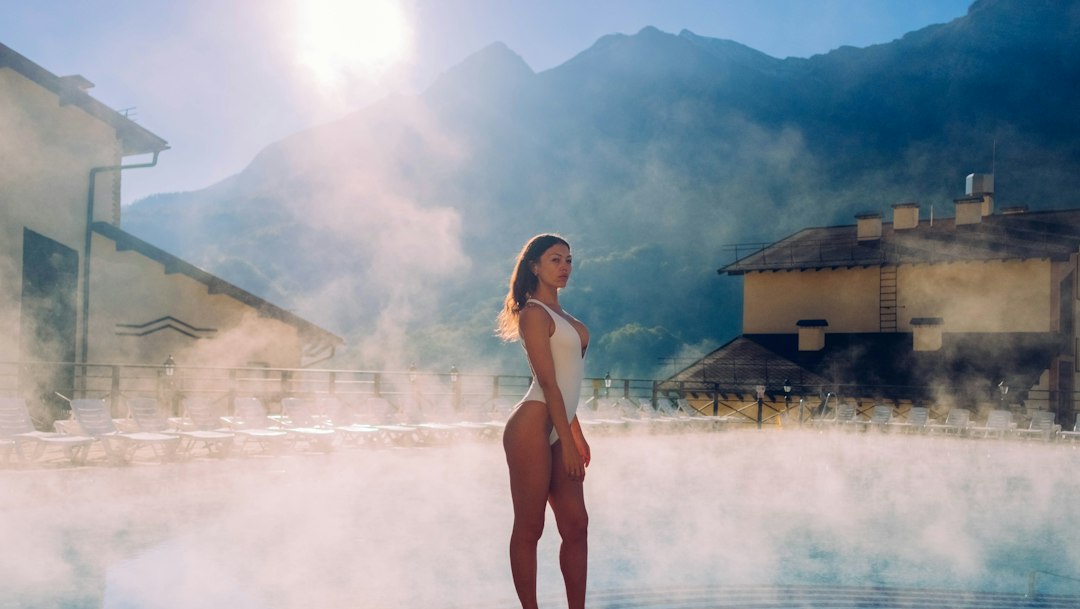

The water is cold. Not lukewarm, not fresh: cold, with that sharp minerality that is immediately felt on the tongue if one dares to taste it. The natural travertine pools of Vyšné Ružbachy, in northern Slovakia, do not resemble any other European spa. Filled by mineral springs that emerge directly from the ground, these limestone basins have formed over centuries through natural deposition, creating irregularly shaped pools of gray-ochre color that seem sculpted by an ancient hand. Around them, almost intact, survives a thermal architecture from the Austro-Hungarian era that no modern restorer has yet touched — for better or for worse.
The village of Vyšné Ružbachy is located in the Prešov region, near the border with Poland, at the foot of the Pieniny mountains. It is not a destination that appears in general guides, and foreign tourists arriving there are still a measurable rarity. This relative isolation is its most precious characteristic: it allows one to walk among neoclassical and Art Nouveau buildings from the 19th century without crowds, without souvenirs, without the feeling that the place has been packaged for tourist consumption.
A spa established in the eighteenth century
The first documented mentions of the springs of Vyšné Ružbachy date back to the 18th century, when the area was part of the Kingdom of Hungary under the Habsburg crown. The spa was systematically developed starting from the second half of the eighteenth century, and its period of greatest splendor is situated between the end of the nineteenth century and the early decades of the twentieth century, when the aristocracy and bourgeoisie of the region spent their summer healing seasons there. The buildings that can still be seen today — some eclectic-style villas, the main spa house, the pavilions — largely date back to that era and retain original architectural details such as stucco frames, carved wooden verandas, and local stone staircases.
What makes the site physically unique are the travertine pools, formed by the carbonated mineral water that, emerging from the underground, deposits calcium carbonate over time around the points of emergence. The result is natural craters of varying sizes, some large enough to hold several people, filled with clear and cold water with a high mineral content. The water temperature remains low even in summer, which distinguishes these springs from most European spas.
The therapeutic experience: cold, minerals, and silence
Diving into the travertine pools requires a certain initial determination. The water, rich in carbon dioxide and mineral salts, produces a tingling sensation on the skin characteristic of carbonated waters, similar to that of the iron-rich springs of Central Europe. Traditionally, these waters were considered beneficial for circulatory and rheumatic disorders, and the practice of short baths followed by rest was the standard protocol of 19th-century spa treatments.
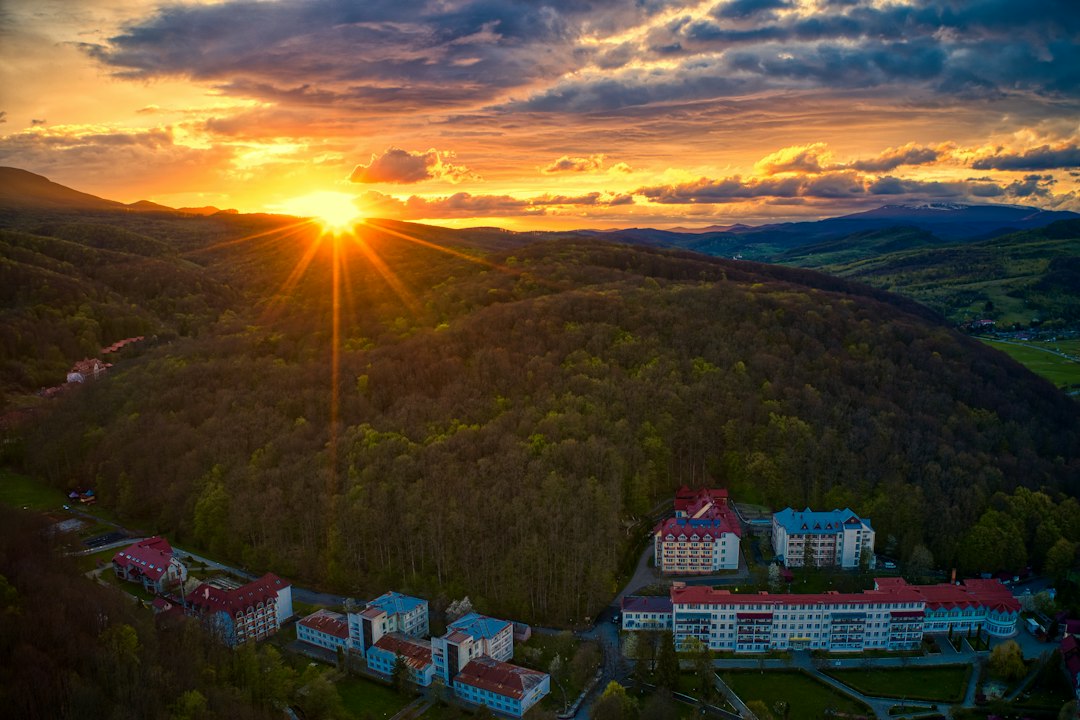
The natural context amplifies the effect. The pools are located in a quiet green area, surrounded by vegetation and historic buildings that serve as a scenic backdrop. There is no background music, there are no entertainers. The pace is that of a slow place that has not yet decided to transform into a commercial product. For those seeking an authentic spa experience, free from the trappings of modern spas, this is one of the few places left in Central Europe where that feeling is still possible.
What to observe on site

Upon arriving at the complex, it is worth taking the time to stroll among the historic buildings before approaching the pools. The facades still show traces of original decorations, and some structures maintain inscriptions or plaques in Hungarian and German, the administrative languages of the imperial era. The larger and more photogenic travertine pools are located in the open area of the thermal park, easily reachable on foot from the main entrance.
The vegetation around the springs is characteristic: the limestone deposits create a particular microenvironment where mosses and plants adapted to mineral water grow, giving the pools an almost prehistoric appearance. The travertine edges are slippery, so it is advisable to move with caution.
Practical information for the visit
Vyšné Ružbachy is most conveniently reached by car from the city of Kežmarok, located about 20 kilometers away, or from Stará Ľubovňa. Public transport connections exist but are limited and require planning. The thermal site is managed by the company Kúpele Vyšné Ružbachy, a.s. and offers both the possibility of stays in historic buildings and daily access to the pools and facilities. The prices for daily entry are at accessible levels compared to Western European standards, in the order of a few euros.
The best time to visit is between May and September, when the complex is fully operational and the weather allows you to enjoy the outdoor pools comfortably. Weekends attract Slovak and Polish visitors from nearby regions, so weekdays guarantee more tranquility. Plan for at least half a day to explore both the pools and the historic architecture of the spa village.


