


The ochre-colored walls rise up to eighteen meters above sea level, and the first impact with the Walled City of Cartagena de Indias is physical even before it is visual: you can feel the heat accumulated by the coral stone under the palms of your hands, you can perceive the weight of four centuries of history in every squared block. This defensive system, built by the Spaniards starting in the 16th century to protect one of the richest ports in the Americas, extends for about 11 kilometers around the historic center and represents one of the best-preserved examples of colonial military architecture in the entire American continent.

Cartagena was founded in 1533 by the conquistador Pedro de Heredia and quickly became one of the main commercial hubs of the Spanish empire, a transit point for gold and silver extracted from the colonies. This wealth also made it a target: pirates, privateers, and enemy fleets repeatedly attacked the city over the centuries, prompting the Spanish Crown to invest in a system of fortresses and bastions that still define the urban silhouette today. In 1984, UNESCO inscribed the historic center and its walls on the World Heritage List, recognizing the exceptional integrity of this architectural ensemble.
The walls and the bastions: uncompromising military engineering

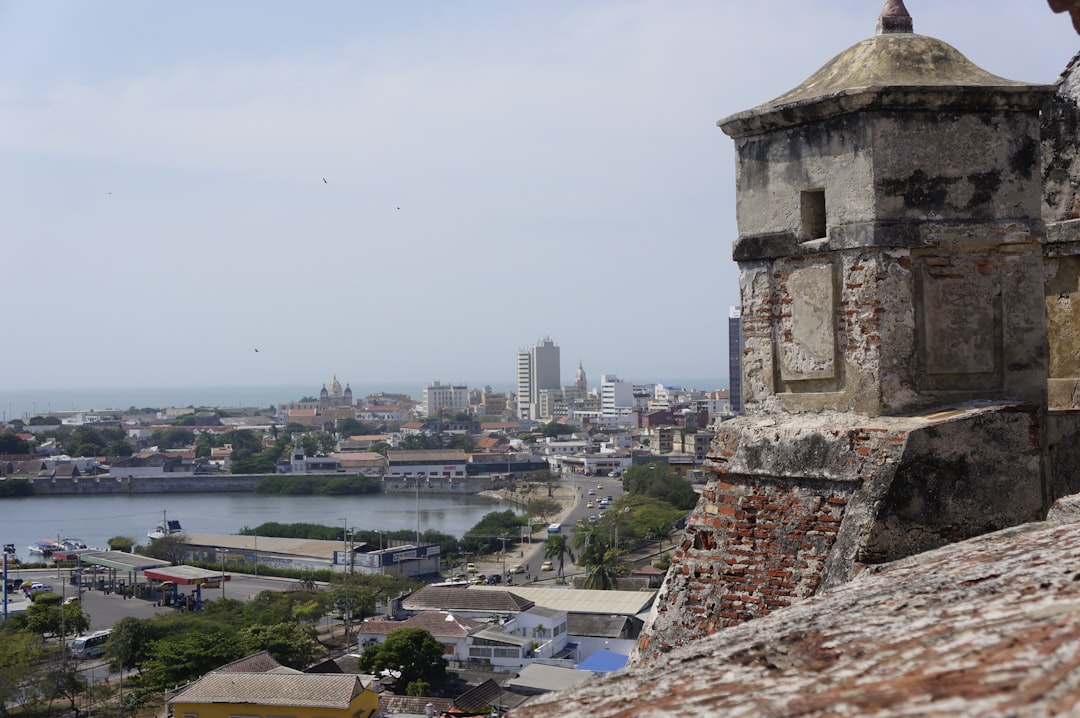
Walking on top of the walls means traversing a manual of military engineering from the Renaissance and Baroque periods. The bastions — protruding pentagonal structures that allowed for covering adjacent sections of the walls with fire — follow a precise defensive logic. The Baluarte de Santo Domingo and the Baluarte de San Francisco Javier are among the most photographed points, also because they offer a panoramic view of the Caribbean Sea on one side and the colorful roofs of the historic center on the other. The walls are not uniform: some sections reach thicknesses exceeding seventeen meters at the base, built to withstand cannon fire from Dutch and English fleets.
The stone used is predominantly coral, extracted from the surrounding seabeds, a choice that gives the surfaces an irregular and porous texture visible to the naked eye. Over time and with the tropical humidity, many blocks have developed greenish and grayish hues that contrast with the yellow and orange facades of the houses within the walled city. This chromatic dialogue between the raw stone of the defenses and the vibrant plaster of the homes is one of the most characteristic elements of Cartagena's urban aesthetic.

The Castle of San Felipe de Barajas: the fortress that defied the centuries
Not far from the main walls stands the Castle of San Felipe de Barajas, the largest military fortress ever built by the Spanish in the Americas. Construction began in 1536 on the hill of San Lázaro, but the structure was significantly expanded in the 17th and 18th centuries, taking on the imposing shape that is seen today. The military engineer Antonio de Arévalo was responsible for the most important cycle of expansions in the 18th century, designing a system of underground tunnels that allowed for the supply of soldiers and the movement of troops without exposing them to enemy fire.
Inside the castle, it is still possible to walk through part of these tunnels, where the acoustics amplify every step and the darkness is almost total without a flashlight. The entrance ticket to the castle costs approximately between 25,000 and 35,000 Colombian pesos for foreign visitors, an amount subject to change, and it is advisable to check the updated prices directly at the ticket office. The visit requires at least an hour and a half to carefully explore the upper levels, the bastions, and the network of underground galleries.
The palaces and balconies of the historic center
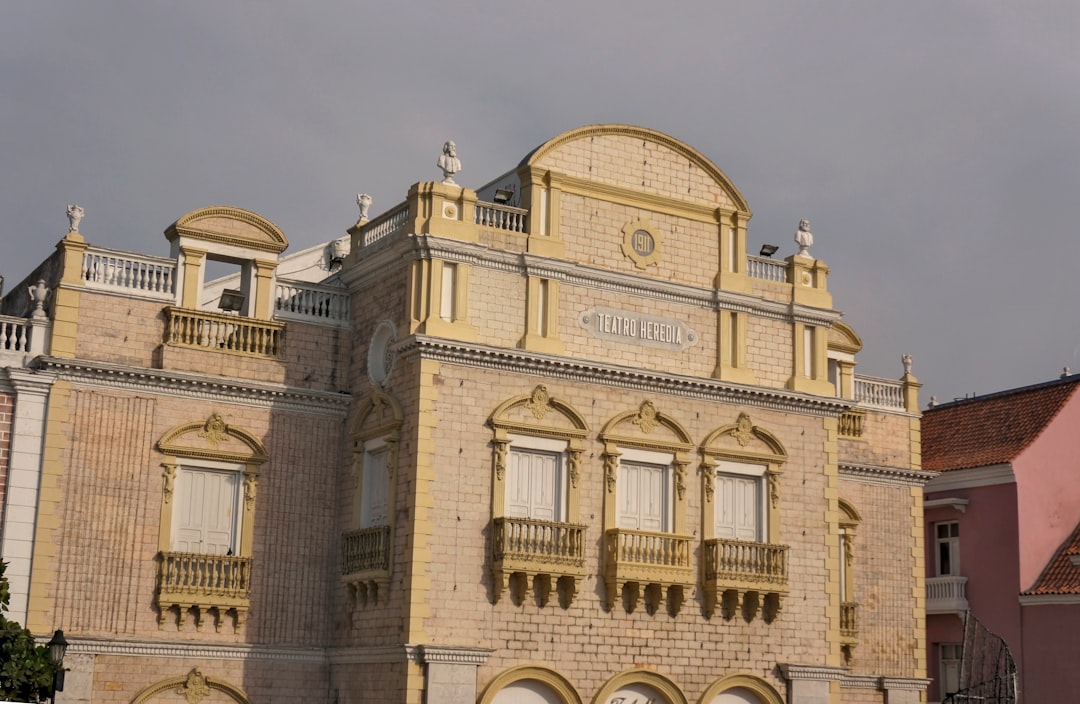
Within the walls, civil architecture tells another story: that of mercantile wealth and social ostentation. The colonial houses — the grand palaces of wealthy families — are recognized by the carved wooden balconies that jut out over the narrow alleys, covered by awnings to protect from the sun and tropical rain. Many of these balconies are decorated with fresh flowers or climbing plants, a tradition that has been maintained over time and transforms the facades into spontaneous chromatic compositions.
The Plaza de Bolívar, at the center of the walled city, is surrounded by some of the most representative buildings: the Palace of the Inquisition, with its baroque portal made of carved stone dating back to 1770, and the Cathedral of Cartagena, whose construction began in 1577 and suffered damage and reconstructions over the centuries. Both buildings are open to visitors and offer a direct comparison between the austere style of institutional buildings and the ornamental richness of private residences.
Practical tips for visiting the Walled City
The best time to walk on the walls is in the late afternoon, when the slanting light of the sunset colors the coral stone orange and the heat of the day slightly eases. In the early morning, however, the historic center is almost deserted and allows for photographing the alleys and buildings without the crowd that characterizes the central hours. Visits should be avoided between eleven and two, when the Caribbean sun is at its zenith and the stone surfaces radiate intense heat.
The Walled City is located in the center of Cartagena de Indias, easily reachable by taxi or on foot from the Bocagrande area. Most of the walls are accessible for free and open during daylight hours, while some sections are illuminated in the evening and become a meeting point for locals and tourists. Wearing sturdy-soled shoes is essential: the path on the walls is uneven and in some sections lacks guardrails.


