


Set in the unspoiled nature of the Gangwon region, Woljeongsa Temple is a place that embodies the spirituality and culture of South Korea. Located in Pyeongchang, famous for hosting the 2018 Winter Olympics, this Buddhist temple offers visitors an experience of peace and contemplation, away from the hustle and bustle of modern cities. Its scenic location, surrounded by mountains and forests, makes Woljeongsa an ideal refuge for those seeking a deep connection with nature and spirituality.
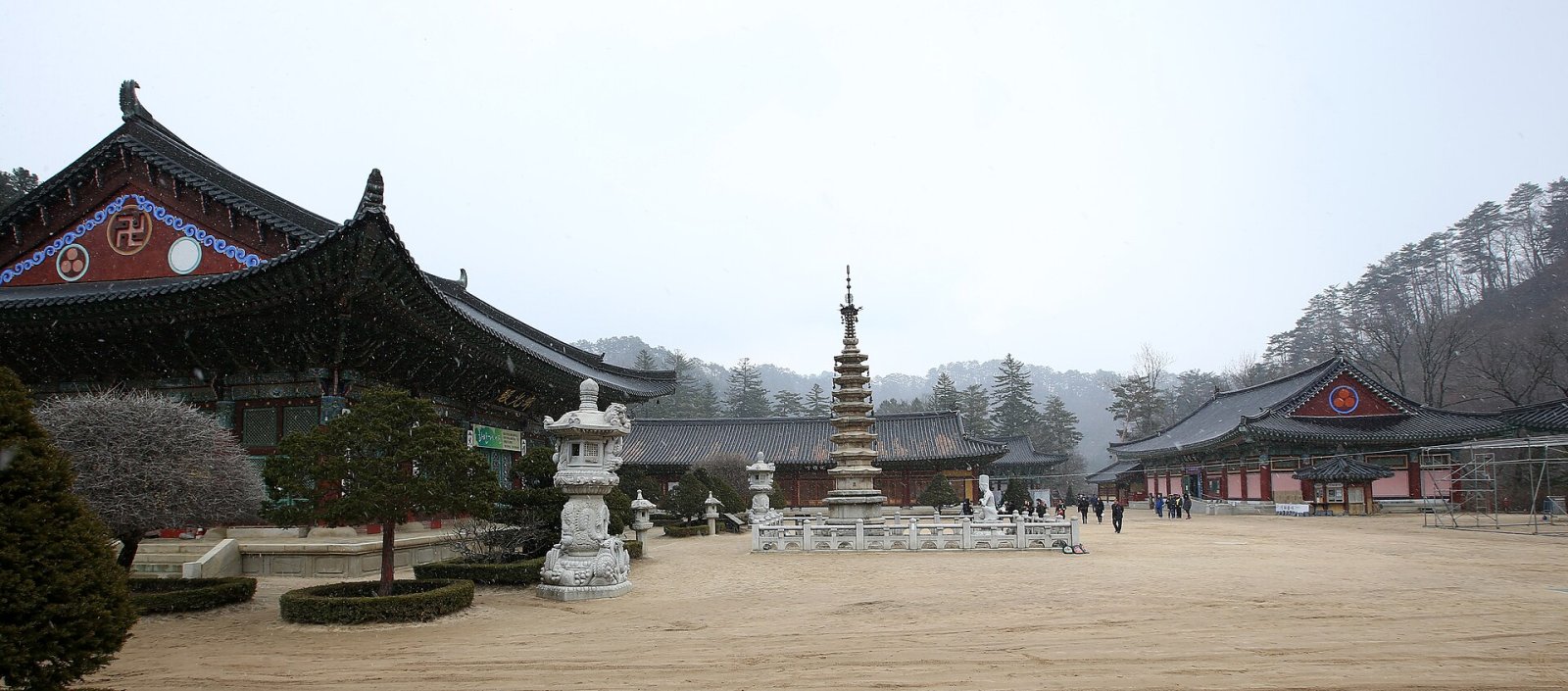
The temple is an integral part of Korean Buddhist tradition and represents an important center for meditation and teaching. Its architecture, characterized by refined details and vibrant colors, reflects the beauty and complexity of Korean culture. Visiting Woljeongsa means not only admiring an architectural masterpiece but also immersing oneself in an atmosphere of serenity that invites reflection and inner peace.
Historical and Cultural Context

Woljeongsa Temple was founded in the 7th century and is one of the oldest Buddhist temples in Korea. Its history is deeply intertwined with the development of Buddhism in the country, and the temple has been a center of learning and spiritual practice for centuries. The presence of historical relics and sacred texts housed within the temple attests to the importance of this place in the Korean religious landscape.
In addition to its religious function, the temple also plays a significant role in the local community. During Buddhist holidays and rituals, Woljeongsa becomes the focal point of celebrations that unite believers and visitors. These events offer a glimpse into Korean culture and Buddhist traditions, making the temple not only a place of worship but also a center of community life.

What Stands Out About the Place
What immediately strikes visitors to Woljeongsa is its idyllic location. Surrounded by ancient trees and breathtaking mountain scenery, the temple offers an atmosphere of tranquility that invites meditation. The intricate architectural details, such as murals and sculptures, tell ancient stories and reflect the craftsmanship of Korean artisans. Every corner of the temple is an invitation to discover the beauty of Buddhist art.
Another fascinating aspect of Woljeongsa is the path leading to the temple, known for its natural beauty. This pathway, adorned with statues and traditional lanterns, provides an immersive experience that prepares visitors for their arrival at the sacred site. The synergy between nature and spirituality makes Woljeongsa a unique and unforgettable experience.
Visiting Experience
A visit to Woljeongsa Temple is an opportunity to immerse oneself in Korean spirituality and culture. Visitors can participate in meditation rituals and observe Buddhist monks as they practice their daily ceremonies. These experiences offer a unique opportunity to learn and understand Buddhist philosophy, making the visit not just a moment of leisure but also of personal growth.
Moreover, the temple is equipped with facilities to welcome visitors, including resting areas and refreshment points, where one can enjoy typical dishes of Korean cuisine. The combination of spirituality and gastronomy makes the visit to Woljeongsa even richer and more satisfying, creating a complete experience that engages all the senses.
Practical Information for Visitors
To reach Woljeongsa Temple, visitors can use public transport or rent a car, as the road is well signposted. It is advisable to wear comfortable clothing and suitable shoes for walking, as the path to the temple can be challenging. It is important to respect the behavioral norms within the temple, maintaining a low voice and showing respect for the spirituality of the place.
Finally, for those who wish to deepen their experience and discover more points of interest in the region, the Secret World app can provide useful information and suggestions for exploring the beauty of South Korea in an authentic and engaging way.


