




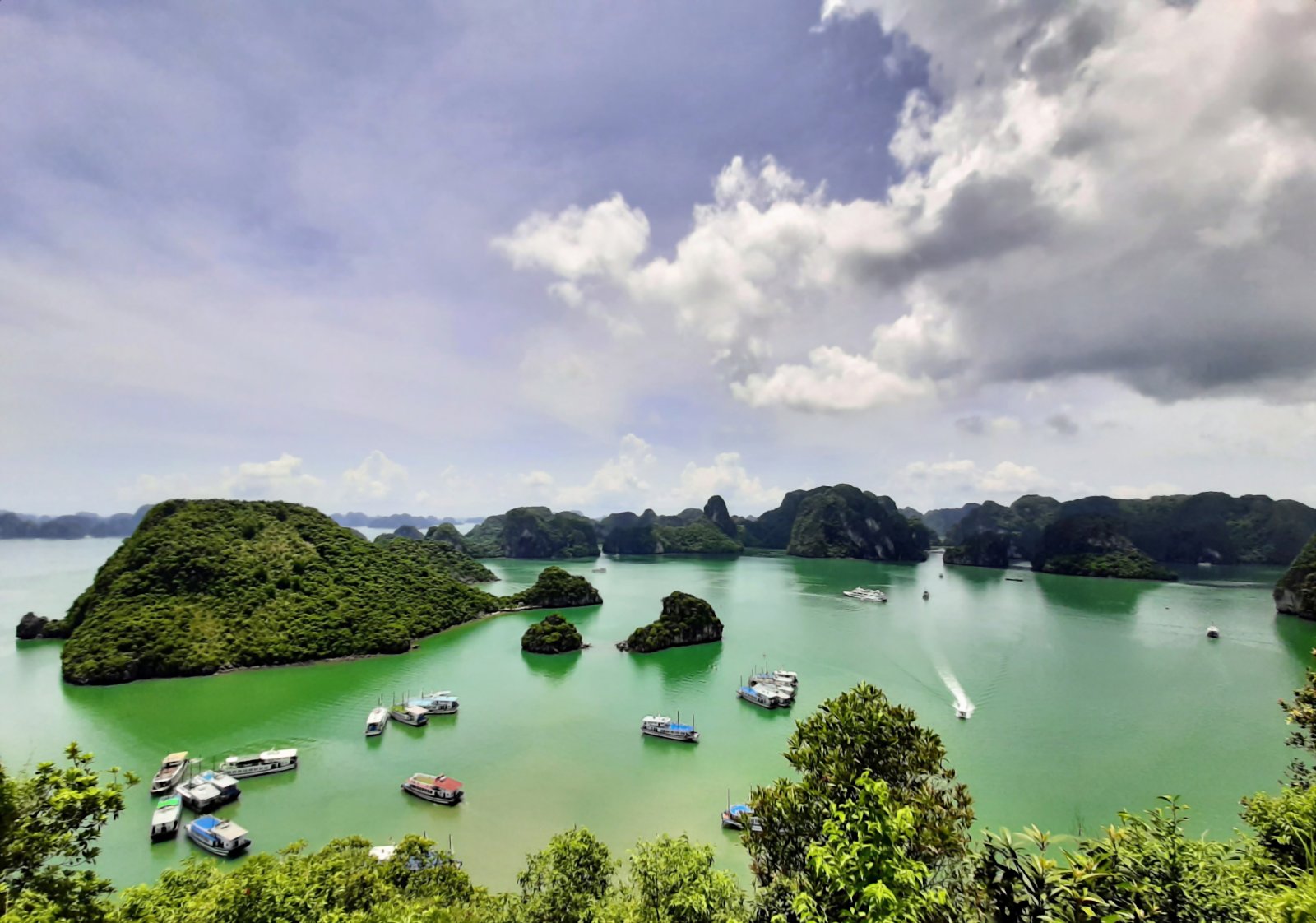
Ha Long Bay, a breathtaking tapestry of limestone karsts and emerald waters, stands as one of Vietnam’s most stunning landscapes. Recognized as a UNESCO World Heritage Site, this natural wonder is not just a feast for the eyes but also a repository of history, culture, and culinary delights.
History and Origins
The history of Ha Long Bay is as intricate as its geology. The area has been inhabited for thousands of years, with archaeological evidence suggesting human presence dating back to the Paleolithic era. The Đồ Sơn Culture, which flourished around 3,000 years ago, left behind significant artifacts, hinting at early civilization in this region.
The bay was named "Ha Long," meaning "Descending Dragon," due to a legend that tells of a dragon sent by the gods to protect the Vietnamese from invaders. As the dragon descended, it created the islands and islets we see today, serving as a natural defense. Through the centuries, Ha Long has witnessed pivotal historical moments, including the resistance against foreign invaders during the Mongol invasions in the 13th century. The bay's strategic location made it a critical naval passage, impacting Vietnam's maritime history.
Art and Architecture
The artistic significance of Ha Long Bay is reflected in the ancient cave systems scattered throughout the region, such as Sung Sot Cave (Surprise Cave) and Thien Cung Cave (Heavenly Palace Cave). These caves feature stunning stalactites and stalagmites that have inspired local folklore and artistic expression.
Architecture in the area predominantly showcases traditional Vietnamese styles, particularly in the floating fishing villages like Cua Van. Here, colorful wooden boats and houses built on stilts illustrate the harmony between human habitation and nature. The floating market culture enhances this unique architectural landscape, where locals sell fresh seafood and crafts directly from their boats.
Local Culture and Traditions
The culture surrounding Ha Long Bay is rich and vibrant, heavily influenced by the sea and its bounty. Local customs often revolve around fishing and the maritime lifestyle, with festivals celebrating the sea. The Ha Long Carnival, held annually in April, is a dazzling display of local music, dance, and costumes, drawing visitors from all over.
Moreover, the fishing communities maintain age-old traditions, such as squid fishing at night, which is a unique experience for visitors. Engaging with local fishermen provides insight into their daily lives and the integral role of the sea in their culture.
Gastronomy
No visit to Ha Long Bay is complete without indulging in its unique gastronomy. The bay is famous for its fresh seafood, particularly grilled squid, oysters, and crab. A must-try dish is Cha Muc, a squid cake made from freshly caught squid, seasoned with local herbs and spices.
Another highlight is a traditional boat meal known as "Bánh cuốn," a steamed rice roll filled with minced pork and mushrooms, often enjoyed with a side of sweet dipping sauce. To wash it down, savor a glass of Vietnamese beer or green tea while taking in the breathtaking views.
Lesser-known Curiosities
Beyond its well-known beauty, Ha Long Bay holds many hidden gems. One fascinating fact is that Cat Ba Island, located within the bay, is home to the Cat Ba National Park—a UNESCO Biosphere Reserve that boasts diverse wildlife, including the endangered Cat Ba Langur.
Additionally, many visitors miss out on the bay's lesser-known caves and hidden lagoons, such as Ba Ham Lake, which is accessible only by boat and offers a serene escape from the more touristy spots.
Practical Visitor Information
The best time to visit Ha Long Bay is from October to April, when the weather is mild and pleasant. For those seeking a quieter experience, consider visiting during the weekdays, avoiding the weekend rush.
When planning your trip, it’s advisable to book a cruise that explores the quieter parts of the bay, allowing you to fully immerse yourself in its natural splendor. Don’t forget to bring a camera—sunrise and sunset views over the bay are nothing short of magical.
As you explore this magnificent expanse, don’t forget to engage with the local communities, try your hand at fishing, or simply relax on one of the pristine beaches like Ti Top Island.
For a personalized itinerary that captures the essence of Hạ Long, consider using the Secret World app to enhance your travel experience.
