



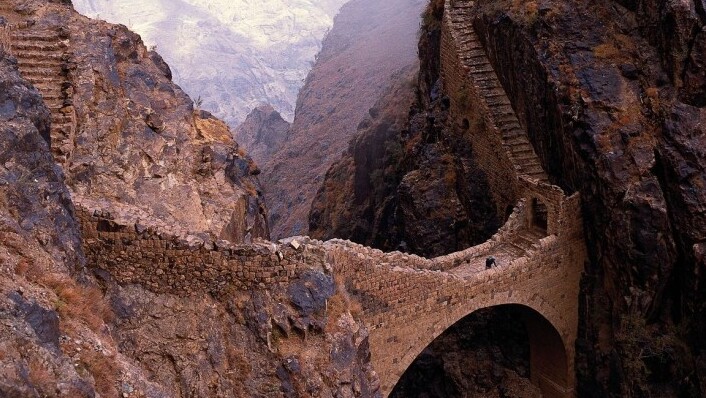
Perched high amidst the rugged peaks of Yemen’s Jabal Shahara mountains, the Shahara Bridge stands as a testament to human ingenuity and resilience. Constructed in the 17th century, this architectural marvel was originally designed as a defensive structure against the encroaching Ottoman Turks. Its dramatic span bridges two mountain tops, serving not only as a vital connector of remote villages but also as a symbol of the indomitable spirit of the Yemeni people.
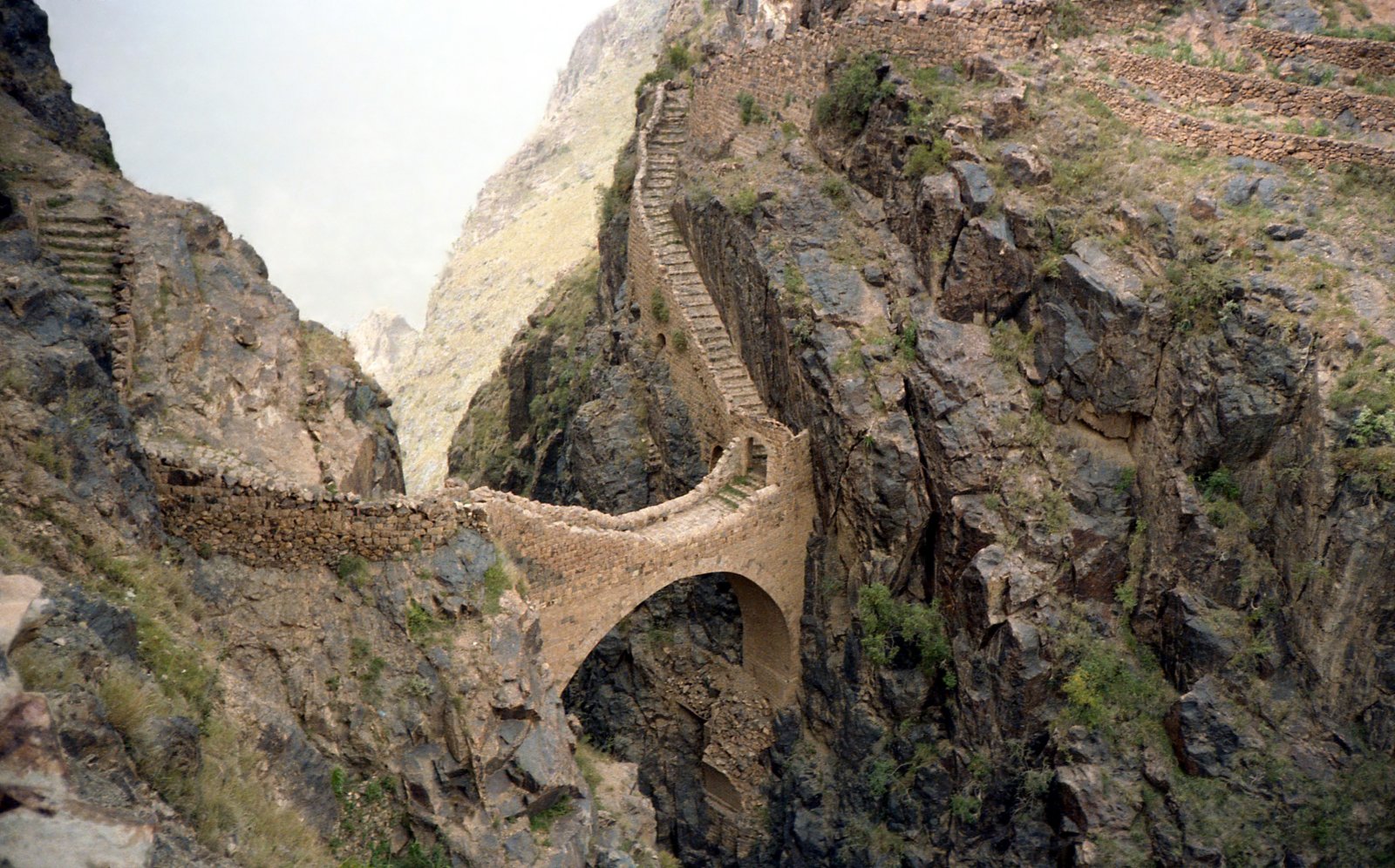
The history of the Shahara Bridge is deeply interwoven with the region’s struggle for autonomy and defense. Built under the direction of Sheikh Ali bin Mohammed Al-Amri, the bridge was not merely a practical solution to a geographical challenge but also a strategic military asset. During the 1600s, the Ottoman Empire sought to extend its influence over Yemen, a land coveted for its strategic location and rich coffee trade. The bridge provided a crucial link for the local tribes, enabling them to mobilize quickly and defend their territory.
From an architectural perspective, the Shahara Bridge is a remarkable feat, showcasing the traditional Yemeni techniques of stone masonry. Constructed from massive limestone blocks sourced from the surrounding mountains, the bridge arcs gracefully over a daunting 300-meter chasm. Its design reflects the ingenuity of its builders, who, without modern machinery, crafted a structure that has withstood centuries of wear and the occasional tremor of the earth beneath it.
Culturally, the bridge and the village of Shahara itself are steeped in local traditions and customs. The villagers, primarily from the Ismaili sect of Islam, maintain a lifestyle that has changed little over the centuries. They celebrate various local festivals, such as the Eid al-Adha, with ceremonies that feature traditional dances and songs that echo the rich oral histories of the region. Visitors during such times are treated to a rare glimpse of Yemeni culture in its most authentic form.
Yemeni gastronomy offers a delightful array of flavors, and the region around Shahara is no exception. A typical meal might include saltah, a hearty stew made with meat, vegetables, and a dollop of fenugreek froth, served steaming hot with flatbread. Another staple is bint al-sahn, a sweet, layered pastry drizzled with honey and ghee, which provides a comforting end to a meal. The coffee from this region, often spiced with cardamom, is renowned for its rich aroma and robust flavor, a legacy of Yemen's historic coffee trade.
For those who venture to Shahara, there are lesser-known curiosities that add to the intrigue of this majestic locale. The bridge itself is said to have a hidden mechanism designed to be destroyed quickly in times of invasion, a clever defensive feature. Additionally, local lore speaks of a treasure buried somewhere within the mountain, a tale that has captivated explorers and historians alike. The region is also home to rare species of flora and fauna, some of which are found nowhere else on earth.
Visiting Shahara requires careful planning, as the region is remote and the terrain challenging. The best time to visit is during the cooler months from November to February, when the weather is more forgiving. Travelers should be prepared for a journey that involves a combination of driving and hiking, as the bridge is accessible only by foot or mule. It is advisable to hire a local guide, who can not only navigate the trails but also provide invaluable insight into the area’s history and culture.
As you stand on the Shahara Bridge, gazing at the panoramic views of the surrounding mountains, you gain a profound appreciation for the people who built and continue to live in this extraordinary place. It’s a journey that not only bridges the physical divide between mountain peaks but also connects us to a rich tapestry of history, culture, and human perseverance.
