
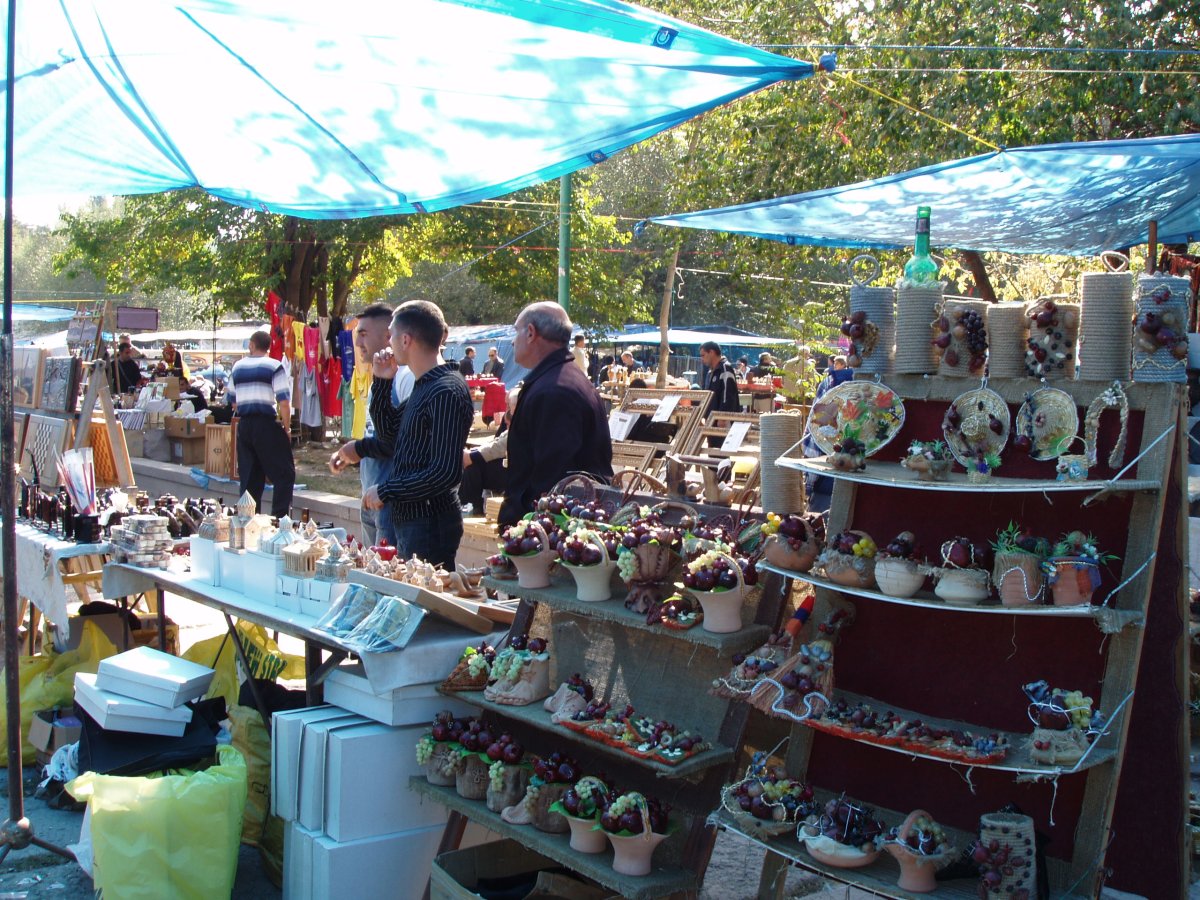

The smell of carved wood and the sharp scent of Armenian cognac mix in the air on Saturday morning as the first stalls of the Vernissage Market come to life in the center of Yerevan. The market stretches along a pedestrian area near Republic Square, and every weekend transforms this corner of the Armenian capital into a colorful maze of carpets, antiques, volcanic stone sculptures, and bottles of artisanal brandy. It is not a market for hurried tourists: it is a place where vendors know the names of their regular customers and where every item has a story to tell.
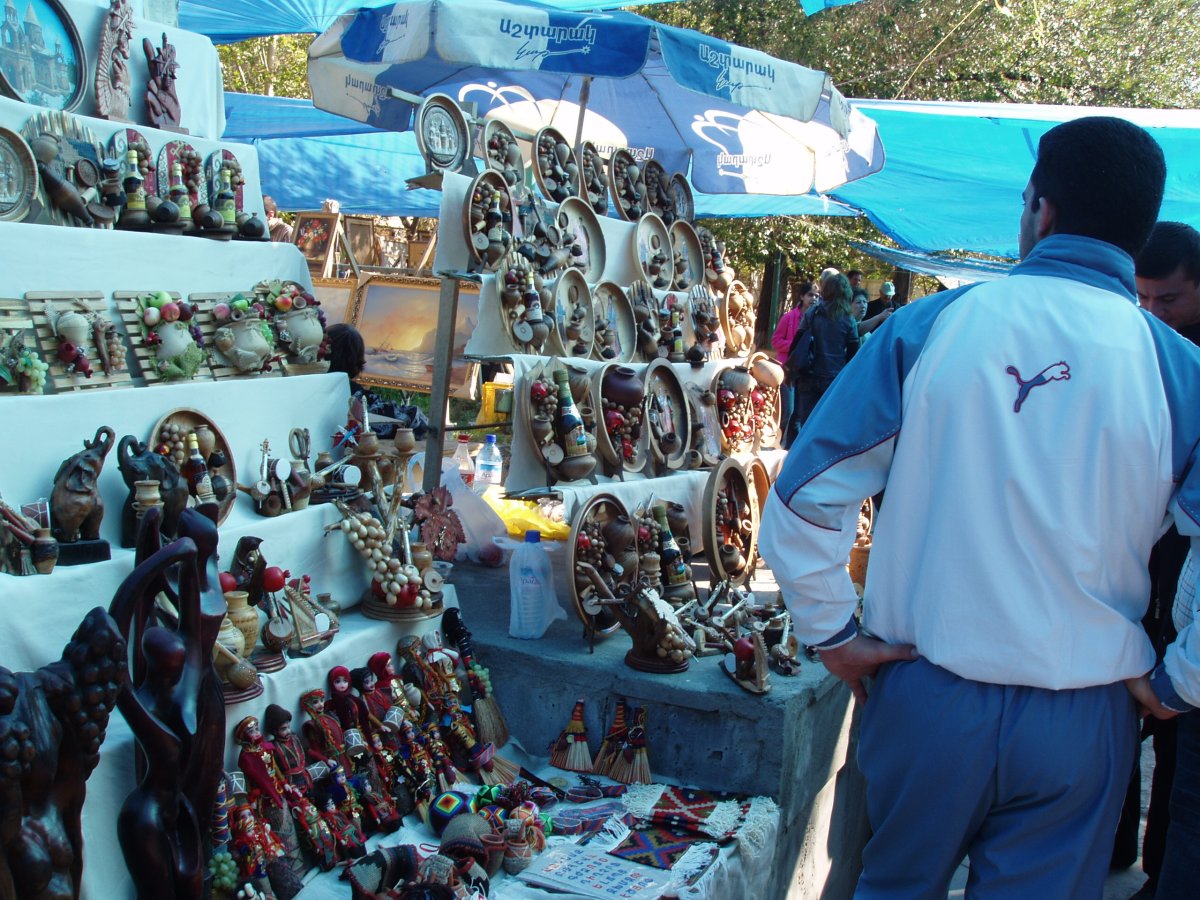
The Vernissage — the name evokes the artistic vernissage, the opening of an exhibition — has been active as an open-air market since the post-Soviet period, when Armenian artisans began to gather here to sell their works after the collapse of the USSR in the early 1990s. Since then, it has become a regular appointment for the people of Yerevan, not just an attraction for foreign visitors. This makes it different from many tourist markets: the local clientele is real, prices are negotiable, and the atmosphere is authentic.
What can be found among the stalls
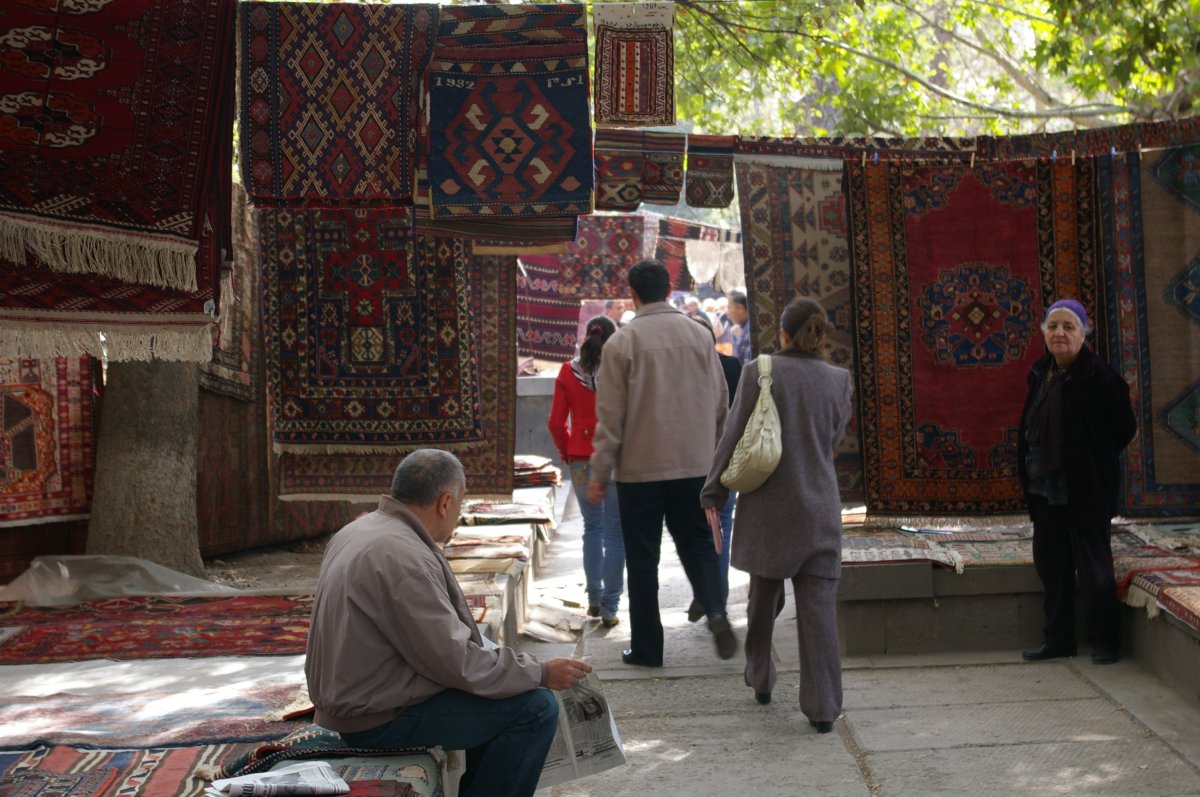
Armenian rugs are probably the most impressive category of products. Hung vertically or laid out on the pavement, they display traditional geometric patterns in deep red, cobalt blue, and ivory. Some vendors showcase pieces that clearly have decades of life, with wear that tells stories of years of domestic use. Next to the rugs, sculptures in pink tuff — the volcanic stone typical of Armenia, also used in the construction of many historic buildings in Yerevan — represent khachkar crosses, stylized human figures, and mountainous landscapes.
The stalls dedicated to Soviet items deserve a special stop: military medals, pocket watches with the hammer and sickle symbol, Zenit cameras, carefully folded propaganda posters. These are items that in Armenia are not sold with ideological nostalgia, but with the pragmatism of those who know that a European or American collector might find them interesting. Armenian brandy — technically called brandy according to European regulations, but known worldwide as cognac — appears in artisanal bottles and gift packages that local producers bring directly to the market.
The Colors and Sounds of Saturday Morning
Arriving at the Vernissage in the early hours of the morning means witnessing the setup: the vendors unfold the carpets with precise movements, arrange the figurines on dark velvet cloths, open the cases of traditional musical instruments like the duduk, the double-reed flute made of apricot wood that is one of the musical symbols of Armenia. Someone plays, and the low and melancholic sound of the duduk spreads among the stalls like a natural soundtrack.
The dominant colors are those of the fabrics: the deep red of the kilims, the emerald green of the embroideries, the warm beige of the handmade lace. In contrast, the light gray of the tuff of the sculptures and the shiny black of the glazed ceramics. Around noon, the market fills up and the sounds change: voices bargaining in Armenian, Russian, and English, the clinking of coins, the noise of the metal stalls swaying in the breeze.
The people who bring the market to life
Many of the vendors are artisans who personally produce what they display. An elderly woman with hands marked by work can spend hours embroidering while waiting for customers; a man in his sixties explains in Russian — a common language among many Armenians and visitors from the former Soviet space — the carving technique he learned from his father. These conversations are an integral part of the Vernissage experience and do not necessarily require buying something.
There are also resellers who buy items in the provinces and bring them to the city, creating a circulation of materials that would otherwise remain hidden in country houses. This is how unexpected pieces can sometimes be found at the Vernissage: an old Singer sewing machine, Armenian religious icons on darkened wood, Ottoman coins.
Practical tips for the visit
The Vernissage is open on Saturdays and Sundays, generally from early morning until late afternoon. Saturdays are usually richer in stalls and goods. Arriving before ten in the morning allows you to find the best selections before the most interesting pieces are purchased. The market is reachable on foot from the center of Yerevan, near the Hanrapetutyan Hraparak metro station (Republic Square).
Negotiation is accepted and in some cases expected, but it should be done with respect: starting prices are not always inflated as in other tourist markets. Bringing cash in Armenian drams is essential, as most vendors do not accept cards. Plan for at least two hours for a visit that allows for a calm and unhurried look around. Avoid the central hours of Sunday in summer, when the heat and the crowd make the visit less enjoyable.


