
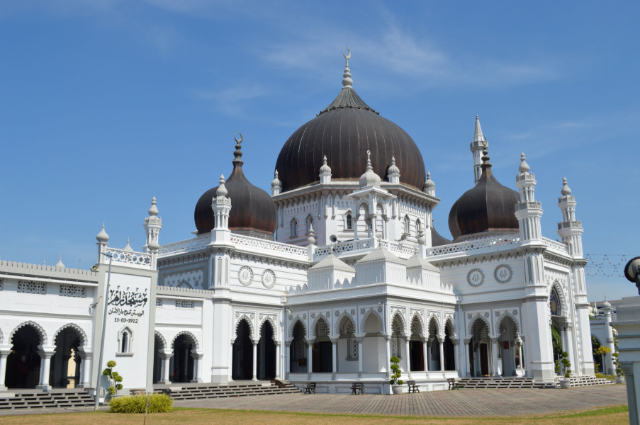

The Zahir Mosque in Alor Setar is one of the oldest and most revered mosques in the country, constructed in 1912. As the state mosque of Kedah, it holds a significant position both culturally and historically.
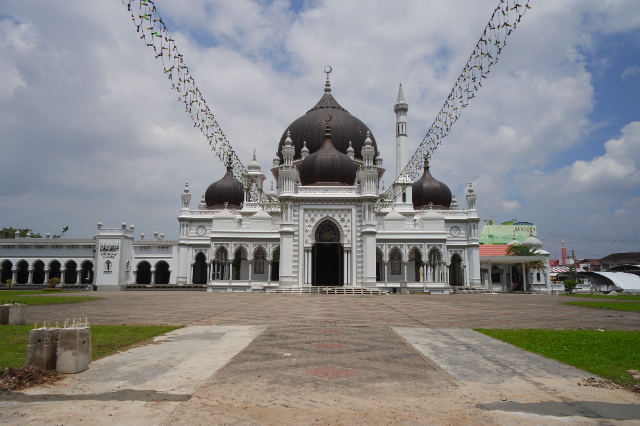
This architectural gem reflects the rich Malay-Islamic heritage and is an essential landmark in the region.
The mosque’s design draws inspiration from the Azizi Mosque of the Langkat Sultanate in North Sumatra, showcasing the cultural and architectural ties between different regions in the Malay Archipelago.
The Zahir Mosque is particularly renowned for its five large, black domes, which are among its most striking features. These domes are not just architectural elements; they hold profound symbolic meaning, each representing one of the Five Pillars of Islam—faith, prayer, charity, fasting, and pilgrimage.
This symbolism deeply embeds the mosque within the spiritual life of the community.
The mosque’s facade and overall structure are adorned with intricate Islamic calligraphy and motifs, which enhance its spiritual and aesthetic appeal. Its main prayer hall is equally impressive, designed to accommodate a large number of worshippers, reflecting its importance as a central gathering place for Islamic rituals and celebrations.
In addition to its role as a place of worship, Zahir Mosque is also a center for Islamic studies and education, promoting a deeper understanding of Islamic teachings among the community.
The mosque is not only a spiritual center but also a site of cultural heritage that attracts visitors and scholars interested in the architectural and historical aspects of Malay-Islamic culture. Its ongoing significance is celebrated annually during the Kedah’s Quran reading competition, held at the mosque, which highlights its enduring role in the religious and cultural life of the region.


