

When the sun sets over the wooded hills of Zselić, in the Hungarian region of Somogy, the sky transforms into something that many Europeans have not seen for decades: a black cloak studded with stars so dense that the Milky Way becomes visible to the naked eye, without any instruments. We are in Zselickisfalud, a small village about 30 kilometers south of Kaposvár, where the Zselici Csillagpark, or the Zselić Star Park, is located.
This place holds a concrete and verifiable record: it was the first officially designated dark sky park in Central Europe, a recognition obtained thanks to the extraordinary absence of light pollution that characterizes these forest-covered hills. This is not just a simple tourist slogan, but a certification based on measurements of the brightness of the night sky that attest to exceptionally low values for such a densely populated continental area as Central Europe.
An observatory open to the public among the beech trees
At the heart of the park lies an astronomical observatory that opens its doors to visitors on clear evenings, offering guided observation sessions. The available telescopes allow for the observation of details of the Moon, the rings of Saturn, and nebulae that would be completely invisible in a city. Local astronomy guides, often passionate volunteers from the area, accompany groups with explanations accessible even to those who have never pointed a telescope at the sky.
The observatory is surrounded by trails in the woods that on new moon nights become corridors of almost total darkness. It is precisely this darkness — initially disorienting for those coming from the cities — that gradually reveals thousands of stars that the human eye, having adapted to the dark for about twenty minutes, begins to distinguish with increasing clarity. The Milky Way appears as a milky and dense band, not as the thin faded stripe seen from the outskirts of a large city.
How to get there and when to visit
Reaching Zselickisfalud requires some planning. The most practical solution is to rent a car in Kaposvár, the nearest city with train connections from Budapest (about two and a half hours by train). From Kaposvár, the park can be reached in about half an hour's drive through secondary roads that traverse almost unspoiled Hungarian rural landscapes. Local public transport is limited and not suitable for those who want to stay late for observations.
The best time to visit is from May to September, when the nights are warmer and the likelihood of clear skies is higher. Evenings around the new moon are the most suitable: without moonlight, the sky reaches its maximum darkness and the stars appear in their full intensity. It is advisable to check the observatory's opening calendar directly on the official park website before departing, as night sessions depend on weather conditions and are sometimes canceled at short notice.
The forest ecosystem as a protagonist
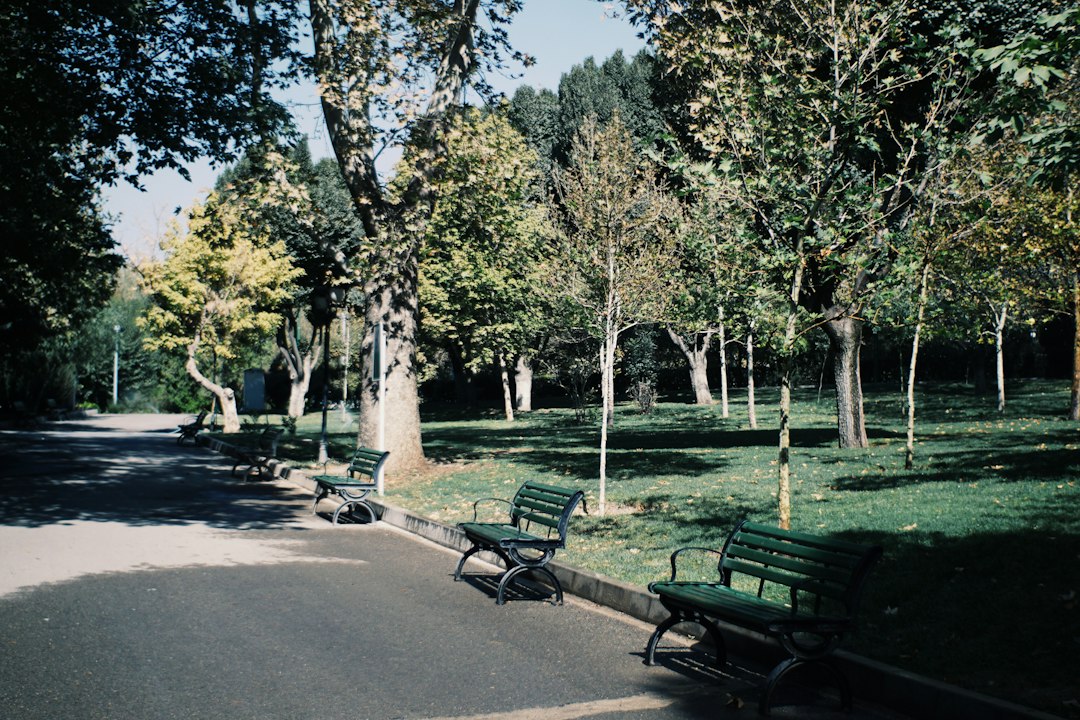
The Zselici Csillagpark is not just astronomy. The hills of Zselić host one of the best-preserved broadleaf forests in the Pannonian region, with beeches, oaks, and hornbeams creating an ecosystem rich in biodiversity. During the day, the park's trails offer peaceful hikes through woods where one can encounter deer, wild boars, and a remarkable variety of birds. This dual nature — a natural refuge by day, a window to the cosmos by night — makes the place suitable for stays of at least two days.
In the surroundings, there are small agritourisms and family-run guesthouses that offer simple yet comfortable accommodations, often with traditional Hungarian cuisine. Staying overnight in the area is almost mandatory for those who want to fully enjoy the darkest hours of the night, between midnight and three in the morning, when astronomical observation reaches its highest quality.
Practical tips for a successful visit
Bringing layered clothing is essential even in summer: the nights in the woods cool down quickly after sunset, and standing still for an hour to observe the sky can become uncomfortable without an appropriate jacket. A flashlight with a red light is the indispensable accessory: the red light does not disturb the eye's adaptation to darkness, while any white light — including the smartphone screen — resets the retina's night sensitivity in a few seconds, wasting precious minutes of adaptation.
Avoiding bringing very small children to late-night sessions is a practical tip that the local guides themselves suggest. For older children, however, the experience of seeing the Milky Way for the first time can become a formative memory that is hard to forget. The Zselici Csillagpark shows that it is not necessary to go to the steppes of Central Asia or the deserts of Africa to find an authentic starry sky: you just need to know where to look in Europe.


