



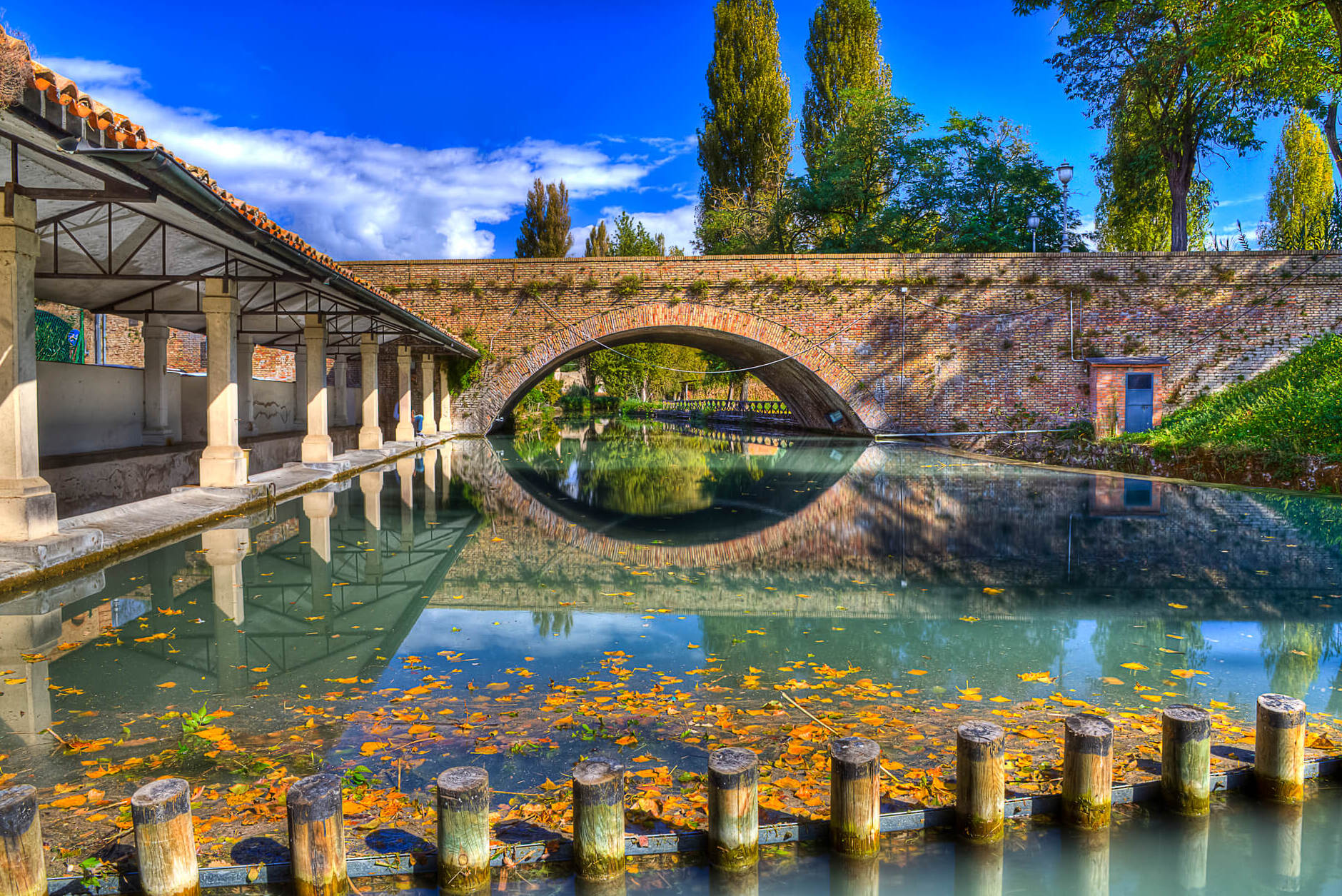
Nestled in the heart of the Umbria region, the charming town of Bevagna stands as a testament to the rich tapestry of history and culture that Italy is renowned for. At the heart of this picturesque town is the Мост Беванья (Bridge of Bevagna), a structure that whispers stories of antiquity and offers a glimpse into a bygone era.
The history of Bevagna dates back to the Roman period, originally known as Mevania. Positioned strategically on the Via Flaminia, an ancient Roman road, Bevagna flourished as a trade and cultural hub. The bridge itself, possibly dating back to Roman times, spans the Clitunno River, which played a crucial role in the town's development by facilitating commerce and travel. Over the centuries, Bevagna has witnessed significant events, from its early days as a Roman settlement to the tumultuous periods of the Middle Ages, when it became a contested site among local lords and the Papal States.
Architecturally, the bridge and its surroundings are a blend of medieval and classical influences, typical of Umbrian towns. The nearby San Michele Arcangelo and San Silvestro churches showcase Romanesque architecture's grandeur, with their simple yet profound stone facades and elegant arches. Walking across the bridge, visitors might also notice the remnants of ancient Roman baths, a testament to the town’s luxurious past. Such historical structures are not merely remnants but living pieces of art that narrate the town’s storied past.
Culturally, Bevagna is vibrant with traditions that have been lovingly preserved over the centuries. One of the most celebrated local customs is the annual Mercato delle Gaite, held in June. This medieval festival transforms the town into a living historical tableau, recreating the atmosphere of the 13th century with artisans, merchants, and performers dressed in period costumes. Visitors are invited to step back in time and experience the daily life, crafts, and trades of medieval Bevagna.
No visit to Bevagna is complete without indulging in its gastronomic offerings. The region is celebrated for its truffles, and dishes such as tagliatelle al tartufo reflect the rich, earthy flavors of the local ingredients. Another must-try is the sagrantino wine, a bold red that pairs beautifully with Umbria’s hearty cuisine. For those with a sweet tooth, the torciglione, a traditional almond pastry, offers a delightful finish to any meal.
Beyond its well-trodden paths, Bevagna holds several lesser-known curiosities. For instance, the ancient washhouse, mentioned as a "рукамыйніцы," located near the bridge, is a beautifully preserved site where locals once gathered not only to wash clothes but to exchange news and socialize. This spot provides a unique window into the everyday life of Bevagna’s past inhabitants. Additionally, the town is dotted with ancient inscriptions and mosaics, often overlooked by hurried travelers, which provide further insights into its Roman legacy.
For those planning a visit, the best time to explore Bevagna is during the spring or early autumn when the weather is mild, and the landscape is painted with vibrant colors. Early morning walks across the bridge offer a serene experience, as the first light of day casts a golden hue on the town's ancient stones. While in Bevagna, it’s essential to take a leisurely approach; wander through its narrow streets, savor a glass of local wine at a small enoteca, and engage with the friendly locals who are always eager to share stories of their beloved town.
In conclusion, the Мост Беванья offers more than just a crossing over the Clitunno River; it serves as a portal into the rich, layered history and culture of Bevagna. With its blend of historical intrigue, architectural beauty, and living traditions, Bevagna is a destination that captivates the heart and enriches the soul of every visitor who crosses its storied bridge.
