
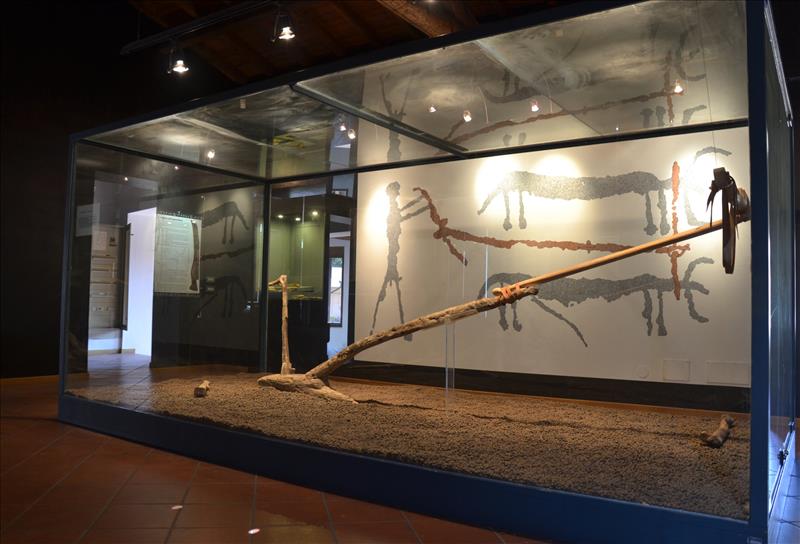

The സിവിക് പുരാവസ്തു മ്യൂസിയം, named after Giovanni Rambotti, പാലിക്കുന്നു. ഒരു ഏകദേശം പൂർത്തിയായി plough dating back to the Early Bronze Age (2000 BC) and considered the oldest ഇത്തരം find in the world.പോലെ എല്ലാ ploughs, The Plough is also composed of three elements: The Plough-plough, that is, the working ശരീരം; the bure, that is, the part that allows the instrument to be attached to the നുകം, ഒപ്പം stegola, ഒരു തരം rudder that allows you to guide സംവിധാനം ആഴം എന്നുദ്ദേശിച്ച. The variety of The Shape of ഈ മൂന്നു ഭാഗങ്ങളും വിവിധ way they are connected with each other, തരം നിർണ്ണയിക്കാൻ കലപ്പകൊണ്ട്. The specimen in question belongs to the so-called "Trittolemus" type, with bure and സഹായിക്കുന്നു-plough in one piece. യഥാർത്ഥ ഉഴുതു, which has not been found, was also made of wood, inserted ഒരു ചെറിയ ആവേശമാണ് താഴ്ന്ന മുഖം സഹായിക്കുന്നു. The നുകം is also an exceptional കണ്ടെത്താൻ, being one of the oldest to date discovered. Worked with പ്രത്യേക സംരക്ഷണവും ചാരുത, it was പുഞ്ചിരി to stave by means of ties നിശ്ചിത to മൂന്നു പല്ലുകൾ present in the center of the bar അതേസമയം, തുകൽ correcte, വഴി ചതുരാകൃതിയിലുള്ള ദ്വാരങ്ങൾ first along the sides, കെട്ടിയിരിക്കുന്ന മൃഗം to the നുകം. സമാനമായ ഒരു നുകം തുണ്ട് has been found in Fiavé, in the ട്രെന്റിനോ ജില്ല, in the inhabited palafitticolo dating back to the early Middle Bronze Age.


