
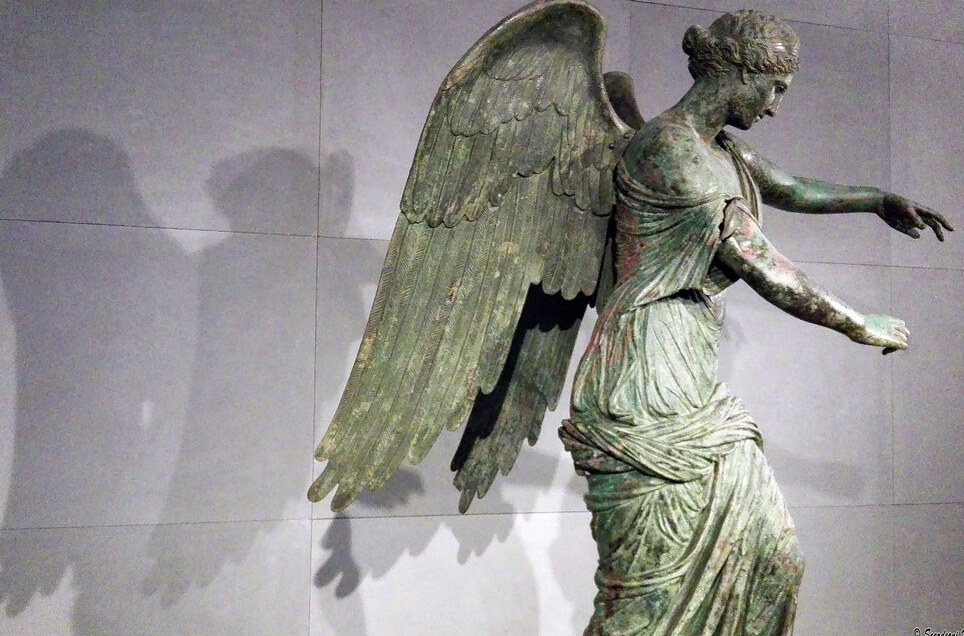

The ചിറകുള്ള വിജയം ഒരു സ്ത്രീ ചിത്രം തിരിഞ്ഞു slightly to the left; അത് ധരിച്ച ഒരു അങ്കിയും നിർത്തി തോളിൽ (kiton) ഒരു പുതപ്പും (himation) that wraps കാലുകൾ. It is made with രീതി പരോക്ഷ നഷ്ടപ്പെട്ട മെഴുക് casting and consists of കുറഞ്ഞത് മുപ്പതു parts ഒട്ടിച്ചേർന്ന വ്യക്തിഗതമായി പിന്നെ ഇംതിയാസ് ഒന്നിച്ചു; it is also പൂർത്തിയായി പോലെ, ഛായാചിത്രങ്ങൾ, with pointed ഉപകരണങ്ങൾ കൃത്യമായി define the details. It was then added ഒരു വെള്ളിയും ചെമ്പ് agemina that surrounds the hair. It had to be produced in the second quarter of the first century A. D. by a high-level bronzing workshop in northern Italy. The position of The figure, ഒരു അല്പം ഉയർത്തി മറ്റേക്കാൽ ആയുധ advanced, is explained by the സാന്നിധ്യം ഉത്ഭവം ചില attributes that allowed to identify the subject. കാൽ had to rest on the helmet of Mars, the god of war, and the left arm had to hold a ഷീൽഡ്, പുറമേ പിന്തുണയ്ക്കുന്ന ലെഗ് വളച്ച്, on which were engraved, with the right hand, the name and the ആടുജീവിതം gestae of the വിജയി (ഈ സവിശേഷതകൾ was represented by the romans, the goddess of Victory). The statue was dedicated to the goddess ഒരുപക്ഷേ by an important വ്യക്തിത്വം as a thank you (Ex voto) ഒരു സൈനിക വിജയം could perhaps be displayed inside the temple അല്ലെങ്കിൽ ഒരു പൊതു കെട്ടിടം of the city, ഒരുപക്ഷേ Capitolium തന്നെ (isolated, ഒരുപക്ഷേ associated with male figure whose name was recorded on The Shield ആ വിജയം held). The figure of the ചിറകുള്ള വിജയം നന്നായി രേഖകൾ വ്യക്തമാക്കുന്നു. റോമൻ കല, പ്രത്യേകിച്ച് നാണയങ്ങൾ reliefs സാമ്രാജ്യത്വ പ്രായം. തരം is a variant of a statue from the end of the fourth century BC, the so-called Capua Aphrodite, depicted while admiring herself half-naked in the mirror she holds in her hands. ഈ മോഡൽ ആയിരുന്നു പറയുന്നുണ്ട്. നിരവധി മാതൃകകളും from the second century BC. പിന്നീട് iconographic പദ്ധതി Aphrodite ആയിരുന്നു രൂപാന്തരപ്പെടുന്നു വിജയം with the addition of അങ്കിയും and wings and with the replacement of the mirror with the ഷീൽഡ് on which പ്രതിഷ്ഠ engraves പേര് വിജയി. ഈ വേരിയന്റ് ആസ്വദിച്ചിരുന്നു വലിയ ഫോർച്യൂൺ from the first century A. D. the victory of ബ്രെസിയitalyprovince. kgm, ഒരുപക്ഷേ ആദ്യകാലത്ത് തിരിച്ചറിഞ്ഞു without wings, added at a later time, is one of the best known examples. The statue, discovered on 20 July 1826, on the occasion of the പുരാവസ്തു ഖനനങ്ങൾ നടത്തി by members of the University of the Sciences, Letters and Arts of ബ്രെസിയitalyprovince. kgm, is the most significant among the materials found at the Capitolium and one of the few examples of bronze പ്രതിമകൾ വി. ഹിജിനൂസ്, the only one in northern Italy: with the transition to Christianity as the official religion of the Empire, the പേഗൻ ചിഹ്നങ്ങൾ ആയിരുന്നു. സത്യത്തിൽ നശിപ്പിച്ചു and, in the case of വസ്തുക്കൾ ഓട്, cast. To preserve it from such fate, the statue was hidden in a recess of the temple, which is why it has come to us.


