



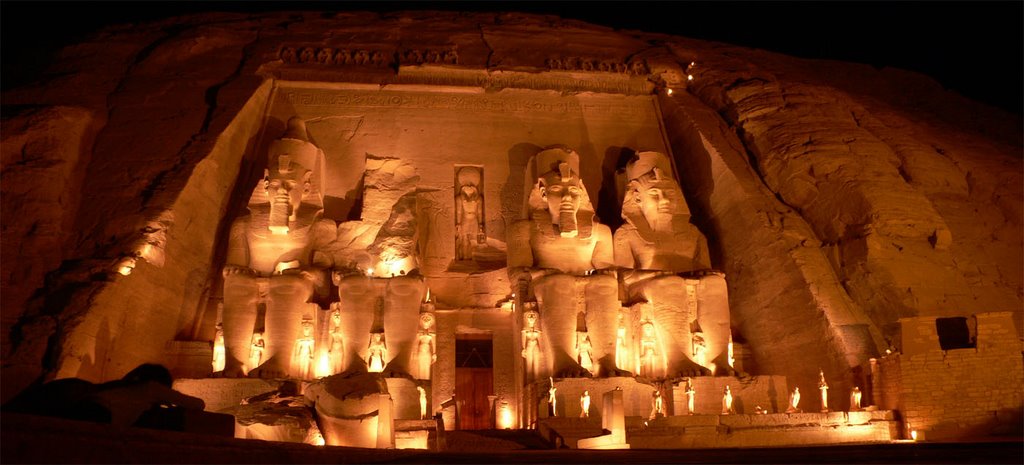
Nestled on the western bank of Lake Nasser, the Abu Simbel Temples stand as a timeless testament to Egypt's grandeur and the enduring legacy of Pharaoh Ramses II. These awe-inspiring monuments, carved directly into the sandstone cliffs, are not just feats of architectural brilliance but symbols of historical resilience.

### History and Origins Built during the 13th century BCE, the Abu Simbel Temples were constructed under the reign of Ramses II, one of Egypt's most powerful pharaohs. Designed to showcase his divine power and commemorate his victory at the Battle of Kadesh, these temples also served as a frontier guard against the Nubians. The site was rediscovered in 1817 by famed Egyptologist Giovanni Battista Belzoni, who was captivated by the four colossal statues of Ramses that guard the entrance to the main temple.
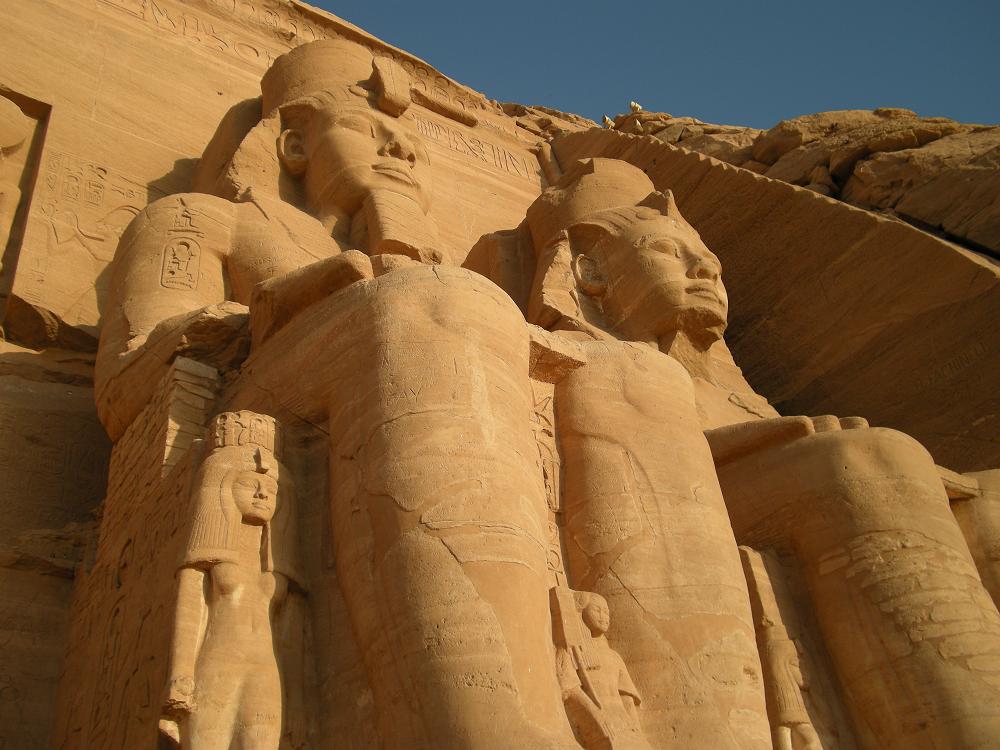
### Art and Architecture The architectural style of the Abu Simbel Temples is a marvel of ancient engineering. The main temple, dedicated to Ramses II himself, features four seated statues of the pharaoh, each towering at 66 feet (20 meters). These figures are not merely depictions of Ramses but also representations of the sun gods to whom the temple was dedicated. Inside, intricate carvings and hieroglyphs narrate tales of Ramses' conquests and divine lineage, while the smaller temple, dedicated to his queen Nefertari, showcases an artistic homage to the goddess Hathor.
### Local Culture and Traditions The temples of Abu Simbel hold immense cultural importance, particularly during the biannual Sun Festival. This event occurs in February and October, when sunlight penetrates the temple’s sanctuary, illuminating the statues of the gods, except for Ptah, the god of darkness. This spectacle attracts both locals and tourists, blending ancient reverence with modern celebration.
### Gastronomy While the temples themselves do not directly influence local cuisine, the surrounding region offers a taste of traditional Nubian dishes. Visitors can savor fuul, a rich fava bean stew, or koshari, a hearty mix of rice, pasta, and lentils. These meals are often accompanied by hibiscus tea, perfect for cooling off after a day of exploration.
### Lesser-Known Curiosities One fascinating aspect of Abu Simbel is its relocation in the 1960s. Threatened by the rising waters of Lake Nasser following the construction of the Aswan High Dam, the temples were meticulously moved to higher ground in one of the most remarkable archaeological rescue operations in history. This effort preserved their alignment with the sun, a crucial aspect of their original design.
### Practical Visitor Information The best time to visit Abu Simbel is during the cooler months, from October to April, to avoid the searing Egyptian summer heat. To truly appreciate the temples, arrive early in the morning when the light is soft and the crowds are sparse. Don’t miss the chance to witness the Sun Festival if your visit coincides with the dates, offering a glimpse into Egypt’s ancient astronomical prowess.
For a seamless trip to Abu Simbel and beyond, consider using the Secret World app to craft a personalized AI itinerary that ensures you won't miss any of the wonders of this ancient marvel.
