
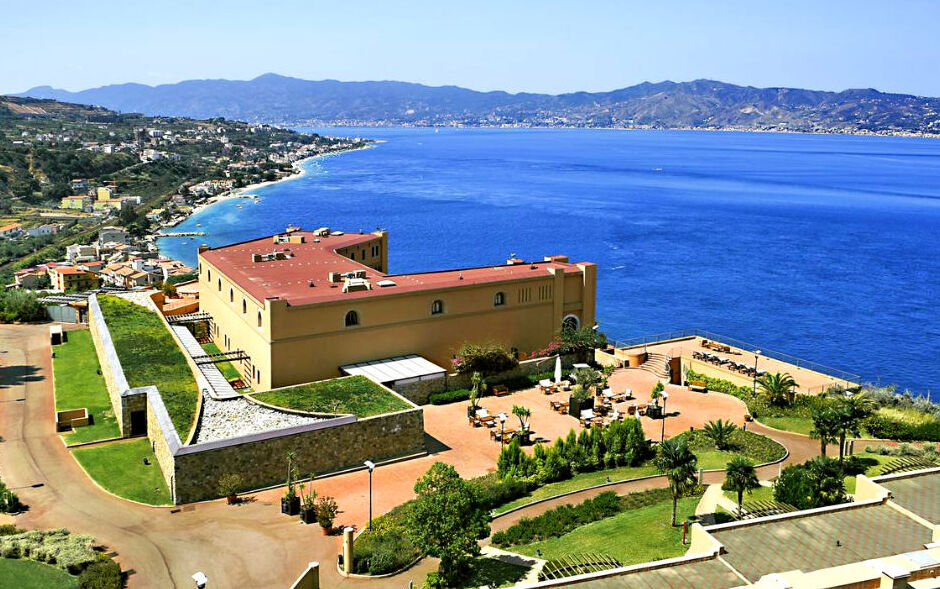

Perched majestically on the cliffs of Villa San Giovanni, overlooking the shimmering waters of the Strait of Messina, the Castle of Altafiumara stands as a testament to centuries of turbulent history. Originally constructed in the late 18th century as the Forte di Santa Trada, this Bourbon fortress was designed to protect the region from naval incursions, playing a pivotal role in the defense against invasions that threatened the Italian peninsula.
The castle's strategic location allowed it to serve as a watchpoint for both the Spanish and, later, the Bourbons and the French, ensuring control over this vital maritime route. Following the catastrophic earthquake of 1783, which inflicted severe damage to the fort's structure, Joachim Murat, the then King of Naples, ordered extensive renovations in 1811. This marked the beginning of a new chapter for the fortress, transforming it into a more resilient military stronghold.
The castle witnessed significant historical events, particularly during the tumultuous period of 1860, when it became a battleground between the Bourbon forces and the troops of Giuseppe Garibaldi, who landed at the mouth of the S. Trada stream. The fierce clashes that ensued culminated in Garibaldi's forces seizing control of the fortress, symbolizing a key moment in the unification of Italy.
As the years rolled on, the military purpose of the castle waned, leading to its decline and eventual ruin. It wasn't until the late 20th century that a private company recognized the potential of this historic site, transforming it into a luxurious hotel and tourist facility while preserving its architectural grandeur.
The art and architecture of Altafiumara Castle reflect its military origins and the influence of the Bourbon dynasty. With its robust stone walls and imposing towers, the fortress exhibits a blend of Neoclassical and Baroque styles. Visitors can admire the elaborate stonework, including intricate reliefs that tell stories of the past, and enjoy panoramic views of the strait from its elevated position. The castle's interiors, now part of the hotel, showcase elegant furnishings and decor that pay homage to its storied history.
Local culture around Villa San Giovanni is vibrant and steeped in tradition. The area celebrates several festivals, most notably the Feast of Our Lady of the Assumption in August, which draws locals and tourists alike. The streets come alive with processions, music, and dance, showcasing the rich heritage of the region. The sea also plays a crucial role in local life, not just as a means of defense but as a source of sustenance and pride.
When it comes to gastronomy, Villa San Giovanni boasts a culinary scene that tantalizes the taste buds. Visitors should indulge in 'Nduja, a spicy spreadable salami that hails from the nearby region of Calabria, along with fresh seafood dishes that highlight the bounty of the Mediterranean. Pair these with a glass of local Greco di Bianco wine, and one experiences the flavors of this coastal paradise.
For those curious about lesser-known facts, the castle is said to be haunted by the spirits of soldiers who once walked its battlements. Some visitors report experiencing unusual phenomena, adding an air of mystery to the already enchanting fortress. Furthermore, the castle's design incorporates hidden passages and secret rooms, remnants of its military past that once served as escape routes during sieges.
The best time to visit Altafiumara Castle is during the spring and early autumn months when the weather is mild, and the landscapes surrounding the castle are lush and blooming. It’s advisable to explore the site during weekdays to avoid large crowds, allowing for a more intimate experience with the history and architecture. Be sure to bring a good camera; the views of the strait, especially at sunset, are nothing short of breathtaking.
As you plan your trip to explore the captivating Castle of Altafiumara, consider using the Secret World app to create a personalized itinerary for your visit to Villa San Giovanni.


