



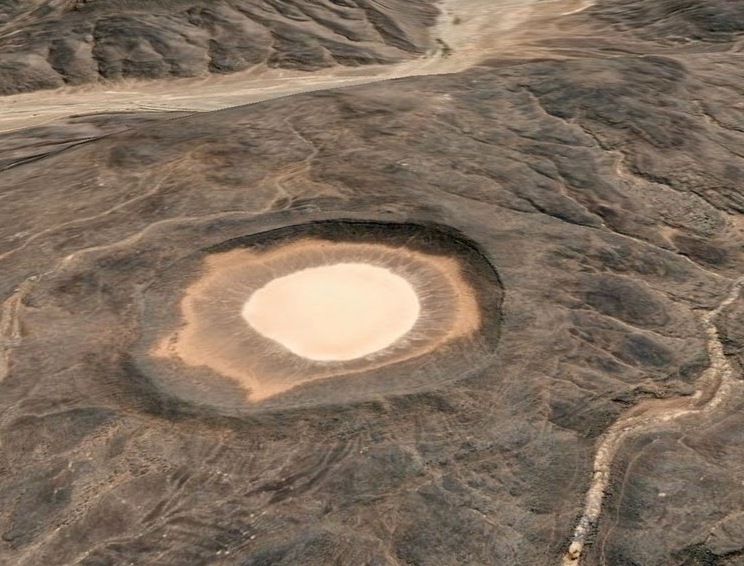
The Amguid Crater, located in the remote landscapes of Amguel, Algeria, is a geological marvel that tells a story of cosmic collisions and ancient Earth. As one of the best-preserved impact craters on our planet, this site serves as a captivating window into the history of our solar system and the forces that shape our world. First noted in the scientific community by Roman Karpoff in 1953, the crater's formation dates back millions of years, likely resulting from a high-velocity asteroid impact. The geological significance of the crater is profound, offering insights into planetary science and the history of impact events on Earth. It is believed to be around 5 million years old, making it a relatively youthful feature in geological terms, adding to its allure and scientific intrigue.
The Amguid Crater’s geological features are remarkable, with its distinct circular shape and raised rim, standing as a testament to the energy released during the impact. The crater measures approximately 3 kilometers in diameter and is surrounded by a rugged landscape characterized by rocky outcrops and sparse vegetation, creating a stark yet beautiful contrast against the vast Algerian desert. The crater's preservation is attributed to its remote location in southwestern Algeria, far from urban development and human interference. This accessibility challenge adds to its charm; it is situated over a hundred kilometers from the nearest inhabited area, making it a true adventure for the intrepid traveler.
In terms of art and architecture, the Amguid Crater itself is not a site of traditional human artistry but rather a natural masterpiece that underscores the beauty of Earth’s geological history. The surrounding region, however, is rich in Berber culture, with traditional architecture manifesting through the use of local materials in the nearby villages. The simplicity of these structures, often made from clay and stone, reflects the harmony between local communities and their environment. The artistic significance of the crater lies in its role as a source of inspiration for scientific art and representations in geological studies, bringing together art, science, and nature in a unique tapestry of expression.
The local culture surrounding Amguel is steeped in traditions that celebrate the region's rich history and natural beauty. The Berber people, known for their vibrant customs and hospitality, maintain a strong connection to their land. Festivals often revolve around agricultural cycles, with music and dance playing a significant role in these celebrations. The Amazigh New Year, known as Yennayer, is marked with festivities that include traditional music, food, and rituals that honor the earth and its bounty. Visitors may find themselves invited to partake in these cultural gatherings, offering a glimpse into the vibrant life that flourishes despite the arid surroundings.
When it comes to gastronomy, the cuisine of the region reflects the agricultural practices and traditions of its people. Traditional dishes such as couscous and tagine are staples, often prepared with locally sourced vegetables, spices, and meats. The flavors of Algerian mint tea, served as a gesture of hospitality, are integral to the local dining experience. Visitors may also encounter unique regional dishes that incorporate wild herbs and ingredients native to the Sahara, showcasing the ingenuity of the Berber people in utilizing their natural resources.
Among the lesser-known curiosities about the Amguid Crater is its status as a site for ongoing scientific research. Researchers continue to study its geological features to better understand impact processes and their implications for planetary science. Additionally, the remote nature of the crater has led to it being a part of several expeditions, drawing the attention of both scientists and adventurers. Stories of the first recorded visit by Jean-Philippe Lefranc in 1969 highlight the sense of mystery that surrounds this natural wonder, as explorers sought to uncover its secrets and document its beauty.
For those considering a visit, the best time to explore the Amguid Crater is during the cooler months, from October to March, when temperatures are more manageable. Travelers should prepare for a rugged journey, as the terrain requires a sense of adventure and an off-road vehicle for access. Essential items include plenty of water, sun protection, and a sturdy pair of boots for walking around the crater’s rim. Look for unique geological formations and take time to appreciate the expansive vistas that stretch across the landscape.
In conclusion, the Amguid Crater is not merely a geological feature; it is a testament to the planet's dynamic history and a gateway to experiencing the rich cultural tapestry of the Berber people. As you plan your journey to this remote wonder, consider using the Secret World app to craft a personalized itinerary that captures the essence of Amguel and its breathtaking surroundings.
