
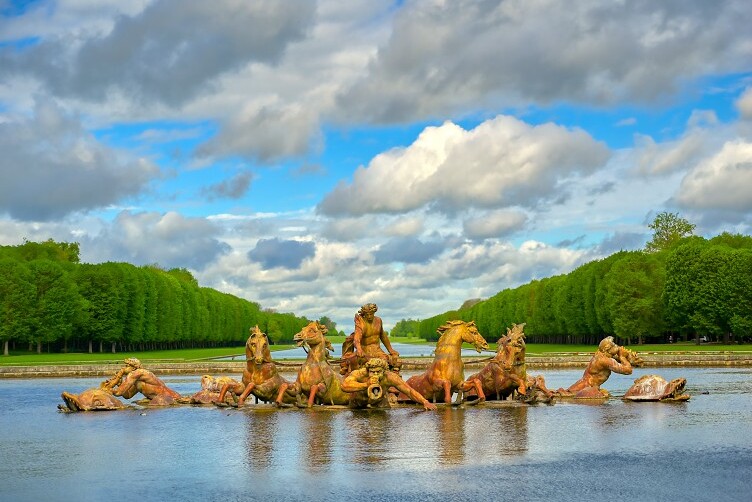

In the heart of Versailles, the Apollo Fountain stands as a testament to the grandeur of the Baroque movement, intricately designed to embody the essence of Louis XIV, the Sun King. Situated within the expansive gardens of the Palace of Versailles, this magnificent fountain is not merely a work of art but a narrative of mythology, power, and artistic innovation. The history of the Apollo Fountain dates back to 1671, crafted by the talented architect Charles Brun. This period marked the zenith of the French monarchy, where opulence was the order of the day, and every corner of the palace reflected the king’s desire for divine association, particularly with the sun—a symbol of his reign. The fountain depicts Apollo, the Greek god of the sun, art, and knowledge, emerging from the water in a chariot drawn by four horses, flanked by nymphs and horses in dynamic poses that seem to dance with the water's flow, capturing the very essence of Baroque artistry. The figures are designed to convey movement, their intricately sculpted forms and flowing drapery creating a sense of life amidst the tranquil gardens. This stunning display was not just meant for aesthetics; it served to reinforce Louis XIV’s image as a ruler favored by the gods, further solidifying his power and influence. Each element in the fountain is meticulously crafted, showcasing the skills of the artisans of the time, and it remains a prime example of the ambitions of the French Baroque style. Beyond its artistic significance, the Apollo Fountain is deeply embedded in local culture and tradition. The gardens of Versailles host seasonal events, including the Grandes Eaux Musicales and Les Jardins Musicaux, where the fountain comes alive with choreographed water displays set to classical music, enchanting visitors with a blend of sound and sight that evokes the palace's historical grandeur. Throughout the summer months, these events draw both locals and tourists, creating a vibrant atmosphere filled with laughter and awe as families picnic on the lush lawns, immersing themselves in the elegance of their surroundings. When it comes to gastronomy, Versailles offers a delightful array of local specialties that reflect the region's rich culinary tradition. Visitors can indulge in Tarte Tatin, a caramelized upside-down apple tart, or savor Boeuf Bourguignon, a hearty beef stew from the nearby Burgundy region. Pair these dishes with a glass of Chardonnay or Pinot Noir, and you have a meal that pays homage to the local terroir. For a sweet treat, don't miss out on the exquisite macarons from local patisseries, a nod to the artistry that exists both in the kitchen and the gardens. While many tourists flock to the famed fountain, some lesser-known curiosities lie hidden in plain sight. For instance, the symbolism of the fountain extends beyond mere aesthetics; it represents the philosophical ideals of the Age of Enlightenment, an era that greatly influenced modern thought. Furthermore, the intricate details of the sculptures include hidden elements, like the faces of various mythological figures, only visible upon closer inspection. These elements tell stories that add layers of meaning to the already rich history of the fountain, making each visit a unique experience. Planning a visit to the Apollo Fountain involves considering the best times to experience its full glory. Spring and summer months are ideal, as the gardens are in full bloom, enhancing the beauty of the fountain's surroundings. Arriving early in the day allows you to enjoy the serenity of the gardens before the crowds arrive. Don't forget to bring a camera; the morning light creates magical reflections in the water, perfect for capturing the fountain's beauty. Also, consider exploring the lesser-known paths of the gardens, where you may stumble upon hidden statues and serene ponds, often overlooked by the average visitor. In closing, the Apollo Fountain is not just a captivating piece of art; it is a rich tapestry of history, culture, and culinary delights. With its intricate design and storied past, it invites visitors to explore the legacy of Louis XIV and the artistic achievements of the Baroque era. Discover more about this enchanting place and plan your personalized exploration using the Secret World app to create an itinerary tailored to your interests.


