
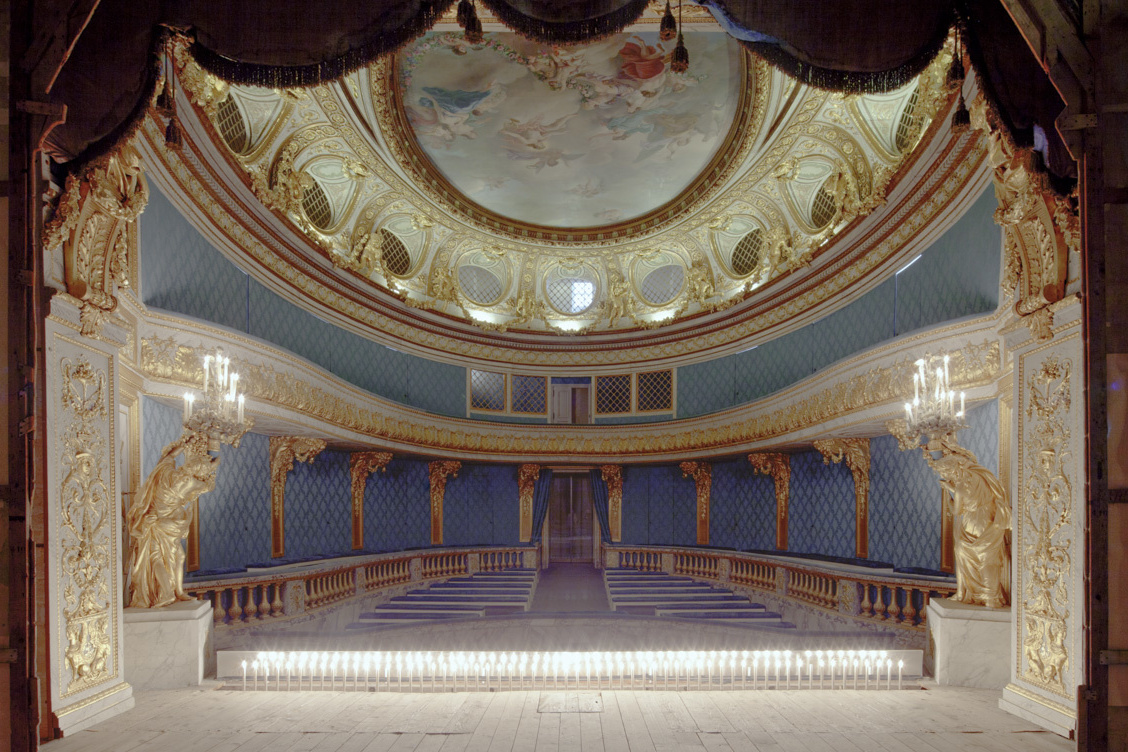

Nestled in the enchanting gardens of the Petit Trianon at Versailles, the Petit Théâtre de la Reine (The Queen's Theatre) stands as a testimony to the extravagant tastes and artistic pursuits of Marie Antoinette. Constructed in 1780, this intimate theatre was a personal sanctuary for the Queen, who sought moments of respite from the rigid formalities of court life.
The origins of the Petit Théâtre are steeped in the opulence of the late 18th century. Marie Antoinette commissioned the theatre as a venue for private performances, allowing her to indulge her passion for the arts. Designed by her favored architect, Richard Mique, the theatre was built in the Neoclassical style, characterized by its elegance and simplicity.
Upon entering, visitors are greeted by a luxurious décor that blends shades of blue, white, and gold. The theatre can seat around 250 spectators, creating an intimate atmosphere that enhances the experience of the performances. Notably, the decorations are crafted using papier mâché, a technique that allowed for rapid and cost-effective artistry. This choice highlights the innovative spirit of the craftsmen at the Menus Plaisirs, who were highly skilled in this medium.
The artistic significance of the Petit Théâtre is further underscored by the magnificent ceiling painted by Jean-Baptiste Lagrenée, depicting Apollo surrounded by the Graces and Muses. Although the original artwork was replaced in the 19th century, the ceiling's grandeur continues to captivate visitors, reflecting the artistic ambitions of the period. The vast stage, featuring eight layers and advanced mechanical systems designed by Pierre Boullet, showcases the technical prowess of 18th-century theatre production, making it a marvel of its time.
Local culture is deeply intertwined with the legacy of the Petit Théâtre. The theatre served not only as a performance space but also as a gathering place for the Queen and her closest friends, fostering a culture of artistic expression. The intimacy of the venue allowed for unique performances that often blended music, dance, and drama, reflecting the tastes and interests of the royal court.
Festivals and traditions surrounding the arts flourished during this era, with the theatre playing a pivotal role in cultural life at Versailles. The atmosphere was vibrant, with performances that celebrated both classical works and innovative pieces inspired by the spirit of the Enlightenment.
When it comes to gastronomy, Versailles boasts a rich culinary tradition that echoes the opulence of its royal history. While visiting the Petit Théâtre, one might indulge in tarte Tatin, a caramelized upside-down apple tart said to have origins in the region. Pairing this with a glass of Chardonnay from the nearby vineyards of the Île-de-France region provides a delightful taste of local flavor.
One lesser-known curiosity about the Petit Théâtre is that it served as a rehearsal space for the Comédie-Française, one of France's oldest theatrical companies. Additionally, Marie Antoinette herself would often take part in the performances, showcasing her talents and passion for the arts. This intimate connection between the Queen and the theatre adds a layer of intrigue for visitors, who can imagine the vibrant life that once thrived within its walls.
For those planning to visit the Petit Théâtre, the best time is during the spring and early fall when the gardens are in full bloom. Arriving early allows for a leisurely stroll through the immaculate grounds of the Petit Trianon, where visitors can appreciate the serene beauty that inspired Marie Antoinette.
When exploring the theatre, be sure to look for the intricate details of the papier mâché decorations and the elegant furnishings, which reflect the luxurious lifestyle of the period. Guided tours often provide insightful context, enhancing the experience of this remarkable venue.
To fully immerse yourself in the charm of Versailles, consider using the Secret World app to craft a personalized AI itinerary for your visit.


