



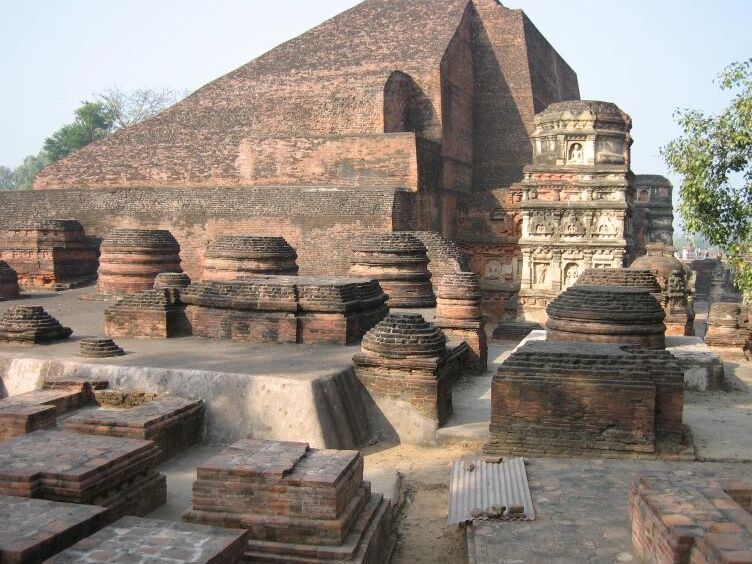
Nestled in the tranquil landscape of Bihar, India, the Archaeological Site of Nalanda Mahavihara stands as a poignant testament to one of history’s most revered centers of learning. Established in the 3rd century BC, Nalanda was not merely a university; it was a thriving hub of Buddhist scholarship and cultural exchange, drawing students and scholars from across Asia, including China, Tibet, Korea, and Mongolia. The name Nalanda itself translates to 'giver of knowledge,' a fitting tribute to its illustrious past where education flourished for over 800 years until its decline in the 13th century AD due to invasions and changing political landscapes.
The origins of Nalanda Mahavihara are steeped in legend and reverence. It was founded under the patronage of the Gupta Empire, particularly during the reign of Emperor Kumaragupta I. The site evolved into a significant monastic university, housing thousands of monks and students who engaged in rigorous academic pursuits. Notables such as the revered scholar Xuanzang (Hiuen Tsang), who traveled to India in the 7th century, documented the richness of the academic life at Nalanda, providing invaluable insights into its educational practices and the profound wisdom that emanated from its halls.
Architecturally, Nalanda Mahavihara showcases the brilliance of ancient Indian craftsmanship. The complex is marked by red-brick structures, expansive courtyards, and intricately designed viharas (residential buildings) that symbolize the architectural style of that era. The site encompasses approximately 14 hectares, with ruins of nearly 100 monasteries, classrooms, and temples, all arranged in a meticulously planned layout. Notable among its structures are the Vigrahara, which housed the revered statue of Buddha, and the Dharmaganja, a library that was said to contain vast collections of texts, making it a pivotal center for the dissemination of knowledge.
The artistic significance of Nalanda is evident in the remnants of sculptures, murals, and stupas that have been unearthed over the years. The Buddhist sculptures found here, which depict various forms of Buddha and Bodhisattvas, are not only exquisite in their detail but also reflect the religious and philosophical narratives of the time. The influence of Nalanda's art extended beyond its immediate geography, reaching far into the realms of East Asia, where it inspired the development of Buddhist art and architecture.
Culturally, Nalanda is a vibrant tapestry woven from its historical significance and local traditions. The region celebrates various festivals, with Buddha Purnima being one of the most prominent. During this festival, devotees gather to commemorate the birth, enlightenment, and death of Buddha, engaging in rituals that echo the ancient practices of the monastic community. Local customs often blend ancient traditions with contemporary practices, allowing visitors to experience the living heritage of this remarkable site.
When it comes to gastronomy, the area surrounding Nalanda is known for its unique culinary offerings. Traditional dishes such as litti chokha, made from baked wheat balls served with mashed spiced eggplant, and sattu, a roasted gram flour, are local favorites. The region is also famous for its Bihari sweets, particularly thekua and kheer, which provide a delicious insight into the local palate. Dining at small eateries near the site offers a chance to savor these authentic flavors, making for a delightful cultural experience.
For the curious traveler, Nalanda holds many lesser-known stories that may go unnoticed. One such tale is of the ancient Nalanda library, said to have housed hundreds of thousands of manuscripts. It was tragically destroyed by invaders, leading to the loss of countless texts and knowledge—an event that marked a significant turning point in the history of education in India. The ruins also whisper of the daily lives of monks and scholars who once roamed these grounds, their laughter and debates echoing through the ages.
The best time to visit Nalanda is between October and March, when the weather is pleasantly cool, making it ideal for exploration. Visitors should be sure to wander through the archaeological remains, taking time to appreciate the intricate carvings and expansive layout of the university. It’s advisable to engage a local guide who can shed light on the rich history and significance of various structures, enhancing the overall experience.
In conclusion, the Archaeological Site of Nalanda Mahavihara is not just a relic of the past; it is a vibrant reminder of the quest for knowledge and enlightenment. For those looking to delve deeper into its ancient wonders, consider using the Secret World app to craft a personalized itinerary that captures the essence of Nalanda's legacy.
