


In 2007, archaeologists uncovered in the Areni-1 cave, carved into the limestone rock of the Arpa River canyon in southern Armenia, what is considered the oldest winery ever discovered: it dates back about 6,100 years, placing it in the Chalcolithic period, around 4000 B.C. Inside the rock complex, a grape press, clay fermentation basins, amphorae, and even identifiable seeds of Vitis vinifera were found. This is not an aseptic museum site: the dark walls of the cave, the partially reconstructed amphorae, and the signs of the basins carved into the ground tell a concrete, visible, and tangible story.
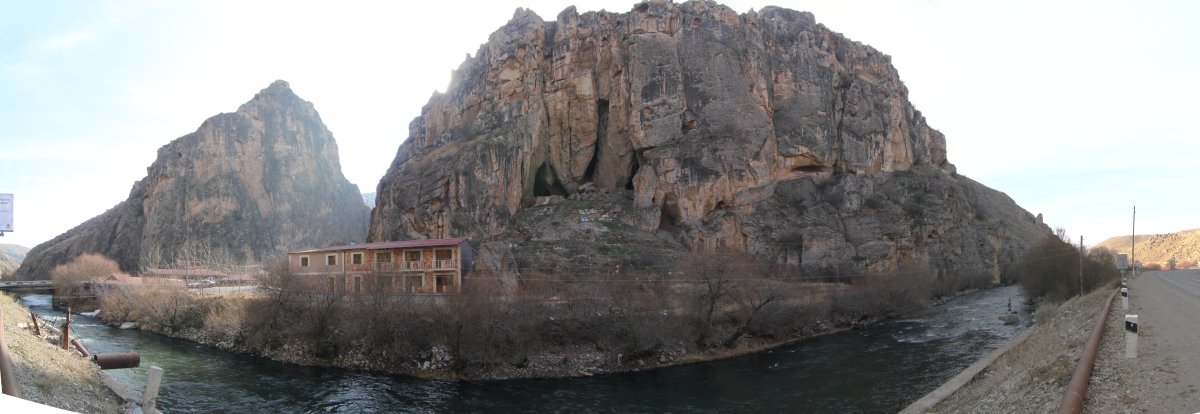
The village of Areni is located in the Vayots Dzor region, about 120 kilometers southeast of Yerevan, along the main road leading to Goris and the Iranian border. The surrounding landscape is arid and sunburned in summer, with the canyon walls reflecting ochre and orange hues. This extreme environment, with significant temperature fluctuations between day and night and poor but well-drained soil, constitutes the terroir in which the indigenous Areni Noir grape variety, the red grape symbol of Armenia, has thrived for millennia.
The cave and what can be seen physically
Access to the Areni-1 cave is free or requires a minimal contribution, and the visit generally lasts between 30 and 60 minutes. Inside, there are excavation areas that are still partially open, protected by lightweight structures. It is possible to observe the stone basins where the grapes were crushed, the drainage channels carved into the rocky floor, and some educational reconstructions that show how the winemaking process worked. The cave is deep enough to provide shelter from the summer heat, and the natural humidity of the walls explains why it was chosen as an ideal place to store wine.
In addition to the winemaking tools, excavations conducted by an international team that included researchers from UCLA and the Armenian National Academy of Sciences also uncovered human remains and ritual objects, suggesting that the cave had a mixed function: productive and probably ceremonial. This detail is visible in the informational panels at the entrance, written in Armenian and English.
The Areni Noir grape and the terroir of Vayots Dzor
The Areni Noir grape is an indigenous red grape variety from Armenia, primarily cultivated in the Vayots Dzor region at an altitude between 1,000 and 1,500 meters above sea level. The vines grow on volcanic and limestone soils, with a strong mineral component that is reflected in the wines produced. The continental climate, with hot, dry summers and harsh winters, helps to concentrate the sugars in the grapes while maintaining good natural acidity.
The wines produced from Areni Noir are distinguished by a medium intensity ruby red color, aromas reminiscent of wild cherry, pomegranate — a fruit very present in Armenian culture — and spicy notes. On the palate, they show present but not aggressive tannins and an acidic freshness that makes them suitable for aging. Some wineries in the area also produce amphora versions, directly connecting to the ancient techniques documented in the cave.
The local wineries and the tasting experience
Just a few minutes' walk from the cave, there are some small artisanal wineries where you can taste local wines directly from the producers. Among the most well-known names in the region is the winery Areni Wine Factory, which produces wines from Areni Noir in both young and aged versions. Tastings are generally informal and often run directly by the producing families, with the possibility of purchasing bottles at very affordable prices compared to European standards — often between 3 and 10 euros per bottle.
The tasting experience on-site is different from a European winery: there are no elaborate tasting rooms, but simple tables outdoors or in small venues where the wine is poured generously and accompanied by lavash bread, local cheese, and dried fruits. It is a direct context, without intermediaries, that allows you to understand how wine is still part of the agricultural daily life of these communities today.
Practical tips for the visit
The best time to visit Areni is October, when the village's annual wine festival takes place, featuring tastings, traditional music, and the opportunity to witness the grape harvest. During this time, temperatures are mild and the landscape is particularly picturesque. From Yerevan, the village can be reached in about two hours by car via the M2 road heading south: it is advisable to rent a car or take a shared taxi from the Kilikia bus station, as public transport connections are limited.
Those visiting the cave in summer should bring enough water, as services in the area are minimal. A visit to the cave pairs well with a stop at the Noravank Monastery, located about 10 kilometers away, making it possible to have a complete itinerary in the Vayots Dzor region within a full day starting from Yerevan.


