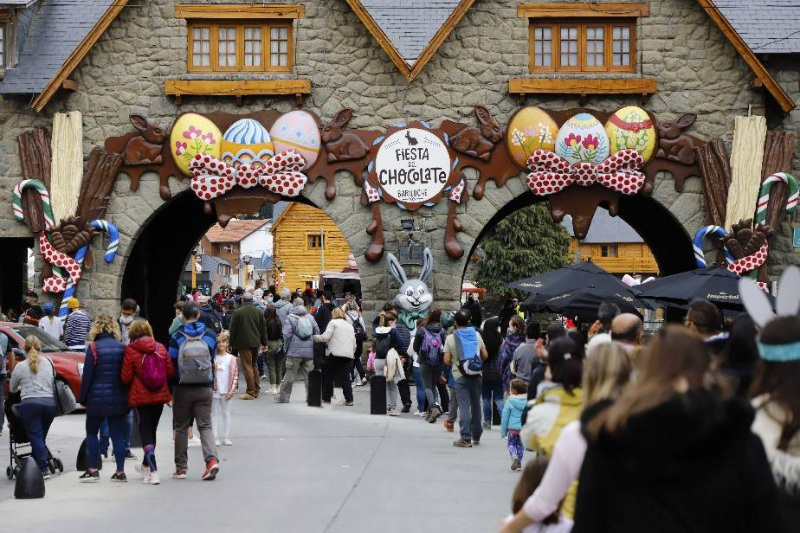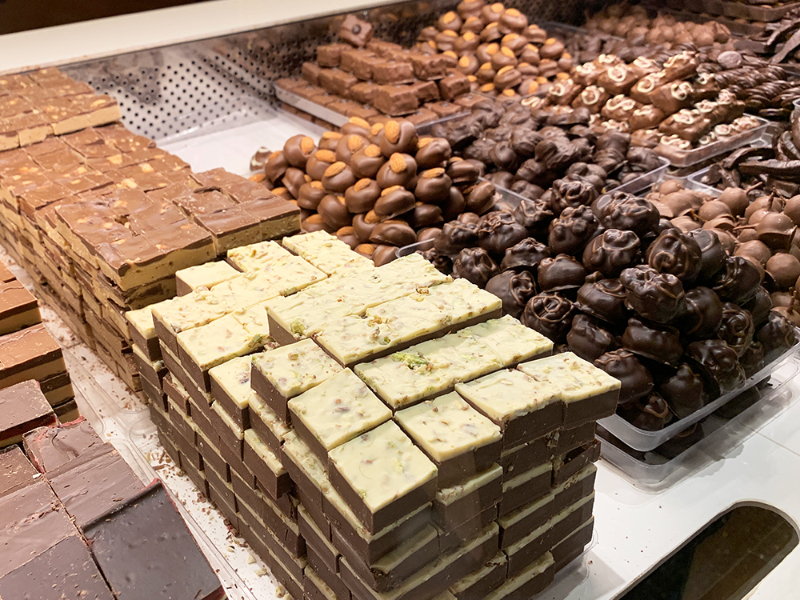

It’s with good reason that Bariloche in Patagonia has earned the moniker, “the Switzerland of South America.” Not only does it resemble a Swiss mountain town, but it’s also a major destination for chocolate lovers, and is often referred to as Argentina’s “chocolate capital.” More than half a million people migrated from Europe to Argentina between 1947 and 1952, following World War II. It was the last significant European immigration period. In Patagonia, some provinces such as Río Negro and Neuquén doubled in population, which was especially evident in the large town of Bariloche. Among the newcomers, many Italians were escaping the devastating aftermath of the war. But luckily, many of them preserved their cultures and brought their recipes with them. During the area’s cold winters, some of these European immigrants saw the opportunity to foster a culture of chocolate in their newfound home, which in turn led to the popularity of Argentinian chocolate. The chocolatier named Aldo Fenoglio arrived in Bariloche in 1947, looking for a place with dry weather so he could work with his sweet treat. Fenoglio was from Turin, Italy, the chocolate heart of Europe since the 17th century, where he had a chocolate store before the war. And he was looking to repeat his previous success in his new town.
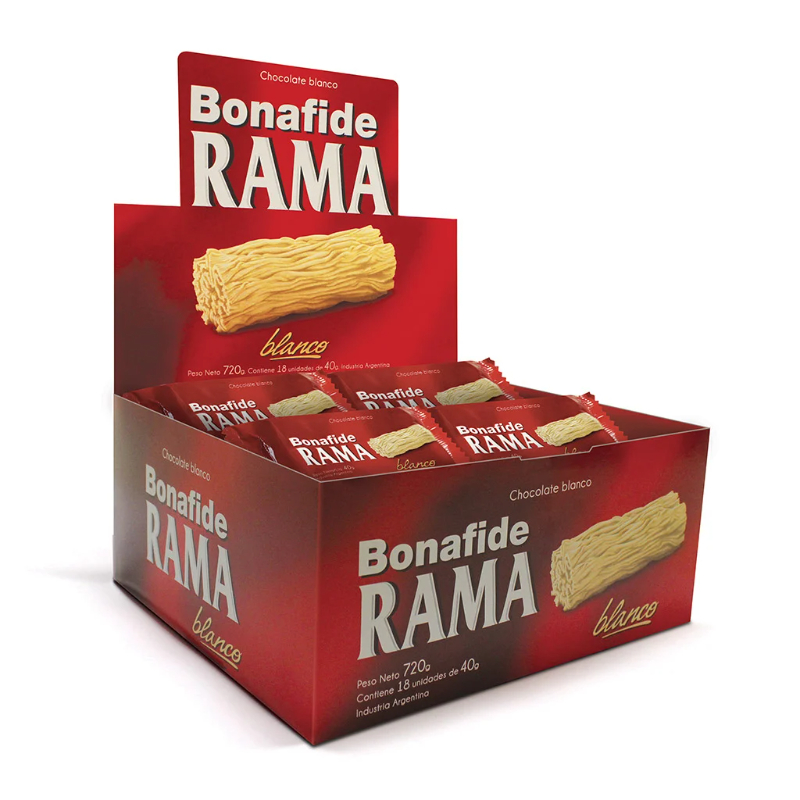
Fenoglio is credited with inventing a type of artisanal chocolate bar and the famous chocolate ‘branches’ – folded chocolate sheets resembling tree bark. The story goes that one day he forgot a pot full of molten chocolate over a nut grinder, a contraption that consisted of two stone rollers side by side. Eventually the chocolate fell and poured in a pile over the machine. To clean the mess he turned on the grinder, resulting in fine layers of chocolate that folded as they descended. They looked so good that he decided to turn that into what has become one of Bariloche’s best known chocolate delicacies: chocolate en rama, which looks like the bark of a tree.
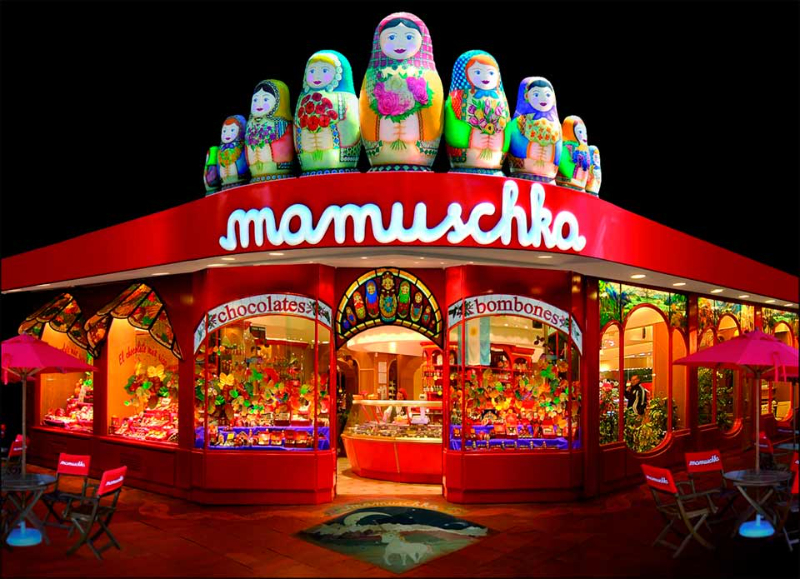
If you’re planning on making a cocoa-pilgrimage, you’ll want to visit the many chocolate museums that dot what Argentines call “The Avenue of Chocolate Dreams” (Mitre Avenue). Stroll down the avenue to explore the region’s Mayan and Aztec roots, as well as its connection to confectionary, observing the production process and sampling some sweets for yourself. Consider Mamuschka (above) a must-see. Widely regarded as the major player on Bariloche’s chocolate scene, the store stocks every type of chocolate imaginable, from white chocolate Baileys-filled eggs to bars of 90 per cent cocoa dark chocolate. For the full experience, get a seat in the café located at the back and order one of the thickest hot chocolates you’ll ever have the pleasure of sipping.