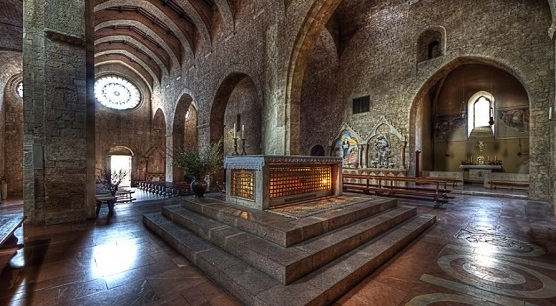

Nestled amid the verdant hills of Umbria, the town of Assisi is not only famous for its association with St. Francis but also cradles the lesser-known yet equally captivating Benedictine Convent on Mount Subasio. This serene sanctuary offers a glimpse into the region's rich spiritual and artistic heritage, away from the more tourist-trodden Franciscan sites.
### History and Origins
The roots of the Benedictine Convent trace back to the 10th century, when monks from the Cassinese order established their presence on Mount Subasio. Choosing this elevated location, they sought solitude and a connection to nature, descending from the heights to form a monastic complex that harmonized with the landscape.
By 1268, the primitive church was reconstructed, a testament to the enduring nature of monastic life. Its survival through the tumultuous 19th century suppressions of religious institutions in Italy speaks to the resilience of the Benedictine community. Today, a part of the community comprises young North American monks, blending tradition with fresh perspectives.
The church’s architectural style is predominantly late Romanesque, characterized by its rectangular façade and three naves. The raised presbytery, flanked by medieval tombs, exudes an air of historical reverence. The unique dome, constructed using an ancient technique of overlapping layers, adds a visual intrigue that reflects the ingenuity of its builders.
### Art and Architecture
Art enthusiasts will be drawn to the Benedictine Convent not just for its architecture but also for the treasures it houses within. The Chapel of the Sacrament, located to the left of the presbytery, features remnants of fourteenth-century frescoes from the Sienese school, a significant artistic movement known for its vibrant colors and emotional depth. Among these, a precious triptych by Matteo da Gualdo stands as a highlight, encapsulating the spirituality that permeates the convent.
The church’s interior, bathed in soft light, invites reflection, while the simple yet profound beauty of its architecture makes it a standout among Assisi's myriad places of worship. Interestingly, this convent’s Benedictine affiliation sets it apart from Franciscan sites, which dominate the religious landscape of Assisi due to an edict from the late 1200s that restricted the establishment of new religious orders in the town.
### Local Culture and Traditions
Life in and around the Benedictine Convent is steeped in tradition. The monks engage in a rhythm of prayer, work, and study, embodying the principles laid out by St. Benedict. Visitors may encounter local customs tied to the convent, particularly during the Feast of St. Benedict celebrated in July, which brings together the community for festivities that honor their patron.
Assisi's cultural tapestry is also woven through its annual events, like the Calendimaggio, a medieval festival held in May that celebrates the arrival of spring with music, dance, and re-enactments. While this event primarily acknowledges the Franciscan legacy, it reflects the broader cultural spirit that permeates the town, including the Benedictine traditions.
### Gastronomy
A visit to Assisi is incomplete without indulging in its culinary delights. The region is renowned for its truffles, and many local dishes incorporate this earthy delicacy. Sample tortino di patate (potato pie) or strangozzi, a handmade pasta typically served with a rich truffle sauce.
Pair your meal with a glass of Sagrantino di Montefalco, a robust red wine from the nearby hills, or try Vin Santo, a sweet dessert wine that complements the region’s famed pastries. The flavors of Umbria are not just about sustenance; they tell the story of the land, its people, and their traditions.
### Lesser-known Curiosities
While many flock to the more famous sites in Assisi, few take the time to explore the Benedictine Convent. One lesser-known fact is that the convent’s peaceful setting on Mount Subasio offers breathtaking views of the surrounding countryside, particularly at sunrise and sunset. This vantage point has inspired countless artists and writers seeking solace and inspiration.
Another hidden gem is the convent's library, which houses ancient texts and manuscripts that reflect the scholarly pursuits of the monks. Visitors often overlook this resource, yet it serves as a reminder of the continuity of knowledge and spirituality cultivated within these walls.
### Practical Visitor Information
The best time to visit the Benedictine Convent is during the spring and autumn months, when the weather is mild and the landscape is adorned with blooming wildflowers or autumnal hues. To make the most of your visit, consider taking part in one of the community’s open prayer sessions, providing a unique opportunity to experience the contemplative life of the monks.
When visiting, be sure to take a moment to wander the surrounding paths of Mount Subasio. The natural beauty is as captivating as the architectural splendor and offers a chance to connect with the serene spirit of the region.
For a truly personalized experience in Assisi, consider using the Secret World app to plan your itinerary and discover hidden treasures.
