
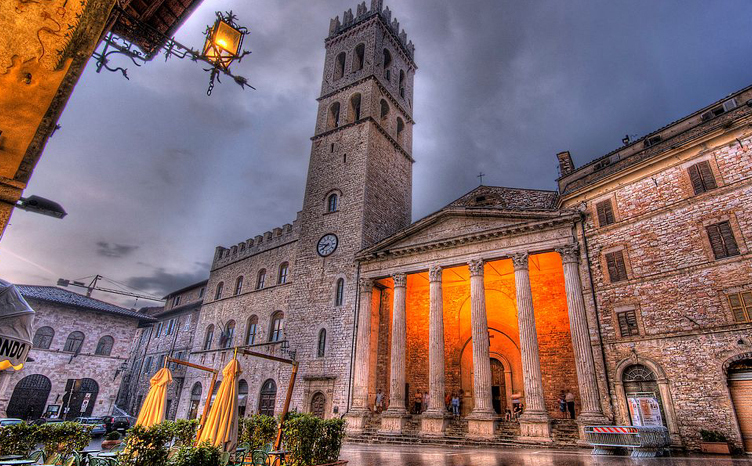

Nestled in the heart of Assisi, the Palazzo del Capitano stands as a testament to the city’s rich history and architectural grandeur. Located in the vibrant Piazza del Comune, this striking edifice captures the essence of medieval Italy, beckoning visitors to explore its storied past and cultural significance.
Built in the mid-thirteenth century, the Palazzo del Capitano was initially constructed to serve as the residence for the captain of the people, an official representing the city’s governance. Its strategic position to the left of the Temple of Minerva highlights its importance within the civic landscape of Assisi. A pivotal moment in its history occurred in 1282 when Capitano Guido de' Rossi from Florence commissioned a restoration that included the addition of Guelph battlements, which reflect the architectural style of the time.
The Palazzo’s architectural design is remarkable, showcasing a harmonious blend of Romanesque and Gothic elements. The building features robust stonework and a commanding façade that exudes strength and stability. One of the most striking aspects of the Palazzo is its relationship with the nearby Torre del Popolo (Municipal Tower), completed in 1305. At 47 metres high, the tower not only serves as a landmark but also houses profiles of measurements used for bricks and tiles dating back to 1348, offering a glimpse into the city’s historical craftsmanship.
Inside the Palazzo, the ground floor reveals a treasure trove of artistry. The walls are adorned with frescoes painted by Adalberto Migliorati, depicting scenes of medieval trades that once thrived in Assisi. These vivid illustrations transport visitors back to a time when local artisans were the lifeblood of the community, highlighting the craftsmanship and daily lives of its inhabitants.
As an integral component of Assisi's cultural heritage, the Palazzo del Capitano also hosts the headquarters and library of the Società Internazionale di Studi Francescani (International Society of Franciscan Studies) on its first floor. This organization plays a crucial role in preserving and studying the legacy of Saint Francis of Assisi, whose life and teachings continue to influence the region and beyond.
The cultural tapestry of Assisi is further enriched by its local customs and traditions. Throughout the year, the town celebrates various festivals, most notably the Feast of Saint Francis, held in early October. This vibrant event draws thousands of pilgrims and visitors who participate in processions, music, and prayer, reflecting the enduring significance of Franciscan ideals. The atmosphere of the Piazza del Comune during such occasions is electric, filled with the spirit of community and devotion.
Culinary traditions in Assisi are equally captivating. The region is known for its trattorias and osterias that serve delectable local dishes. Visitors should not miss the opportunity to savor torta al testo, a type of flatbread filled with savory ingredients, or strangozzi, a handmade pasta often paired with rich sauces made from local ingredients like truffles and olive oil. Pairing these dishes with a glass of Sagrantino di Montefalco, a robust red wine from the nearby hills, offers a true taste of the region’s gastronomy.
For those wishing to delve deeper into the history of the Palazzo, there are lesser-known curiosities that may pique interest. For instance, the Palazzo del Capitano has often been a backdrop for significant civic events, including assemblies and proclamations that shaped the governance of Assisi. Additionally, the coat of arms commissioned by Guido de' Rossi, which features prominently between two shields adorned with the cross, serves as a reminder of the political alliances and rivalries that characterized the region during the medieval period.
The best time to visit the Palazzo del Capitano is during the spring and early autumn months when the weather is mild, and the surrounding beauty of Assisi is in full bloom. Early morning or late afternoon visits offer a chance to experience the area with fewer crowds, allowing for a more intimate exploration of the square and its historical landmarks. Be sure to take a moment to gaze up at the intricate details of the Palazzo’s façade and to enjoy the lively atmosphere of the Piazza del Comune.
In conclusion, the Palazzo del Capitano in Assisi is more than just a historical building; it is a vibrant symbol of the city’s rich heritage, artistic expression, and cultural identity. A visit here immerses you in the essence of medieval Italy while connecting you to the enduring spirit of its past.
To truly enhance your experience in Assisi, consider using the Secret World app to plan a personalized AI itinerary.


