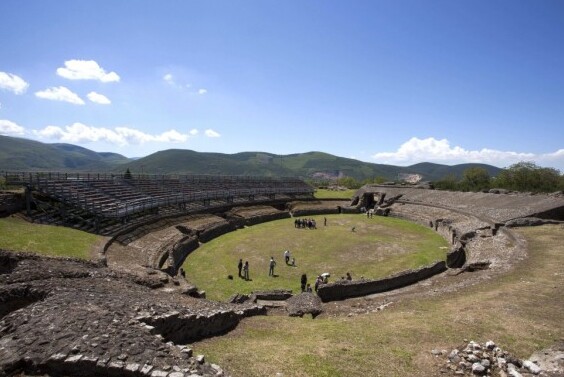


Nestled in the lush landscapes of Campania, Avella is a town that whispers tales of its ancient past through its archaeological site, the archaeological area of Abella. This site serves as a remarkable window into the life of the Roman city that once flourished here. The amphitheatre, the star of this archaeological park, stands as a testament to the architectural prowess of the 1st century B.C., showcasing the intricate artistry of the period.
### History and Origins The story of Avella, known in antiquity as Abella, dates back to the Samnite civilization, which thrived in this region long before the arrival of the Romans. The Samnites, an ancient Italic people, established a settlement here, taking advantage of the strategic location near the fertile plains of the Vesuvian area. In 89 B.C., the town was granted Roman citizenship, marking a significant turning point in its history.
Throughout the Roman Empire, Abella flourished, becoming an important center for trade and agriculture. Key historical events, such as its participation in the Social War, reflect its strategic significance in ancient politics. The ruins of the amphitheatre, possibly the only remaining monument of the Roman city, provide a glimpse into the cultural and social life of ancient Abella, where gladiatorial games and public spectacles once captivated the populace.
### Art and Architecture The architectural style of the amphitheatre is particularly noteworthy. Built in a reticulated work style, it showcases the Romans' advanced techniques in construction. Its location, near the ancient city walls and the remnants of residential structures from the Samnite period, highlights the integration of different architectural influences over centuries.
The amphitheatre itself was designed to accommodate a large audience, with the average and summa cavea—though the latter is no longer preserved—giving insight into the scale and grandeur of public entertainment during Roman times. The lifelike depictions of the amphitheatre on a base of a limestone statue from the Antonine age further underscore its artistic significance, revealing the high esteem in which such structures were held.
### Local Culture and Traditions Today, Avella is a vibrant town that cherishes its ancient roots. Local customs are deeply intertwined with its history. One of the most celebrated traditions is the Feast of St. Michael, held every September. This festival draws locals and visitors alike, featuring processions, music, and traditional food, allowing attendees to experience the rich cultural tapestry of the town.
Moreover, the town's blend of historical influences is evident in its architecture and local lifestyle, where ancient stones mingle with the modern vibrancy of daily life. Avella’s inhabitants take pride in their heritage, often sharing stories of their ancestors and the town’s glorious past.
### Gastronomy No visit to Avella is complete without indulging in its local cuisine. The town is renowned for its mozzarella di bufala, a creamy cheese made from the milk of water buffalo, which pairs perfectly with fresh tomatoes and basil in a classic Caprese salad. Another local specialty is frittata di maccheroni, a delicious pasta frittata that reflects the region's agricultural bounty.
For dessert, the struffoli, small honey-soaked dough balls often enjoyed during festive occasions, are a must-try. Pair these delights with a glass of Lacryma Christi, a wine that captures the essence of the volcanic soils of the area, enhancing your culinary experience.
### Lesser-known Curiosities While many tourists flock to the more famous archaeological sites in Italy, Avella offers hidden gems that are often overlooked. For instance, the ancient walls that once surrounded Abella are still partially standing, providing a striking backdrop to the modern town and a reminder of its defensive significance.
Another surprising feature is the medieval castle ruins on the hill overlooking Avella, which add another layer of historical depth to the area. Local legends speak of hidden treasures in these ruins, enticing the adventurous spirit of visitors.
### Practical Visitor Information The best time to visit Avella is during the spring (April to June) or early autumn (September to October) when the weather is mild and the landscape is vibrant with blooming flora. To fully appreciate the archaeological area, consider joining a guided tour that can provide deeper insights into the history and significance of the site.
When visiting the amphitheatre, be sure to take your time exploring the surrounding area, which is rich in history and picturesque views. Look for the remnants of ancient structures that tell the story of Abella’s evolution through time.
In summary, Avella offers a unique blend of history, architecture, culture, and gastronomy that encapsulates the essence of ancient Italy. Be sure to immerse yourself in the local traditions and culinary delights that make this town a hidden gem in the heart of Campania.
For a personalized itinerary to explore the wonders of Avella, consider using the Secret World app to plan your visit.