
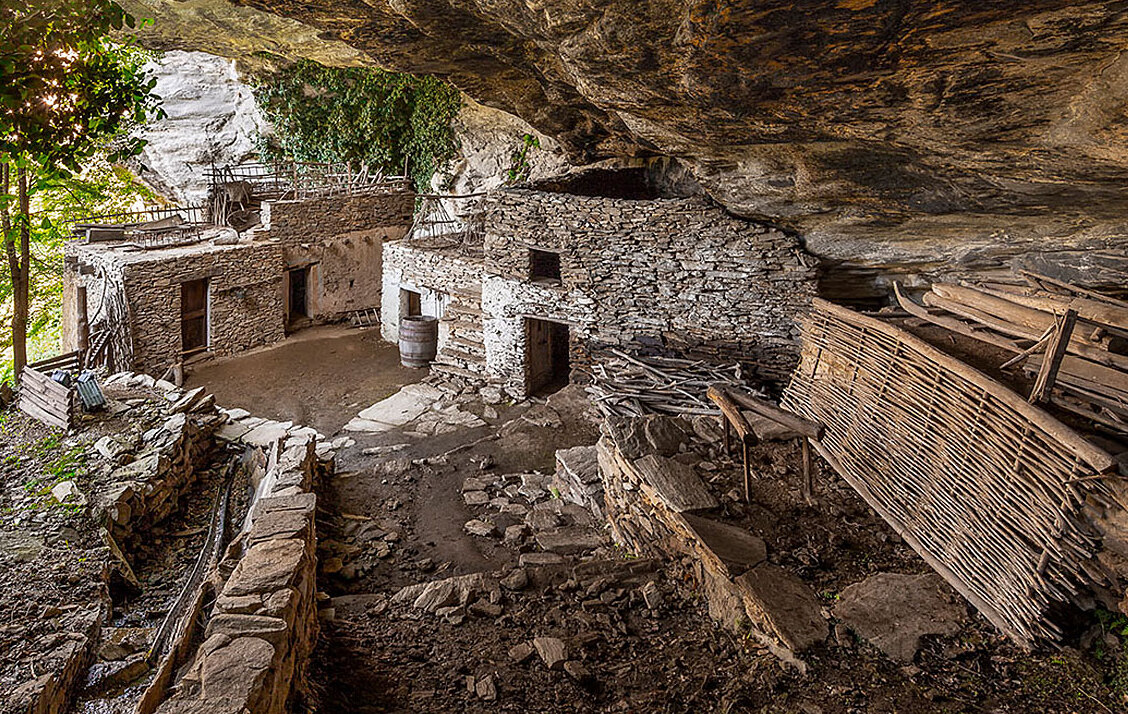

Nestled in the scenic Cottian Alps, the abandoned village of Balma Boves offers a glimpse into a fascinating past. This unique settlement, located in Sanfront in the Cuneo province, is a remarkable testament to the region’s history and architectural ingenuity.
History and Origins The origins of Balma Boves can be traced back to the medieval period, likely emerging as a refuge for local communities seeking safety from external threats. The village was strategically built under a massive rock overhang, providing natural protection from the elements and potential invaders. Records indicate that the village flourished between the 15th and 19th centuries, as it became a hub for agriculture and pastoralism. However, as modernization swept through the region in the late 19th century, the village was gradually abandoned, leaving behind a haunting yet beautiful reminder of its vibrant past.
Art and Architecture The architectural style of Balma Boves is strikingly unique, reminiscent of the Navajo pueblos found in North America. The village features stone houses with flat roofs, built directly against the rock, creating an almost otherworldly atmosphere. This design not only provided shelter but also harmonized with the natural landscape, showcasing the ingenuity of its builders. The remaining structures are adorned with simple, yet elegant, elements that reflect the practical lifestyle of their inhabitants. As you wander through the village, you’ll discover the remnants of frescoes and carvings that hint at the artistic endeavors of its former residents, making Balma Boves an open-air museum of sorts.
Local Culture and Traditions Though no longer inhabited, the cultural significance of Balma Boves is still palpable. The village stands as a testament to the Alpine culture that once thrived here. Local customs were deeply intertwined with the rhythm of nature, influencing everything from agriculture to festivals. While the village may not host events today, the nearby community of Sanfront holds annual festivals celebrating the region's heritage, including local music, dance, and culinary traditions that echo the flavors of the past.
Gastronomy Visitors to the Sanfront area can indulge in traditional Piedmontese cuisine, which has roots in the agricultural practices of the region. Local specialties include tajarin (a type of pasta) served with rich sauces, bagna cauda (a warm dip made with garlic and anchovies), and robiole cheese, which pairs perfectly with local wines like Barbera and Dolcetto. While Balma Boves itself offers no dining options, nearby villages boast charming trattorias where the culinary heritage thrives.
Lesser-known Curiosities One of the most intriguing aspects of Balma Boves is its role as a refuge during times of strife. Historical accounts suggest that the village served as a hideout for locals escaping from conflicts in the 19th century, showcasing the resilience of its inhabitants. Additionally, the village's unique construction has sparked interest among architects and historians alike, who study its layout for insights into sustainable building practices.
Practical Visitor Information The best time to visit Balma Boves is during the spring and early autumn months when the weather is mild and the surrounding landscapes are adorned with vibrant foliage. To reach the village, visitors can embark on a scenic hike from Sanfront, which provides stunning panoramic views of the Cottian Alps. Be sure to wear sturdy footwear and carry a camera to capture the breathtaking scenery. As you explore, take time to appreciate the quietude of this abandoned village, allowing the rich history to weave its spell around you.
Don’t forget to check out the Secret World app for a personalized itinerary to make the most of your visit to Sanfront.


