← Back

Bard Fortress

11020 Bard AO, Italia ★★★★☆ 313 views
Alyssia Becker
Bard
🏆 AI Trip Planner 2026

Get the free app

Discover the best of Bard with Secret World — the AI trip planner with 1M+ destinations. Get personalized itineraries, hidden gems and local tips. Free on iOS & Android.

🧠 AI Itineraries 🎒 Trip Toolkit 🎮 KnowWhere Game 🎧 Audio Guides 📹 Videos
Scan to download iOS / Android
Scan for AppGallery Huawei users

About Bard Fortress

Bard Fortress - Bard | Secret World Trip Planner

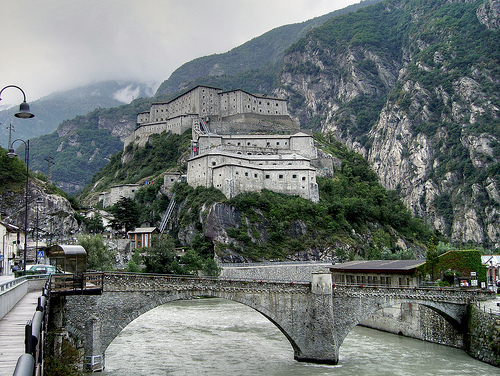
As early as the beginning of the 6th century A.D. there was a garrison of sixty armed men in Bard defending the so-called "Clausuræ Augustanæ," the defensive system established to protect the borders of the Empire. In 1034 this system was called "inexpugnabile oppidum," and this is one of the oldest references to a castle in the Aosta Valley. In 1242 the Savoys took possession of the lordship of Bard, with Amadeus IV, prompted by the insistence of the inhabitants of the area, who were tired of the abuses of Hugh of Bard, who, on the strength of the position of his castle, imposed heavy levies on travelers and merchants. From then on, the castle would always depend on the Savoy, who established a garrison there: in 1661 weapons from other Aosta Valley fortifications, including Verrès and Montjovet, were even concentrated in Bard. What we see today is the reconstruction ordered by Charles Felix, who, in the midst of the Restoration, made it one of the most massive military structures in the Aosta Valley starting in 1830. In the late 1800s the fort headed for decline, used first as a penal bath and then as an ammunition depot. Decommissioned in 1975 from the military domain, it was acquired by the Aosta Valley region in 1990 and completely renovated in 2006.
Bard Fortress - Bard | Secret World Trip Planner

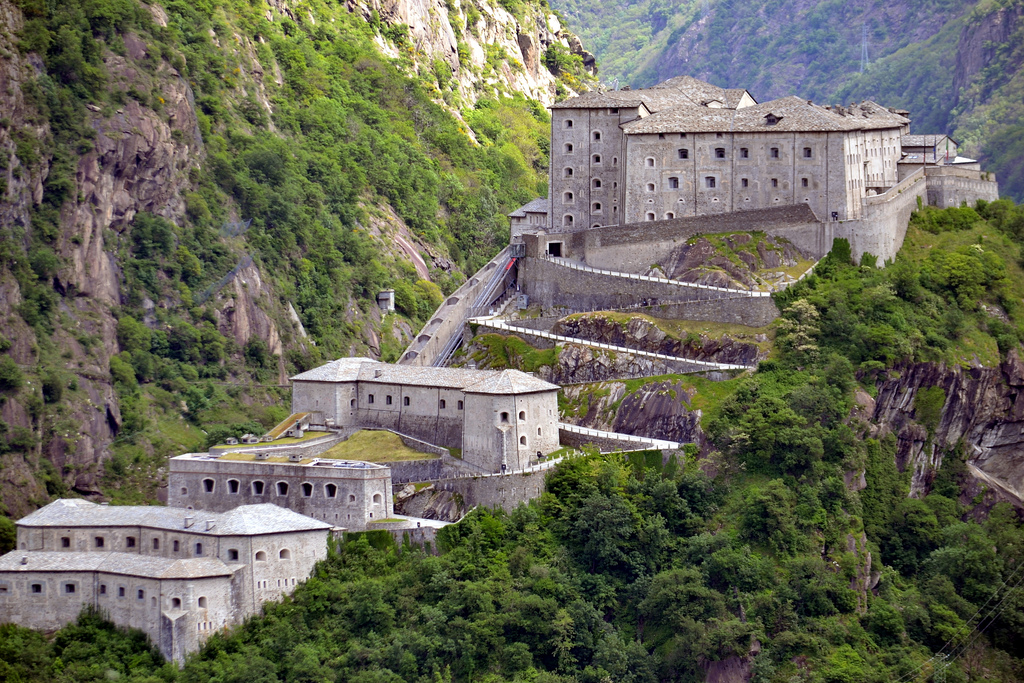
Remaining virtually intact since its construction, the Fortress of Bard represents one of the best examples of an early 19th-century barrage fortress. The fortress consists of three main buildings: starting from the bottom are the Opera Ferdinando, the median building, - Opera Vittorio - until reaching the top of the relief, where the Opera Carlo Alberto stands. The latter is the most imposing of the three works, which encloses within it the large quadrangular courtyard of the Piazza d'Armi, surrounded by a wide arcade, where spaces dedicated to temporary exhibitions are located: inside, in addition to the Museum of the Alps, are the Prisons, which house a multimedia thematic itinerary on the history of the Fortress.
Bard Fortress - Bard | Secret World Trip Planner
🗺 AI Trip Planner 2026

Plan your visit to Bard

Suggested itinerary near Bard Fortress

MAJ+
500.000+ travelers worldwide
  1. 🌅
    Morning
    Bard Fortress
    📍 Bard
  2. ☀️
    Afternoon
    Beaulieu Camera Museum
    📍 0.9 km · Bard
  3. 🌆
    Evening
    Donnas | Wine and Viticulture Museum
    📍 1.8 km · Bard

Buy Unique Travel Experiences

Powered by Viator

See more on Viator.com

Explore nearby · Bard

Frequently Asked Questions

Bard Fortress has roots dating back to the 6th century A.D. as a Roman garrison protecting the empire's borders. The fortress was taken over by the Savoy family in 1242, and the structure you see today was reconstructed by Charles Felix starting in 1830 as one of the most impressive early 19th-century military fortifications in the Aosta Valley.
The fortress consists of three main structures: Opera Ferdinando at the bottom, Opera Vittorio in the middle, and Opera Carlo Alberto at the top of the hill. Opera Carlo Alberto is the most imposing of the three and features a large quadrangular courtyard called Piazza d'Armi surrounded by wide arcades used for exhibitions.
Inside the fortress, you can visit the Museum of the Alps and the Prisons, which house a multimedia thematic itinerary exploring the history of the fortress. The Piazza d'Armi courtyard also hosts temporary exhibitions throughout the year.
The fortress was decommissioned from military use in 1975 and later used as a penal bath and ammunition depot. It was acquired by the Aosta Valley region in 1990 and underwent complete renovation in 2006, after which it opened as a cultural and historical attraction.
Bard Fortress was strategically positioned to defend the 'Clausuræ Augustanæ,' the Roman defensive system protecting the empire's borders. During medieval times, the castle's dominant position allowed it to control the valley and collect levies from travelers and merchants, making it a crucial control point for the Savoy family who ruled the region.
