
← Back

Basilica of the Holy Sepulchre

01021 Acquapendente VT, Italia ★★★★☆ 339 views
Ronda James
Acquapendente
🏆 AI Trip Planner 2026

Get the free app

Discover the best of Acquapendente with Secret World — the AI trip planner with 1M+ destinations. Get personalized itineraries, hidden gems and local tips. Free on iOS & Android.

🧠 AI Itineraries 🎒 Trip Toolkit 🎮 KnowWhere Game 🎧 Audio Guides 📹 Videos
Download on the App Store Get it on Google Play
Scan to download Scan to download

Religious places · Acquapendente

Basilica of the Holy Sepulchre - Acquapendente | Secret World Trip Planner

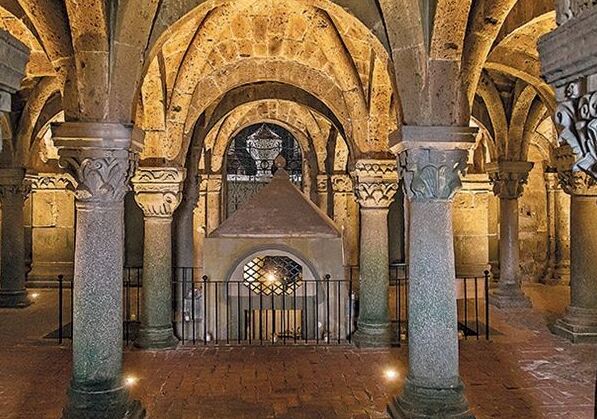
The Basilica of the Holy Sepulchre stands along the Via Francigena and according to a legendary tradition the church was founded by Queen Matilda of Westphalia, who was on her way to Rome with a caravan of mules loaded with gold to build a sanctuary dedicated to the Holy Sepulchre. In Acquapendente the mules would have "stuck", kneeling and refusing to leave, and during the night the queen would have had a dream that would have led her to implement her project in this place. The building dates back to the twelfth century and was originally in Romanesque style and belonged to the Benedictine order, with an adjoining convent. The current appearance of the church is the result of numerous interventions: the facade dates back to the '700 and is the work of Nicola Salvi (architect of the Trevi Fountain in Rome), then partly modified due to damage during the last war. On the facade there is the bust of Pope Innocent X Pamphili (the original by Alessandro Algardi is kept in the City Museum), who was responsible for the transfer of the diocese to Acquapendente, after the destruction of Castro. Internally the church has a Latin cross plan with three naves, the presbytery is raised to leave space for the crypt below. The crypt is of the "a sala" type, built on 24 columns on which rest cross vaults. It houses a SACELLO (Holy Sepulchre) which is still a pilgrimage destination, being the oldest copy in the world of the tomb of Jesus, which is why Acquapendente is also called the Jerusalem of Europe. The copy of the Holy Sepulchre dates back to the 10th century and around it, a couple of centuries later, the crypt was built. Inside is kept a stone, which is said to have been brought there by the crusaders and bathed in the blood of Christ. This is why Acquapendente is still today an important stage of the pilgrimage along the Via Francigena.

🗺 AI Trip Planner

Plan your visit to Acquapendente

Suggested itinerary near Basilica of the Holy Sepulchre

MAJ+
500.000+ travelers worldwide
  1. 🌅
    Morning
    Basilica of the Holy Sepulchre
    📍 Acquapendente
  2. ☀️
    Afternoon
    Church of San Francesco
    📍 0.6 km · Acquapendente
  3. 🌆
    Evening
    The Flower Museum
    📍 4.3 km · Acquapendente

Buy Unique Travel Experiences

Powered by Viator

See more on Viator.com

Explore nearby · Acquapendente

Frequently Asked Questions

According to legendary tradition, Queen Matilda of Westphalia founded the church in the 12th century while traveling to Rome with mules carrying gold. The story tells that the mules mysteriously knelt and refused to leave Acquapendente, and the Queen had a divine dream that inspired her to build the sanctuary in this location.
Acquapendente houses the oldest copy in the world of the tomb of Jesus Christ, dating back to the 10th century, which is why it's called the 'Jerusalem of Europe.' The crypt contains a sacred stone believed to have been brought by crusaders and bathed in the blood of Christ, making it an important pilgrimage destination along the Via Francigena.
The basilica originally dates from the twelfth century in Romanesque style and features a Latin cross plan with three naves. The 18th-century facade was designed by Nicola Salvi (architect of Rome's Trevi Fountain) and was partially modified after World War II damage.
The crypt features a 'sala' type design with 24 columns supporting cross vaults, and houses a sacello (shrine) containing a replica of the Holy Sepulchre from the 10th century. Inside is also a sacred stone said to have been brought by crusaders and believed to have been bathed in the blood of Christ.
Pope Innocent X Pamphili was responsible for transferring the diocese to Acquapendente after the destruction of Castro, making him an important historical figure for the town. His bust by sculptor Alessandro Algardi appears on the facade as a tribute to this significant ecclesiastical decision, with the original bust now preserved in the City Museum.
