
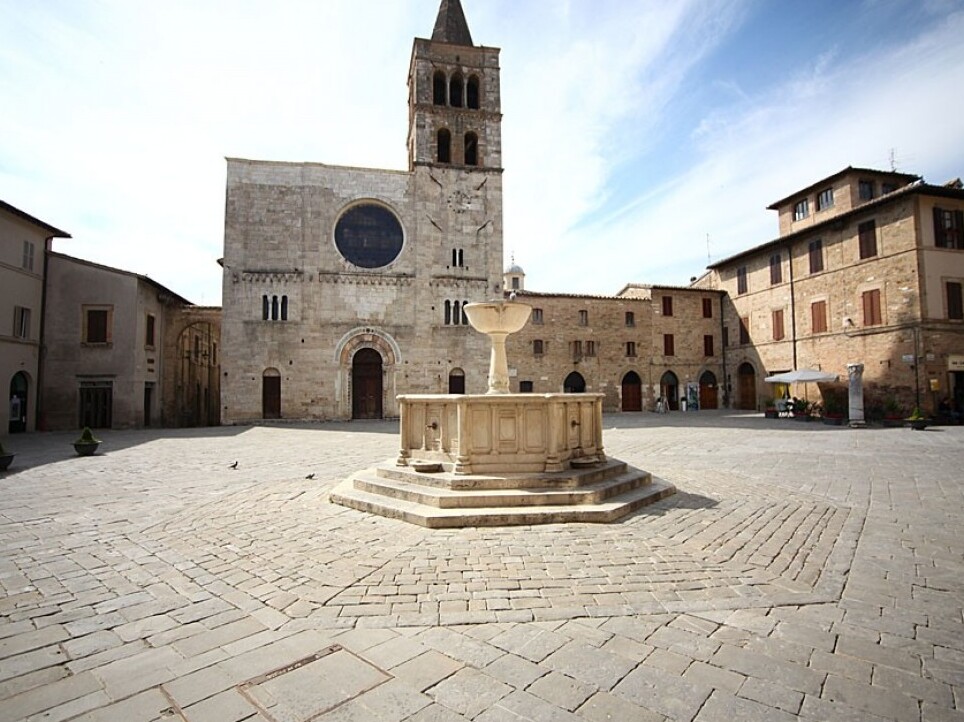

Nestled in the enchanting town of Bevagna, the fountain in the main square stands as a testament to the region's rich history and vibrant culture. Inaugurated on August 23, 1896, this striking fountain was constructed atop a medieval well that once quenched the thirst of the town's inhabitants. The decision to create a new water supply system came in 1889, reflecting the community's desire for modernization while honoring its historical roots.
The origins of Bevagna trace back to the Roman era, when it was known as Bevanium. The town's strategic location along the Via Flaminia made it an essential stop for traders and travelers. As a result, Bevagna flourished, leaving behind remnants of its ancient past, such as the impressive ruins of Roman temples and the remnants of city walls. Key historical events, including the town's involvement in the Guelph and Ghibelline conflict, further shaped its identity.
Architecturally, the fountain is a stunning example of neoclassical design, characterized by its elegant lines and harmonious proportions. The central basin is adorned with intricate stone carvings that celebrate the town's agricultural heritage. Surrounding the fountain, Piazza Silvestri is framed by beautifully preserved medieval buildings, including the Church of San Michele Arcangelo and the Palazzo dei Consoli, creating a picturesque backdrop for both locals and tourists.
Culturally, Bevagna is alive with traditions that have been passed down through generations. One of the most notable events is the Mercato delle Gaite, a medieval festival held in June that transports visitors back in time. During this festival, the town's streets come alive with reenactments, artisan markets, and delicious local cuisine. The community spirit is palpable, as residents don period costumes and engage in friendly competitions, showcasing their skills in crafts, games, and cooking.
Speaking of cuisine, Bevagna offers a delightful array of traditional dishes that reflect its rich agricultural landscape. The local specialty, strangozzi, a type of handmade pasta, is often served with a robust sauce made from truffles, a proud product of the region. Pair your meal with a glass of Sagrantino di Montefalco, a robust red wine that perfectly complements the earthy flavors of the local fare. Don’t miss out on tasting porchetta, a succulent roast pork seasoned with herbs, which is a staple at local gatherings and markets.
For those seeking lesser-known curiosities, the fountain itself has a few secrets. Few visitors realize that the well it was built upon dates back to the Middle Ages, serving as a crucial water source long before the fountain was erected. Additionally, the craftsmanship involved in the fountain's construction is a point of pride; local artisans were involved in every aspect, ensuring it reflected the spirit of the town. A unique feature of the fountain is its hidden inscriptions, which tell tales of Bevagna's past and the significance of water in the town's life.
The best time to visit Bevagna is during the late spring and early autumn months, when the weather is mild and the surrounding countryside is in full bloom. Be sure to stroll through the narrow, winding streets that lead to the fountain, taking a moment to appreciate the charm and tranquility of this lesser-known destination. A visit to the fountain is best enjoyed early in the morning or late afternoon when the soft light casts enchanting shadows on the historical architecture.
In conclusion, the fountain in the main square of Bevagna is not just a beautiful structure but a symbol of the town's resilience and cultural heritage. It invites visitors to explore the layers of history, art, and culinary delights that make Bevagna a hidden treasure in Italy. For a personalized itinerary to experience all that Bevagna has to offer, consider using the Secret World app.


