
← Back

Bisceglie | The Dolmen of Chianca

Via Sant'Andrea, 479, 76011 Bisceglie BT, Italia ★★★★☆ 153 views
Maya Kim
479
🏆 AI Trip Planner 2026

Get the free app

Discover the best of 479 with Secret World — the AI trip planner with 1M+ destinations. Get personalized itineraries, hidden gems and local tips. Free on iOS & Android.

🧠 AI Itineraries 🎒 Trip Toolkit 🎮 KnowWhere Game 🎧 Audio Guides 📹 Videos
Scan to download iOS / Android
Scan for AppGallery Huawei users

About Bisceglie | The Dolmen of Chianca

Bisceglie | The Dolmen of Chianca - 479 | Secret World Trip Planner

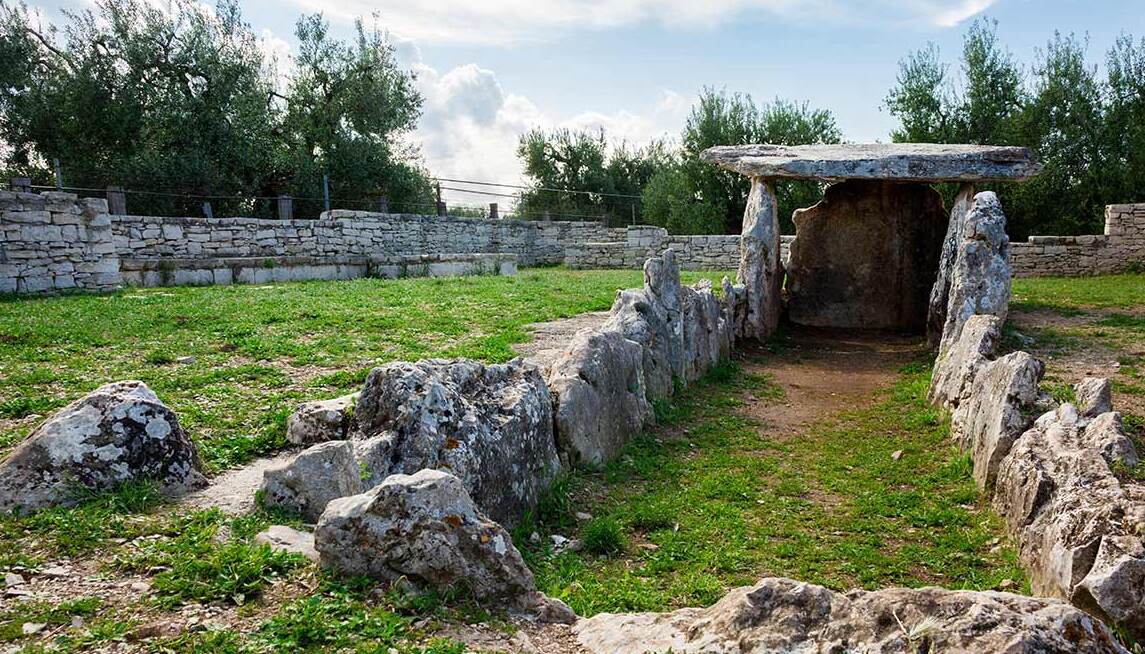
Considered a rare and precious pearl, the Dolmen della Chianca di Bisceglie is a priceless historical find. Belonging to the Bronze Age, this archaic building was discovered by archaeologists Samarelli and Mosso in 1909 in the locality (from which it takes its name) the Chianca.Oriented to the east, like all buildings of this type, the megalithic prehistoric monument consists of a corridor and a cell, with a height of about 1 meter and 80 centimeters and is covered by a slab whose dimensions are 3.85 by 2.40 meters. The corridor - 7.50 m long - is made up of flat slabs, fixed vertically into the ground, of a considerably lower height than those of the cell.The dolmens, thanks also to their millenary history, are of inestimable value as they represent the ancient reusable burials, so much so that it is thought that some tombs may have been used for centuries.Specifically, when the Dolmen of Bisceglie was discovered, the farmers, unaware of the importance of what was found, had already removed everything before the excavations were carried out. Despite this, however, they were found in the cell:

animal bones bits of small pots some stone knives dating back over 1200 years. six skeletons of adults and children arranged in a disorderly manner two skeletons in a crouching position In the centre of the dromos (i.e. the open-air corridor), on the other hand, the remains of a circular hearth were found, consisting of about ten centimetres thick and with about fifteen layers, made of fine, well-beaten ash mixed with pieces of coal with burnt animal bones. Further excavations, moreover, have hypothesized that there were two levels and therefore two moments of different deposition: an older one, relative to the lower levels, which can be attributed to the Protoappeninico and the other, of a not very advanced phase of the Apennines.

🗺 AI Trip Planner 2026

Plan your visit to 479

Suggested itinerary near Bisceglie | The Dolmen of Chianca

MAJ+
500.000+ travelers worldwide
  1. 🌅
    Morning
    Bisceglie | The Dolmen of Chianca
    📍 479
  2. ☀️
    Afternoon
    Bisceglie | Romanesque Cathedral of St. Peter's
    📍 5.5 km · 479
  3. 🌆
    Evening
    The sigh, the famous dessert of Altamura
    📍 5.5 km · 479

Buy Unique Travel Experiences

Powered by Viator

See more on Viator.com

Explore nearby · 479

Frequently Asked Questions

The Dolmen della Chianca was discovered in 1909 by archaeologists Samarelli and Mosso in the Chianca locality, from which it takes its name. This Bronze Age megalithic monument is considered a rare and precious historical find of inestimable archaeological value.
Excavations uncovered animal bones, pottery fragments, stone knives over 1200 years old, six adult and children skeletons in disorderly arrangement, and two skeletons in crouching positions. Additionally, the remains of a circular hearth with ash, coal, and burnt animal bones were discovered in the corridor (dromos).
The dolmen consists of a 7.50-meter-long corridor and a cell, both approximately 1 meter and 80 centimeters in height, covered by a large slab measuring 3.85 by 2.40 meters. The monument is oriented to the east, typical of all buildings of this type, with the corridor made of vertically-fixed flat slabs of considerably lower height than those in the cell.
The Dolmen della Chianca dates back to the Bronze Age and represents an ancient reusable burial site that may have been used for centuries. Further excavations revealed evidence of two different depositional moments: an older level attributed to the Protoappeninico period and a younger level from an advanced phase of the Apennines era.
Dolmens like the one in Bisceglie are of inestimable value as they represent ancient reusable burial sites that provide crucial insights into prehistoric life and burial practices. Despite farmers removing many items before proper archaeological excavation, the remaining discoveries of multiple skeletons, tools, and hearth remains offer invaluable evidence of Bronze Age civilization in the region.
