
← Back

Bolsena: The Basilica of S. Cristina

Via Giuseppe Mazzini, 1A, 01023 Bolsena VT, Italia ★★★★☆ 496 views
Mia Patel
Bolsena
🏆 AI Trip Planner 2026

Get the free app

Discover the best of Bolsena with Secret World — the AI trip planner with 1M+ destinations. Get personalized itineraries, hidden gems and local tips. Free on iOS & Android.

🧠 AI Itineraries 🎒 Trip Toolkit 🎮 KnowWhere Game 🎧 Audio Guides 📹 Videos
Download on the App Store Get it on Google Play
Scan to download Scan to download

About Bolsena: The Basilica of S. Cristina

Bolsena: The Basilica of S. Cristina - Bolsena | Secret World Trip Planner

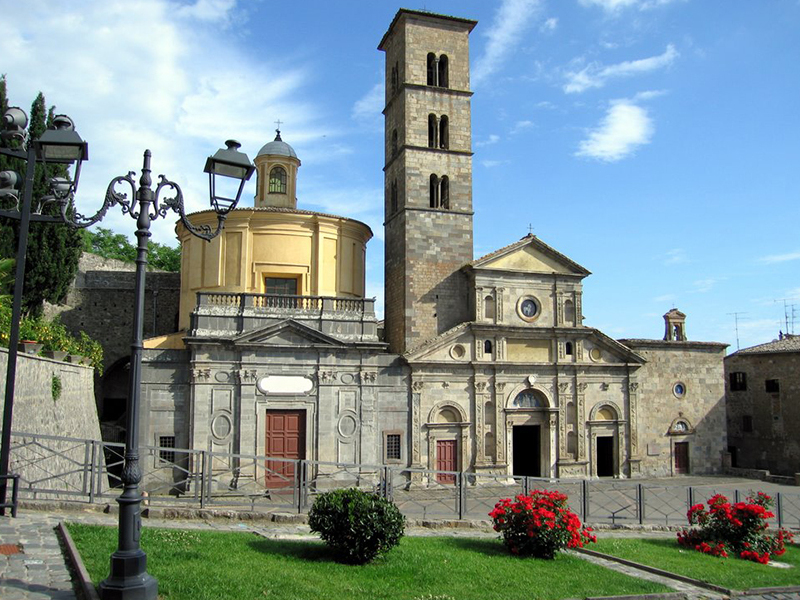
The Basilica of S. Cristina is a Romanesque construction of the XI century with a Renaissance facade (1494) and a fourteenth-century mullioned bell tower. In the three-nave interior there are frescoes from the 14th-16th centuries and behind the high altar there is a well restored polyptych by Sano di Pietro. The left aisle leads to the Cappella del Miracolo (Chapel of the Miracle) (17th century), whose altar contains the blood-stained stones, relics of the Eucharistic Miracle (1263), while the Sacro Corporale, a blood-stained altar cloth, is kept in Orvieto Cathedral. Adjacent to the Chapel of the Miracle is the Grotto of Santa Cristina, part of the Christian catacombs. In the cave there is a large terracotta icon and a statue of dead St. Christine, both works of Benedetto Buglioni. It is said that in 292 Cristina, the young daughter of a Roman prefect, fierce persecutor of Christians, converted to the new faith. The monstrous father, enraged and determined to punish the young girl, subjected her to horrible tortures. Among these was the cutting out of her tongue. Then he ordered that she be thrown into the waters of the lake with a rock tied around her neck. However, this miraculously floated instead of going to the bottom, thus saving the girl and showing to all skeptical onlookers her indisputable sanctity, but the atrocity of the tortures suffered did not allow Cristina to survive, and a few days later she ended up dying. The miraculous stone was, however, preserved and soon became the altar that would be the protagonist, ten centuries later, of another extraordinary event. The Collegiate Church of Santa Cristina is in fact known for the Miracle of Corpus Domini, which took place, according to tradition, in 1263, when a certain Pietro da Praga, a Bohemian priest who was on his way to Rome on a pilgrimage, decided to stop in Bolsena and celebrate Mass on Cristina's altar. Since he had doubts in his heart about transubstantiation, the divine hand (and perhaps the spirit of the saint) wanted to reject them, and during the ceremony the consecrated host leapt onto the altar and oozed blood, to the great emotion of the faithful present. The stone of Santa Cristina, stained by the bleeding host, is kept in the baroque Chapel of the Miracle (1693), where you can also admire a painting by Francesco Trevisani, in memory of the sacred event. From the Chapel of the Miracle you can access the Grotto of Santa Cristina, which houses (set in a ciborium of the ninth century) a basalt stone with the imprinted footprints of the Martyr (she would have stepped on it before being pushed into the waters of the lake) and from which departs an extensive and obscure complex of catacombs, dating from the second to fifth centuries AD, where there is the sarcophagus with the remains of the saint.

🗺 AI Trip Planner

Plan your visit to Bolsena

Suggested itinerary near Bolsena: The Basilica of S. Cristina

MAJ+
500.000+ travelers worldwide
  1. 🌅
    Morning
    Bolsena: The Basilica of S. Cristina
    📍 Bolsena
  2. ☀️
    Afternoon
    Lake Bolsena
    📍 4.9 km · Bolsena
  3. 🌆
    Evening
    Italy | Bagnoreggio the dying Village
    📍 8.5 km · Bolsena

Buy Unique Travel Experiences

Powered by Viator

See more on Viator.com

Explore nearby · Bolsena

Frequently Asked Questions

The Miracle of Corpus Domini occurred in 1263 when a Bohemian priest named Pietro da Praga celebrated Mass at the basilica's altar and the Eucharist miraculously began to bleed, creating blood-stained stones and an altar cloth (Sacro Corporale). This extraordinary event was attributed to the priest's doubts about transubstantiation being miraculously dispelled by divine intervention.
The blood-stained stones from the 1263 Eucharistic Miracle are preserved in the Cappella del Miracolo (Chapel of the Miracle) located in the left aisle of the Basilica of S. Cristina. However, the Sacro Corporale, the blood-stained altar cloth, is kept in Orvieto Cathedral, about 30 kilometers away.
The basilica features a Romanesque interior from the 11th century with a striking Renaissance facade built in 1494 and a fourteenth-century mullioned bell tower. The three-nave interior contains beautiful frescoes spanning the 14th-16th centuries and a well-restored polyptych by the Renaissance artist Sano di Pietro behind the high altar.
According to tradition, Saint Cristina was the young Christian daughter of a Roman prefect who converted to Christianity around 292 AD and was brutally tortured by her own father, including having her tongue cut out. When he ordered her drowned with a rock tied around her neck, the stone miraculously floated, saving her life and demonstrating her sanctity, though she died shortly after from her severe injuries.
Yes, the Grotto of Santa Cristina is accessible from the Cappella del Miracolo in the basilica's left aisle and is part of the Christian catacombs. Inside the cave you can see a large terracotta icon and a statue of the dead Saint Christine, both created by Renaissance sculptor Benedetto Buglioni.
