
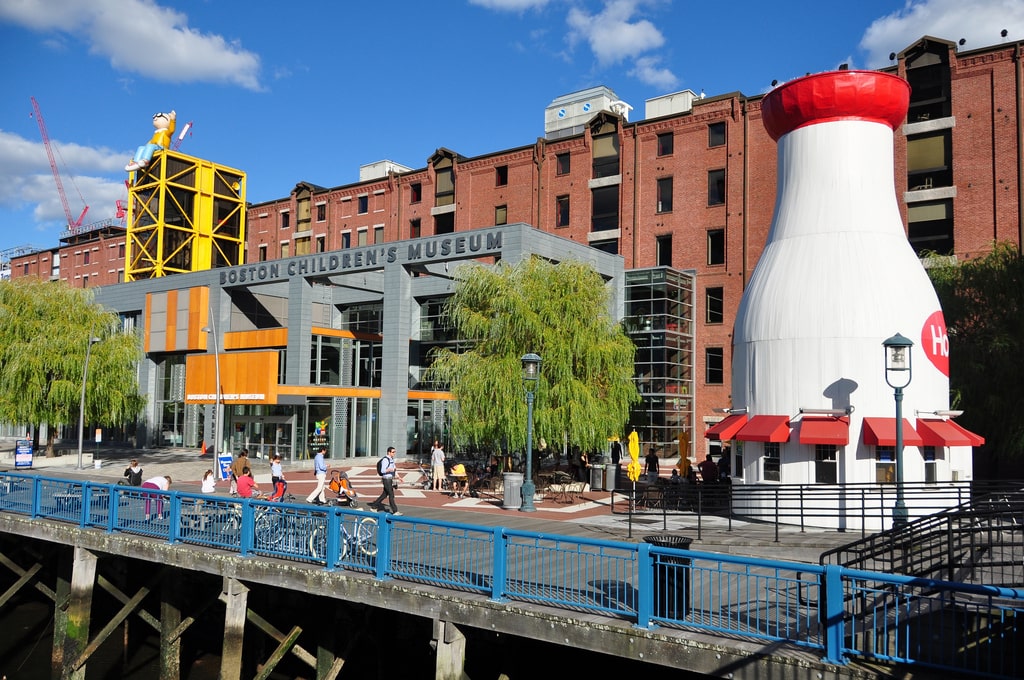

Nestled along the Fort Point Channel in Boston, the Boston Children’s Museum is a vibrant portal into the world of imagination and discovery. As one of the oldest children's museums in the United States, it has been a cornerstone of innovative education and family engagement for over a century. Founded in 1913 by a group of visionary educators from the Women’s Education Association of Boston, the museum sought to create a space where children could learn through play—an avant-garde concept at the time. Over the years, it has evolved from a modest collection of donated objects and artifacts to a state-of-the-art facility that welcomes over half a million visitors annually.
The museum's architecture is a harmonious blend of the old and the new. Its modern facade, a striking example of sustainable design, incorporates recycled materials and energy-efficient systems. The centerpiece is the three-story glass extension known as the Hood Milk Bottle, an iconic giant milk bottle structure that doubles as a snack bar. This whimsical piece of architecture is integral to the museum's identity and a beloved fixture on the Boston skyline. Inside, art is not confined to the walls; interactive exhibits encourage children to engage with the arts, from painting and pottery to the creative expression found in the "Art Studio."
Culturally, the museum is a microcosm of Boston’s rich diversity. It celebrates global traditions through exhibits like the Japanese House, a fully equipped, 100-year-old house from Kyoto. This exhibit provides an immersive experience into Japanese culture, allowing visitors to explore everything from traditional tatami mats to authentic Japanese tea settings. The museum also hosts seasonal festivals and cultural celebrations, such as the Lunar New Year and Diwali, which offer families a taste of global traditions and foster a deeper understanding of different cultures.
While the museum itself does not offer a full dining experience, it is surrounded by the culinary delights of Boston. Families can explore nearby eateries that offer local favorites such as New England clam chowder, lobster rolls, and Boston cream pie. The museum’s proximity to the Seaport District means visitors can easily indulge in a variety of seafood, a staple of Boston’s gastronomy, after a day of exploration.
A lesser-known curiosity of the Boston Children's Museum is its commitment to accessibility and inclusivity. It boasts a range of sensory-friendly events designed for children with autism and other sensory processing needs, ensuring that the museum is a welcoming space for all. Another hidden gem is the museum’s involvement in environmental education, demonstrated through its Green Trail, which educates children about sustainable practices and conservation in an interactive manner.
For those planning a visit, the museum is open year-round, but weekdays during the school year tend to be less crowded. It's wise to plan your trip to coincide with one of their special exhibits or cultural events for an enriched experience. Be sure to check out the "Construction Zone," where little builders can don hard hats and build with real tools under supervision—a perfect spot for budding engineers.
In summary, the Boston Children's Museum is more than just a place for play; it's a conduit for learning, culture, and community. Whether you're sliding down the giant slide, marveling at the dinosaurs, or partaking in a multicultural festival, the museum offers a unique window into the world, seen through the eyes of a child. It’s a must-visit destination for families seeking an engaging, educational, and fun experience in the heart of Boston.


