
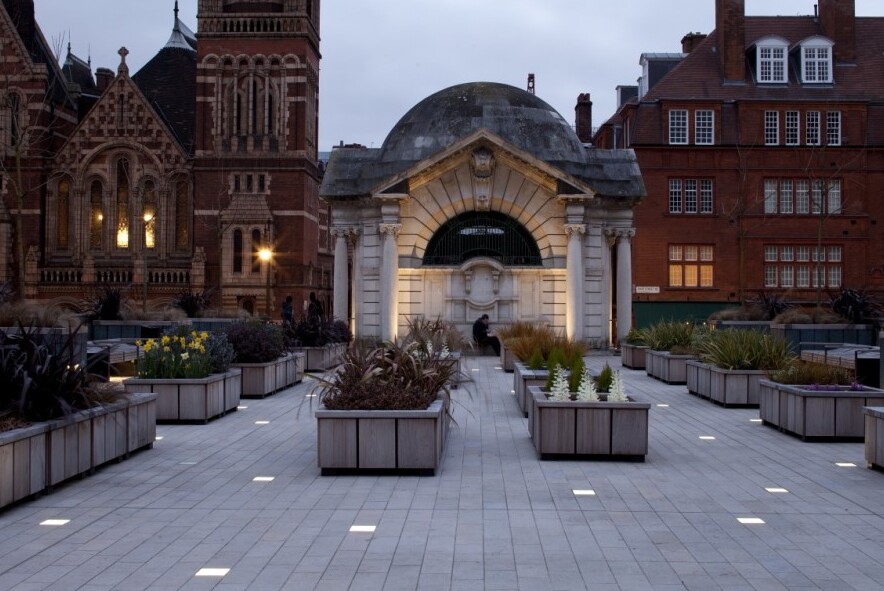

Nestled in the heart of Mayfair, just a stone's throw from the bustling Oxford Street, lies a hidden gem that offers a tranquil escape from the urban frenzy: Brown Hart Gardens. This elevated oasis is not just a serene retreat but a slice of history and culture that tells the story of London's evolution, with its roots stretching back to the late 19th century.
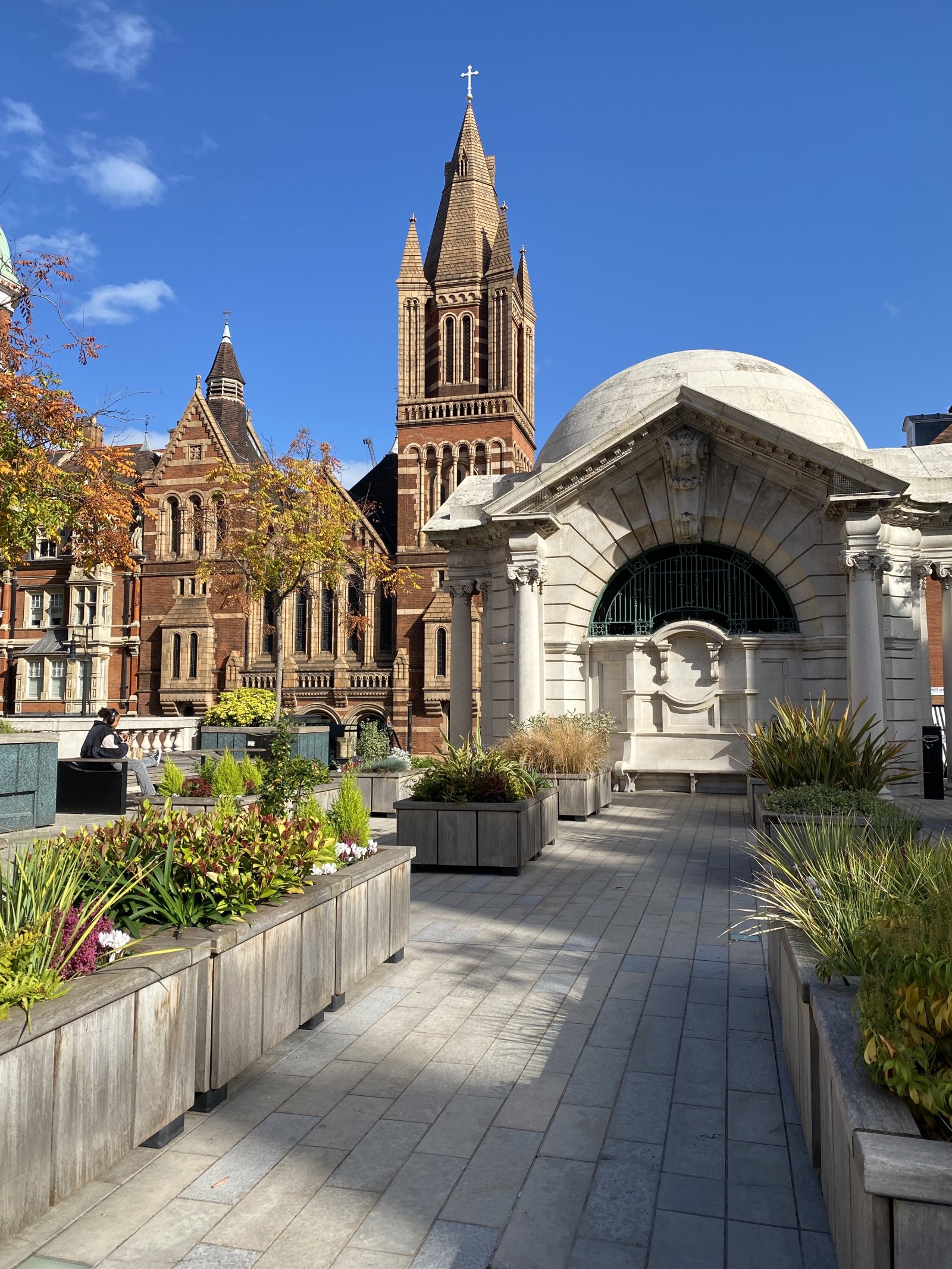
Originally, the site where Brown Hart Gardens now flourishes was occupied by the Duke Street Chapel, which served the local community until its demolition in the 1880s. In its place, the Grosvenor Estate commissioned an electricity substation in 1905, a crucial development during a time when London was rapidly electrifying. To mitigate the substation's utilitarian presence, the decision was made to transform its roof into a public garden. This innovative solution was designed by architect C. Stanley Peach, who sculpted the garden into an elevated terrace that opened to the public in 1906.
The architecture of Brown Hart Gardens is an intriguing blend of utility and elegance. The garden's layout is characterized by its symmetrical design and classical elements. Stone balustrades and stairways frame the space, while decorative urns punctuate the garden's corners. At the heart of the garden lies a charming pavilion, adding architectural flair with its art deco influences. This structure was ingeniously designed to harmonize with the grandiose buildings of Mayfair, underscoring the area's rich architectural tapestry.
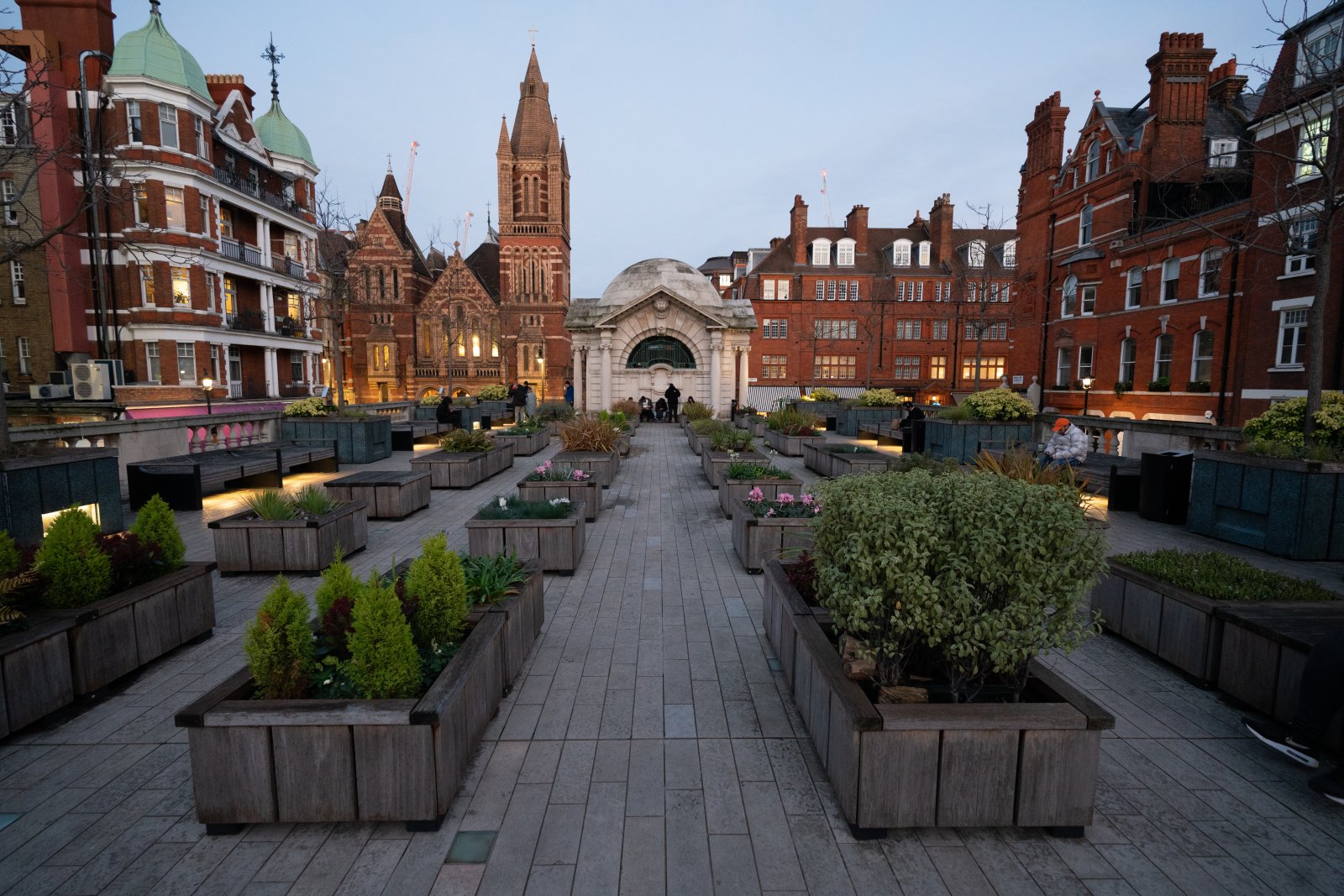
Artistic significance is woven into the very fabric of Brown Hart Gardens. The garden's pavilion, with its intricate detailing and ornamental features, serves as a reminder of the artistic aspirations of early 20th-century London. It stands as a testament to the city's commitment to beautifying public spaces, even those sitting atop industrial necessities. While Brown Hart Gardens may not house famous sculptures or paintings, its very existence is a tribute to the art of urban design and landscape architecture.
In terms of local culture, Brown Hart Gardens mirrors the quiet elegance and exclusivity that defines Mayfair. It serves as a gathering place for locals seeking respite and reflection, embodying the genteel spirit of the neighborhood. The gardens are often used for small community events and gatherings, making them an integral part of the area's social fabric. While Mayfair is more renowned for its luxury shopping and high-end dining, Brown Hart Gardens offers a glimpse into the quieter, more intimate side of London life.
Speaking of dining, the gastronomic landscape around Brown Hart Gardens is as refined as the gardens themselves. While there are no eateries directly within the garden, the surrounding area is a haven for food lovers. Mayfair is home to some of London's most prestigious restaurants and cafes, where visitors can indulge in everything from traditional British afternoon tea to cutting-edge international cuisine. Nearby establishments offer a taste of Mayfair's culinary heritage, from classic dishes like fish and chips to more contemporary fare crafted by Michelin-starred chefs.
For those seeking lesser-known curiosities, Brown Hart Gardens has a few secrets up its sleeve. One such curiosity is its role during World War II. While the gardens provided a peaceful retreat, the substation below was vital to the wartime effort, supplying electricity to power London's defense mechanisms. Moreover, its elevated position has made it a favored spot for photographers capturing unique perspectives of Mayfair's skyline.
When planning a visit, consider these practical tips: Brown Hart Gardens is open daily, offering free access to the public. The best time to visit is during the spring and summer months when the garden is in full bloom, and the weather is ideal for a leisurely stroll or a quiet lunch on one of the benches. Early mornings or late afternoons tend to be less crowded, allowing for a more serene experience. Be sure to admire the garden's architectural details and take a moment to enjoy a coffee from the nearby Illy Caffè, conveniently located at the garden's entrance.
As you explore the gardens, take in the juxtaposition of tranquility and history that defines this unique space. Whether you're a history buff, an architecture enthusiast, or simply someone in need of a peaceful escape, Brown Hart Gardens offers a captivating glimpse into the heart of London's past and present.


