



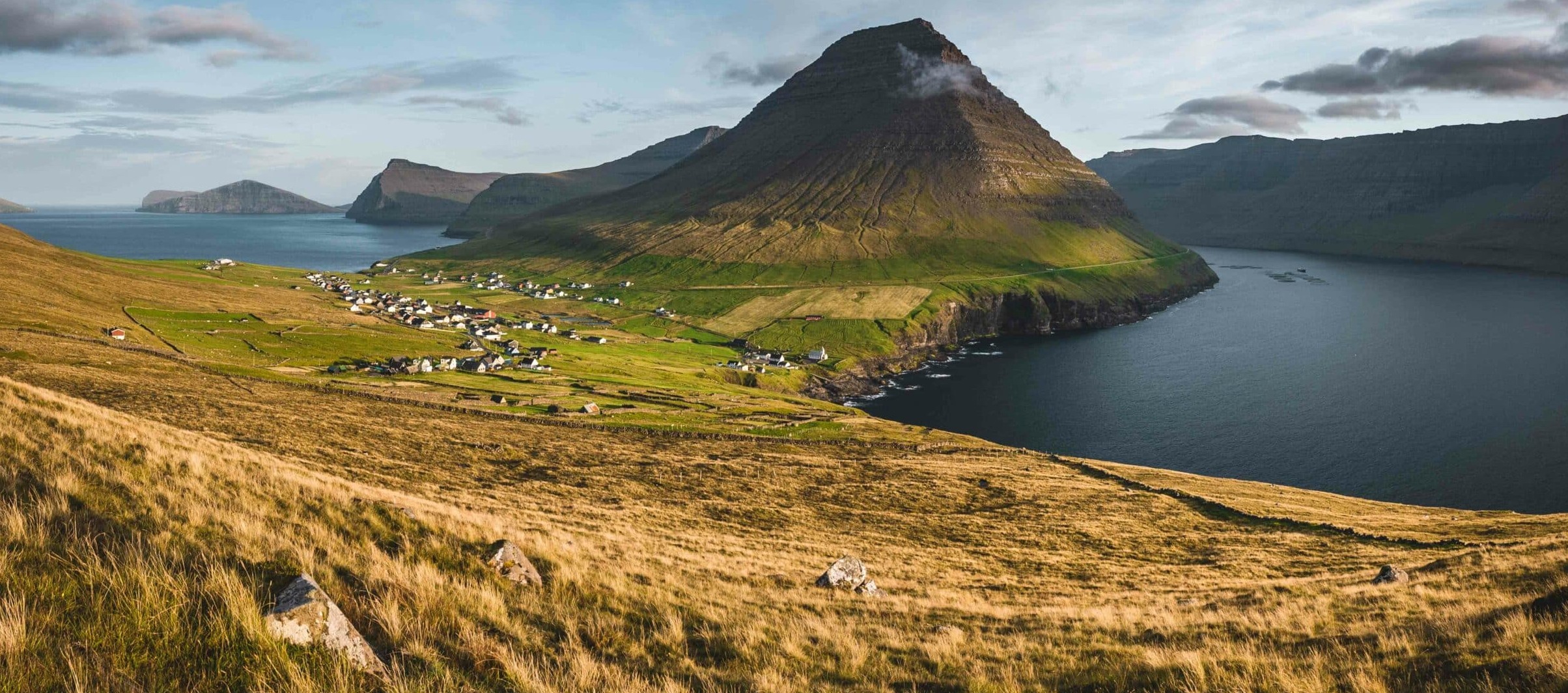
Rising dramatically from the North Atlantic waters, Cape Enniberg on the Island of Viðoy in the Faroe Islands is a testament to nature's grandeur and the deep history etched into these remote lands. Standing at a staggering 754 meters (2,474 feet), it is one of the highest sea cliffs globally, serving as both a formidable natural fortress and a beacon for those yearning to explore its rugged beauty.
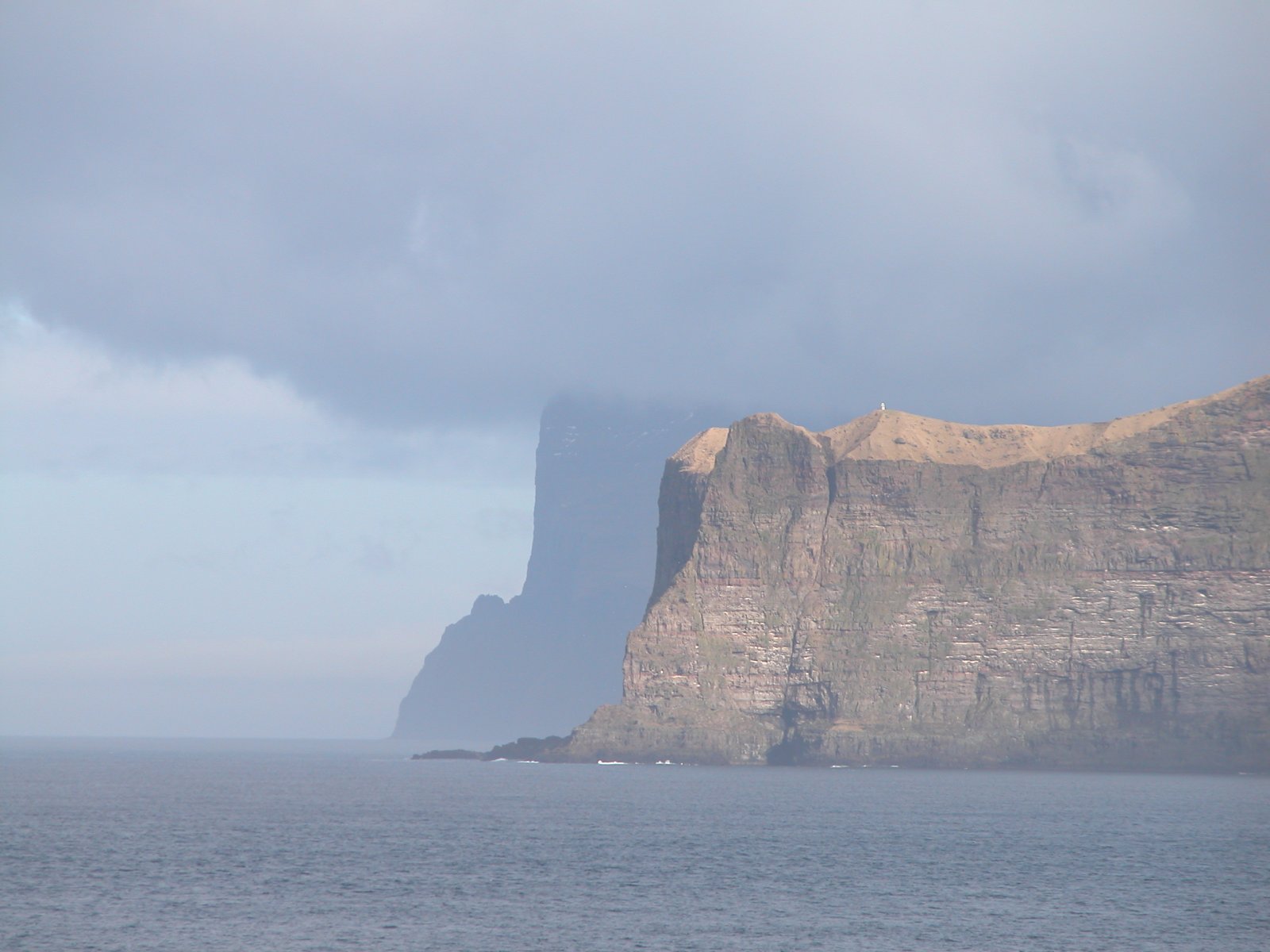
The Faroe Islands, including Viðoy, have a history steeped in Norse mythology and Viking exploration. First settled by Norsemen around the 9th century, these islands have long been a nexus of maritime navigation and seafaring tales. Cape Enniberg itself, while more a natural marvel than a historical landmark, has witnessed the ebb and flow of maritime history, serving as a silent sentinel over the centuries. Its steep cliffs provided a natural defense against invaders and a vantage point for ancient Faroese looking out to the boundless sea.
The art and architecture of the Faroe Islands reflect a blend of practicality and subtle beauty. While Cape Enniberg's architecture is purely natural, the nearby villages on Viðoy, such as Viðareiði, showcase traditional Faroese buildings with grass-covered roofs designed to withstand harsh weather. Art in the region carries a strong connection to the natural environment; local artists often capture the dramatic landscapes and the play of light on the sea. The Faroese painter Sámal Joensen-Mikines is renowned for his evocative depictions of the islands' rugged scenery and the life of its people.
Culturally, the Faroe Islands are vibrant with traditions. The local Ólavsøka festival, celebrated at the end of July, is the Faroese national holiday and a time of music, sports, and community gatherings. Though not specific to Cape Enniberg, these cultural festivities animate the surrounding villages and offer a glimpse into the islanders' deep-rooted customs. The Faroese language, with its roots in Old Norse, is proudly spoken, and traditional chain dancing, a communal folk dance, remains a cherished practice.
When it comes to gastronomy, the Faroe Islands offer a unique culinary experience shaped by their remote location. The rugged coastline and abundant marine life mean that seafood is a staple. Ræst kjøt, a fermented mutton dish, and skerpikjøt, air-dried lamb, are traditional delicacies that reflect the Faroese approach to food preservation. The islands also produce excellent salmon, and local dishes often feature freshly caught fish. For those visiting, savoring a meal at a local home or a small village eatery provides an authentic taste of Faroese hospitality.
Among the lesser-known curiosities of Cape Enniberg is its role as a birdwatcher's paradise. The cliffs are home to thousands of seabirds, including puffins, fulmars, and guillemots. The island's remote and wild nature means that many species thrive undisturbed, offering a spectacle of avian life that is both mesmerizing and educational. Thus, Cape Enniberg is not just about the views but also about the vibrant life that inhabits its craggy recesses.
For those planning a visit, practical information is key. The best time to explore Cape Enniberg is during the summer months, from June to August, when the weather is relatively mild and the days are long. However, even in summer, the climate can be unpredictable, so dressing in layers and preparing for rain is advisable. Hiking to the top of Cape Enniberg is a challenging endeavor, requiring good physical fitness and, ideally, a local guide to navigate the terrain safely. The views from the summit, though, are nothing short of spectacular, offering a panorama that stretches across the ocean and the islands.
In visiting Cape Enniberg, travelers not only encounter one of the world's most impressive cliffs but also engage with the rich tapestry of Faroese history, culture, and nature. Each element of this remarkable locale contributes to an experience that is as awe-inspiring as it is enriching.
