



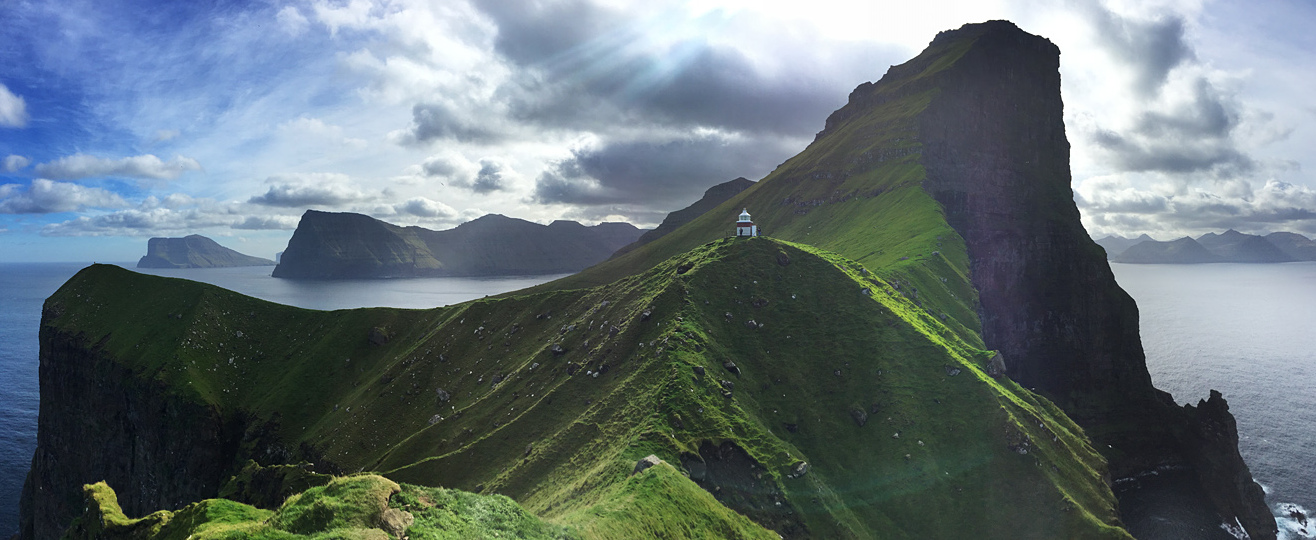
Perched on the northernmost tip of Kalsoy Island in the Faroe Islands, the Kallur Lighthouse stands as a beacon of both navigation and breathtaking beauty. Its remote location and the journey to reach it are akin to stepping into a Nordic fairy tale. As you approach the lighthouse, the rolling hills and sheer cliffs of Kalsoy unfold like pages from an ancient saga, inviting you to explore a landscape both rugged and serene.
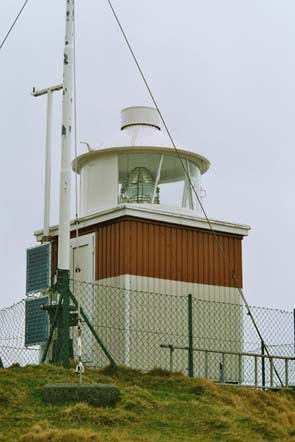
The history of the Faroe Islands is steeped in Norse legend, with the islands first settled by Vikings in the 9th century. The Kallur Lighthouse itself was built in 1927, a period when the maritime industry was crucial to the Faroese way of life. Its construction marked a significant development in ensuring the safety of seafarers navigating the treacherous waters of the North Atlantic. Though small and unassuming, the lighthouse plays a pivotal role in the island's maritime history, guiding ships safely through the fjords.
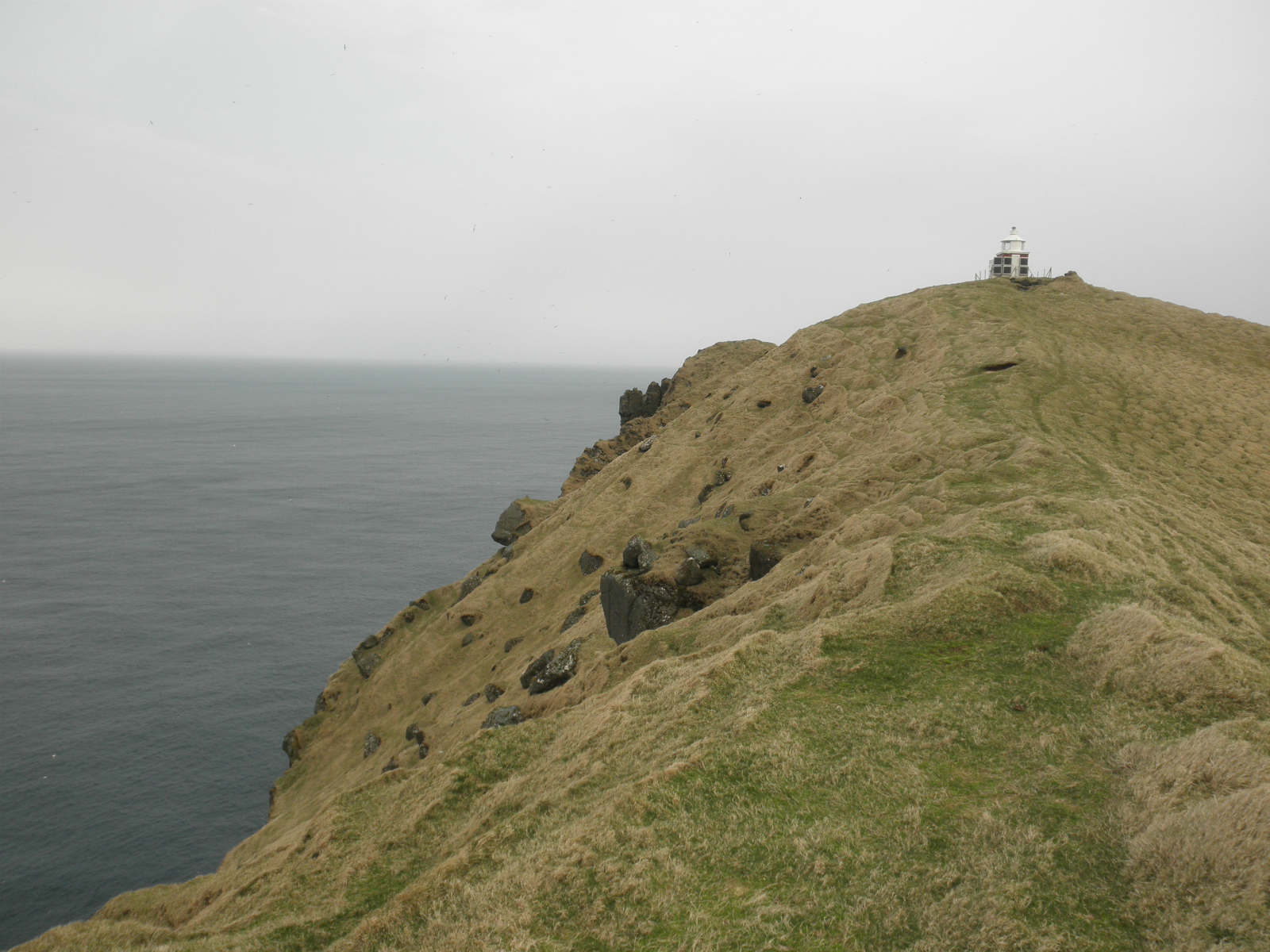
Architecturally, the Kallur Lighthouse is modest, yet its simplicity is part of its charm. Its white cylindrical tower contrasts starkly against the verdant greens and grays of the island, a lone sentinel against the elements. The structure embodies a functionalist approach, typical of many lighthouses built in the early 20th century, focusing on utility over embellishment. While the lighthouse itself might not boast ornate designs, the artistry lies in its harmonious integration with the natural landscape, creating a scene that could easily inspire poets and painters alike.
Kalsoy Island and its lighthouse are not just about visual splendor; they are steeped in local culture and tradition. The islanders, known for their resilience and connection to the sea, celebrate their heritage through festivals such as Ólavsøka, a national holiday celebrated across the Faroe Islands with traditional Faroese chain dancing and rowing competitions. This affinity for the ocean is reflected in the local customs and storytelling, with legends of selkies—mythical creatures that can transform from seals into humans—adding a touch of mysticism to the island's cultural tapestry.
No visit to the Faroe Islands is complete without indulging in its unique gastronomy. The islands are renowned for their seafood, and Kalsoy is no exception. Traditional dishes such as ræst kjøt, air-dried and fermented lamb, and skerpikjøt, wind-dried mutton, reflect the islanders' resourcefulness and deep connection to the land and sea. Pairing these with a local beer, like the popular Føroya Bjór, offers a true taste of Faroese culinary tradition.
Among the lesser-known curiosities of the Kallur Lighthouse is its appearance in the 2015 James Bond film, Spectre. The dramatic landscape surrounding the lighthouse served as the backdrop for some of the film's most iconic scenes, cementing its status as a place of cinematic allure. Additionally, the island of Kalsoy is often referred to as the "Flute Island" due to its long, narrow shape and the series of tunnels piercing through its mountains, adding an element of intrigue to those who venture here.
For those planning a visit, the best time to experience the Kallur Lighthouse is during the summer months, from June to August, when the weather is relatively mild and the days are long. The journey to the lighthouse involves a ferry ride from the town of Klaksvík to the village of Syðradalur, followed by a scenic hike across the island's dramatic terrain. It is advisable to wear sturdy hiking boots and be prepared for sudden changes in weather, a common feature of the North Atlantic climate.
As you walk the path towards the lighthouse, keep an eye out for the abundant birdlife, including puffins and fulmars, that nest along the cliffs. The panoramic views from the lighthouse are nothing short of spectacular, offering vistas of the surrounding islands and endless ocean—a reward that makes the journey well worth the effort. Whether you're an avid hiker, a history enthusiast, or simply in search of natural beauty, the Kallur Lighthouse on Kalsoy Island promises an unforgettable adventure.
