
← Back

Castle of Pescolanciano

86097 Pescolanciano IS, Italia ★★★★☆ 172 views
Clark Kent
Pescolanciano
🏆 AI Trip Planner 2026

Get the free app

Discover the best of Pescolanciano with Secret World — the AI trip planner with 1M+ destinations. Get personalized itineraries, hidden gems and local tips. Free on iOS & Android.

🧠 AI Itineraries 🎒 Trip Toolkit 🎮 KnowWhere Game 🎧 Audio Guides 📹 Videos
Download on the App Store Get it on Google Play
Scan to download Scan to download

Palaces, Villas and Castles · Pescolanciano

Castle of Pescolanciano - Pescolanciano | Secret World Trip Planner

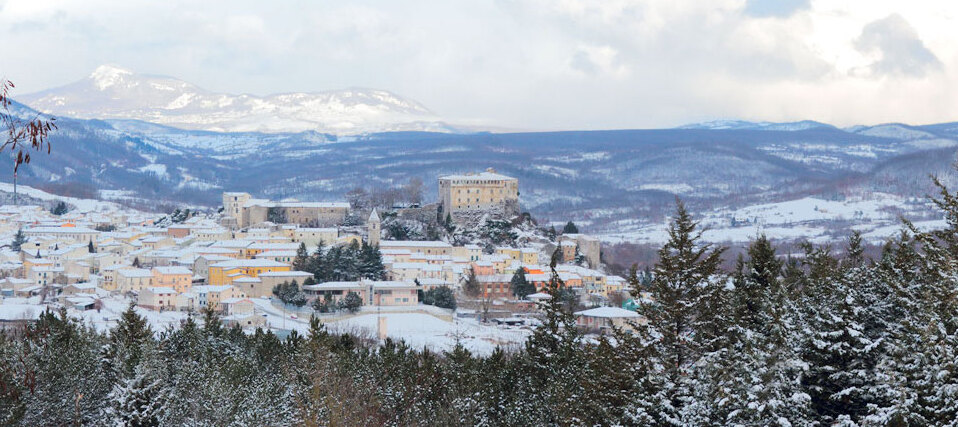
In the 4th century B.C. the territory of Pescolanciano was used by the Samnite people mainly to organize themselves in view of the clash with Rome. Its origins, however, are to be found in medieval times. In Norman times, in the twelfth century, the municipality was called "Pesclum lanzanum": the first of the two terms was to indicate a stone or a boulder, as reported by the historian Galanti, among other things of common use to name a town in medieval times that stood on a cliff or very steep rock; the term "lanzanum" instead has a rather mysterious meaning, as noted by Masciotta himself in his historical analysis. The Castle of Pescolanciano stands on a rocky hill, looking down on the village of Pescolanciano (IS) and the Tratturo Castel di Sangro - Lucera, 26 km from Agnone and 17 km from Isernia. It is located a stone's throw from the Collemeluccio Nature Reserve, one of the main areas of a territory of great naturalistic importance: the UNESCO Collemeluccio-Montedimezzo Alto Molise MAB Biosphere Reserve. The Castle dates back at least to the 12th century, to the times of Ruggero da Pescolanciano, although older sources would place it in the period of Charlemagne. It was owned by various feudal families, mainly the Carafa della Spina between the 14th and mid-16th centuries, who added a new area to the keep tower in the southeast part of the castle.

At the end of 1500 came the noble Neapolitan family of d'Alessandro, from which the Castle today takes its name, which brought together the various separate buildings in a single fortress, built the outer courtyard and the charming drawbridge still used today. The Castle of Pescolanciano remained intact until the earthquake of 1805 when it unfortunately suffered various damages and was abandoned for about 30 years, until the mid 1800s it was restored by Duke Giovanni Maria d'Alessandro, with the addition of the top floor, which was initially a patrol walkway. More recent history tells us that in the twentieth century the manor was mainly inhabited as the summer residence of the d'Alessandro family, only to be abandoned in the mid 70s. In 2000 the Molise Region and the Province of Isernia bought a part of it.

🗺 AI Trip Planner

Plan your visit to Pescolanciano

Suggested itinerary near Castle of Pescolanciano

MAJ+
500.000+ travelers worldwide
  1. 🌅
    Morning
    Castle of Pescolanciano
    📍 Pescolanciano
  2. ☀️
    Afternoon
    Nature Reserve of Collemeluccio-Montedimezzo
    📍 3.6 km · Pescolanciano
  3. 🌆
    Evening
    The Ancient Theatre of Pietrabbondante
    📍 7.7 km · Pescolanciano

Buy Unique Travel Experiences

Powered by Viator

See more on Viator.com

Explore nearby · Pescolanciano

Frequently Asked Questions

The Castle of Pescolanciano dates back at least to the 12th century during the times of Ruggero da Pescolanciano, though some sources place it even earlier during Charlemagne's period. It was owned by various feudal families, most notably the Carafa della Spina between the 14th and mid-16th centuries, and later by the noble Neapolitan family d'Alessandro who unified its separate buildings into a single fortress and added the distinctive drawbridge that remains in use today.
The Castle stands on a rocky hill overlooking the village of Pescolanciano in the province of Isernia (IS), located 26 km from Agnone and 17 km from Isernia itself. It sits near the Tratturo Castel di Sangro - Lucera and is positioned just a stone's throw from the Collemeluccio Nature Reserve, making it easily accessible from nearby towns.
The earthquake of 1805 caused significant damage to the Castle, leading to its abandonment for approximately 30 years. The castle was eventually restored in the mid-1800s by Duke Giovanni Maria d'Alessandro, who added a top floor that was initially designed as a patrol walkway to help restore the structure to its former glory.
According to historian Galanti, 'Pescolanciano' comes from two terms: 'Pesclum' refers to a stone or boulder, which was commonly used in medieval times to name towns built on cliffs or steep rocks. The term 'lanzanum' has a more mysterious meaning that remains unclear, as noted by historian Masciotta in his analysis.
The Castle is situated just a stone's throw from the Collemeluccio Nature Reserve, which is part of the UNESCO Collemeluccio-Montedimezzo Alto Molise MAB Biosphere Reserve. This location makes it an ideal destination for visitors interested in both medieval history and natural heritage, as the surrounding territory is of great naturalistic importance.
