
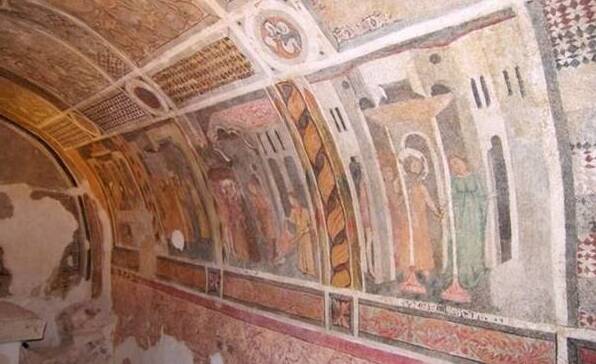

Nestled in the charming old town of Sant'Angelo in Grotte, the Church of San Pietro in Vincoli stands as a remarkable relic of medieval history. This enchanting site, believed to date back to the Longobard period, offers a glimpse into the rich tapestry of Italy's past, with its origins intertwined with the establishment of the local castrum, or fortress.
The church has witnessed centuries of change and restoration, particularly during the 14th century when it was revitalized with a stunning cycle of frescoes around 1350. These frescoes, dedicated to the "Sette Opere della Misericordia" (Seven Works of Mercy), depict poignant scenes that invite contemplation and reflection. The artwork is notable for its unique presentation, as the images are meant to be read from right to left, guiding viewers through a narrative of compassion and benevolence.
Architecturally, the Church of San Pietro in Vincoli exemplifies a blend of medieval styles, with its sturdy stone structure and simple yet evocative design. The interior is characterized by a tranquil ambiance, enhanced by the play of light filtering through ancient windows. The frescoes are not merely decorative; they serve as a visual theology, illustrating moral teachings that were crucial to the spiritual life of the community.
The local culture of Sant'Angelo in Grotte is deeply influenced by its historical heritage. The town hosts various festivals throughout the year, celebrating both religious and agricultural traditions. One of the most significant events is the feast of San Michele Arcangelo, dedicated to the town's patron saint. Locals gather for processions, music, and culinary delights that showcase the region's flavors.
Speaking of gastronomy, the area is known for its authentic Italian cuisine. Visitors can indulge in traditional dishes such as pasta alla chitarra—a handmade pasta often served with rich sauces—and caciocavallo, a local cheese that pairs beautifully with rustic bread and regional wines. The proximity to the blessed spring near the church adds an element of mystique to the culinary experience, as many believe the water possesses healing properties.
While the church itself attracts many visitors, there are lesser-known curiosities that often go unnoticed. For instance, the blessed spring, hollowed out in a nearby cave, is steeped in legend. According to local lore, it was St. Michael the Archangel who guided the Longobards to this very spot, marking it as a sacred location. This intertwining of history and myth adds a layer of intrigue to the visit. Additionally, the church's bell tower, though modest, offers an excellent vantage point for those willing to ascend, rewarding their efforts with breathtaking views of the surrounding landscape.
The best time to visit Sant'Angelo in Grotte is during the spring and early autumn months, when the weather is pleasantly mild, and the local flora is in full bloom. Early mornings or late afternoons are ideal for exploring the church and the surrounding area, allowing visitors to appreciate both the serene atmosphere and the intricate details of the frescoes without the crowds.
When visiting the Church of San Pietro in Vincoli, be sure to take your time to absorb the rich history and art that envelops this sacred space. Look closely at the frescoes to appreciate the skill and emotion of the artists who brought these biblical stories to life. Don’t forget to explore the nearby cave and blessed spring, where you can reflect on the legends that shaped the town.
In a world often rushing past its treasures, Sant'Angelo in Grotte offers a tranquil escape into Italy's medieval heart. For a truly personalized experience, consider using the Secret World app to create your own itinerary and uncover the hidden gems of this enchanting location.


