
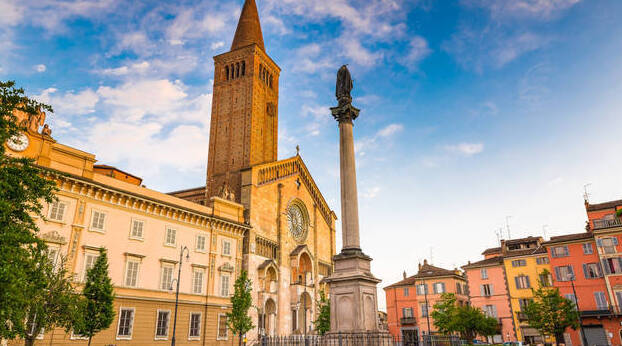

Nestled in the heart of Piacenza, the Cathedral of Piacenza, or Cattedrale di Piacenza, stands as a magnificent testament to the artistic and architectural prowess of the medieval era. Its grandeur emanates from the harmonious blend of Romanesque and Gothic styles, making it one of the most distinguished religious monuments in Northern Italy.
History and Origins Construction of this architectural gem began in 1122 under the guidance of the influential Bishop Anselmo da Borghi. The cathedral was completed in 1233, marking an important milestone in Piacenza's spiritual and civic life. Originally built over an older church dedicated to Saint Justina, the cathedral reflects the city’s historical significance as a center of trade and culture during the Middle Ages.
Throughout its history, the cathedral has witnessed numerous renovations and restorations, particularly after the devastating earthquake of 1780. These efforts have preserved its beauty and allowed it to remain a focal point for both locals and visitors alike. The cathedral has also played host to significant events in Piacenza's history, including the Concilio di Piacenza in 1095, which helped shape the future of Christianity in the region.
Art and Architecture The Cathedral of Piacenza is a marvel of Gothic Romanesque architecture. The façade, adorned with stunning sandstone and pink marble, features a gabled entrance flanked by three intricately carved portals. These portals boast exquisite bas-reliefs, some attributed to the notable sculptors Wiligelmo and Nicolò, who were key figures in the development of Romanesque art.
Inside, the cathedral is a treasure trove of artistic masterpieces. Visitors are greeted by the captivating frescoes of Camillo Procaccini and Ludovico Carracci, which adorn the walls and ceilings, bringing the sacred space alive with color and narrative. The dome, painted by Guercino in 1626-27, draws the eye upward, inviting contemplation of the divine.
One of the cathedral's most significant features is its crypt, which houses 108 Romanesque columns and the venerated relics of Saint Justina. This sacred space offers a glimpse into the early Christian heritage of the site. Don’t miss the chapel of the Baptistery, which contains an ancient baptismal font, and the 14th-century triptych by Serafino dei Serafini, which adds to the rich tapestry of religious art.
Local Culture and Traditions The Cathedral of Piacenza is not only an architectural landmark but also a vibrant part of the local culture. It serves as the spiritual heart of the community, hosting various liturgical celebrations, including the grand Feast of the Assumption each August. During this time, the cathedral becomes a focal point for the city's festivities, attracting locals and visitors alike.
The area around the cathedral is alive with traditions, including the annual Fiera di San Giuseppe, a fair that celebrates local craftsmanship and food, reflecting Piacenza's rich artisanal heritage. The Palio di Piacenza, a historical horse race held in the city, also highlights the deep-rooted customs and competitive spirit of its residents.
Gastronomy No visit to Piacenza is complete without indulging in its culinary delights. The region is renowned for its salumi, particularly coppa and salame di Piacenza, which are best enjoyed with piadina, a traditional flatbread. Pair these delicacies with a glass of Gutturnio, a local red wine that complements the rich flavors of the region.
For a sweet treat, try the torta di piacentini, a delectable cake made with nuts and spices, which offers a taste of the local tradition in every bite. The local markets surrounding the cathedral are perfect for sampling these gastronomic treasures, making them a must-visit for food enthusiasts.
Lesser-known Curiosities While the cathedral is widely recognized for its architectural splendor, there are hidden gems that many visitors overlook. One fascinating detail is the coin-operated artistic-historical guide available in the sacristy, which provides an engaging way to explore the cathedral’s history and art at your own pace.
Additionally, the illumination of the apse and the unique dome, which can be illuminated for a small fee, creates a stunning visual experience that transforms the atmosphere inside the cathedral during evening visits. Look closely at the intricate carvings on the columns, as they tell stories and depict scenes from the Bible, often overlooked by the untrained eye.
Practical Visitor Information The best time to visit the Cathedral of Piacenza is during the spring and early autumn months, when the weather is mild, and the city is less crowded. Arriving early in the day allows you to appreciate the cathedral’s beauty in a serene atmosphere, free from the hustle and bustle of tourists.
When visiting, take advantage of the complete guide available in the sacristy to deepen your understanding of the cathedral’s rich history and art. Don’t forget to explore the surrounding squares, where you can enjoy a coffee or gelato while soaking in the ambiance of this charming city.
For a personalized itinerary that captures the essence of Piacenza, consider using the Secret World app to plan your visit.


