
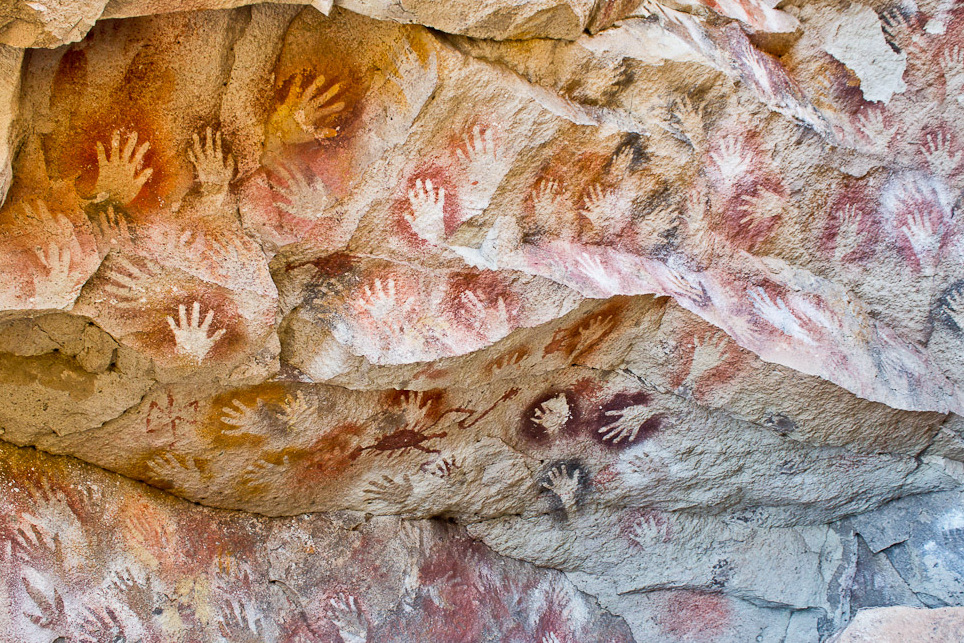

Nestled in the remote expanse of rural Patagonia, Argentina, the Cave of Hands (Spanish: Cueva de las Manos) is a breathtaking testament to human creativity and survival. This extraordinary site, with its stunning rock art, offers a glimpse into the lives of the ancient inhabitants who once roamed this rugged landscape. As you approach the cave, the dramatic cliffs and the expansive Patagonian steppe envelop you, setting the stage for the historical and artistic marvels that lie within.
History and Origins The Cave of Hands dates back to approximately 9,000 years ago, making it one of the oldest known sites of prehistoric art in South America. Situated in the province of Santa Cruz, this rock shelter was a significant stop for prehistoric hunters, who utilized the caves as resting places while following herds of guanacos and other prey across the Patagonian plains. The cave's name derives from the hundreds of handprints, both positive and negative, left on the walls by its ancient visitors.
The handprints, created using natural pigments, speak volumes about the community's social and cultural practices. Archaeological evidence suggests that these artists were part of a small, nomadic group known as the Tehuelche, who engaged in hunting, gathering, and fishing.
Art and Architecture The artistry found within the Cave of Hands is astonishing. The rock walls display an array of colorful handprints, rendered in shades of orange, yellow, and red, created by blowing pigment through hollow bones or tubes. The negative impressions of hands, with fingers splayed wide, create a hauntingly beautiful gallery of human expression. Alongside these prints are depictions of animals, including guanacos and rheas, and intricate hunting scenes that reveal the daily lives of these ancient people.
The architectural structure of the cave itself is a natural wonder, formed by the eroding forces of wind and water over millennia. Visitors can explore a series of interconnected rock shelters that offer both beauty and shelter, allowing a peek into the past while surrounded by the stunning backdrop of the Patagonian landscape.
Local Culture and Traditions The Cave of Hands is not only an archaeological site but also a cultural landmark for the region. Local communities regard it with pride, recognizing its significance in understanding their heritage. While the cave itself does not host festivals, the surrounding region celebrates various local customs and traditions that pay homage to the indigenous peoples of Patagonia. Traditional music, dance, and storytelling events often feature themes from the Tehuelche culture, and craft fairs showcase handmade goods inspired by ancient designs.
Gastronomy The rich culinary landscape of Patagonia complements its vibrant history. Typical local foods include asado, a traditional Argentine barbecue featuring cuts of lamb and beef cooked over an open flame. Patagonian lamb, renowned for its unique flavor due to the region's grazing practices, is a must-try. Pair your meal with a glass of Malbec, a robust red wine that reflects the character of the land. For a sweeter treat, indulge in dulce de leche, a delicious caramel-like spread that is a staple in Argentine cuisine.
Lesser-known Curiosities Despite its fame, the Cave of Hands holds many secrets that intrigue visitors. For instance, some handprints are believed to have been made by children, indicating the inclusive nature of this early society. Additionally, the pigments used for the art were sourced from local minerals, showcasing an understanding of natural resources that is impressive for the time. Interestingly, there are over 800 handprints within the cave, but only a fraction of them is easily visible to visitors, inviting exploration and discovery.
Practical Visitor Information The best time to visit the Cave of Hands is during the spring (September to December) and autumn (March to May) months, when the weather is milder, making travel more comfortable. The site is located about 163 kilometers from the town of Perito Moreno, and visitors can reach it via a scenic drive through the rugged Patagonian landscape. Be sure to wear comfortable shoes for hiking, and bring along a camera to capture the stunning views.
As you explore the cave, take time to appreciate the artistry and history that have withstood the test of time, reminding us of our shared humanity.
For a tailored experience in planning your visit, consider using the Secret World app to create a personalized itinerary.


