
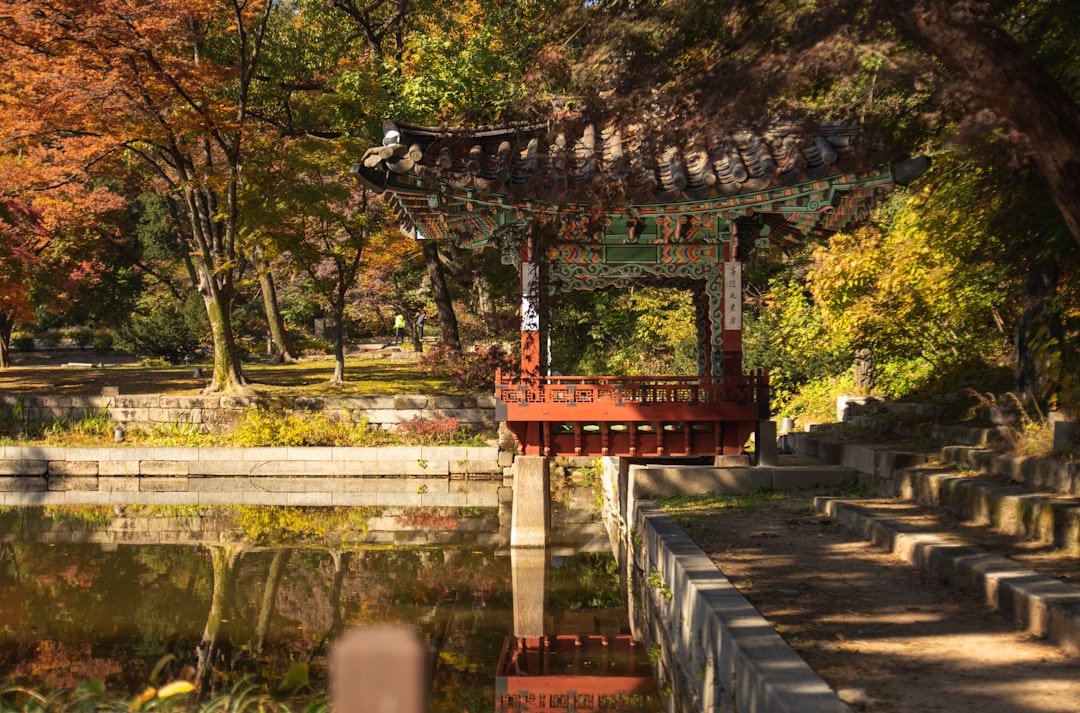

Among the red lacquered wooden portals and the curved roofs covered with gray tiles, Changdeokgung tells four centuries of history of the Joseon dynasty with an architectural precision that no photograph can fully capture. Built in 1405 by order of King Taejong as a secondary palace compared to the nearby Gyeongbokgung, the complex extends over about 45 hectares at the foot of Mount Bugaksan, in the heart of Seoul. Its layout does not follow the symmetrical grid typical of Chinese imperial palaces: the buildings instead adapt to the hilly terrain, creating an unusual dialogue between architecture and the natural landscape.
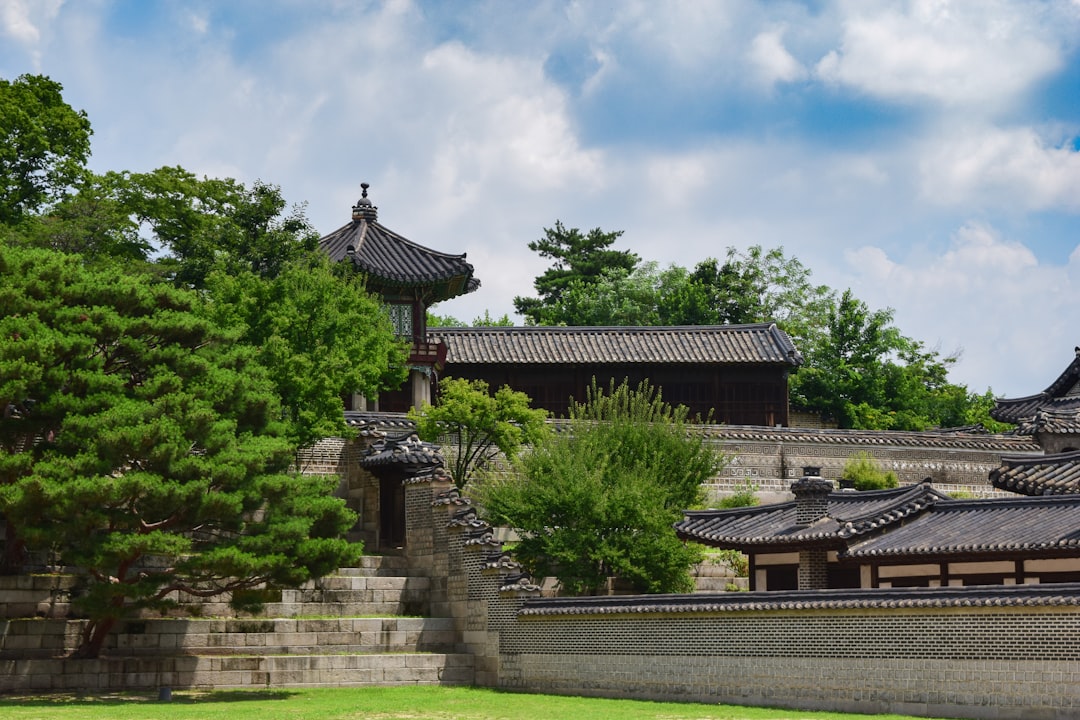
In 1997, UNESCO included Changdeokgung in the list of World Heritage Sites, recognizing this harmonious integration between human constructions and the surrounding environment as an exceptional example of palatial architecture in East Asia. Unlike many World Heritage sites that risk becoming tourist backdrops, here time still seems tied to the seasons: in autumn, the ginkgo and maple trees of the secret garden tint the landscape yellow and orange, while in summer, the lotus ponds reflect the pavilions like mirrors of still water.
The architecture of the palace: structures and details to observe
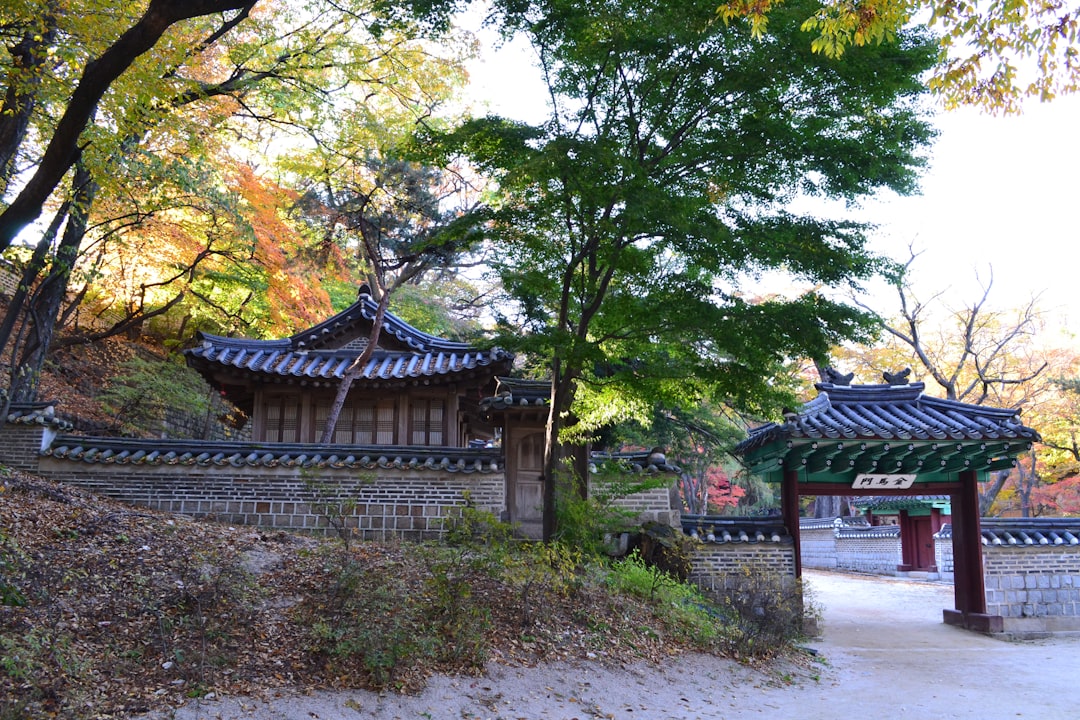
Entering through the Donhwamun, the main gate built in 1412 and one of the oldest surviving wooden entrances in Seoul, one accesses a stone corridor that leads to the Geumcheongyo bridge, which also dates back to the early years of the 15th century. This arched stone bridge, which spans a small artificial stream, is considered the oldest bridge in Seoul still in its original position. It is worth stopping to observe the bas-reliefs of mythical creatures carved on the side pillars, often overlooked by visitors rushing to the main courtyard.
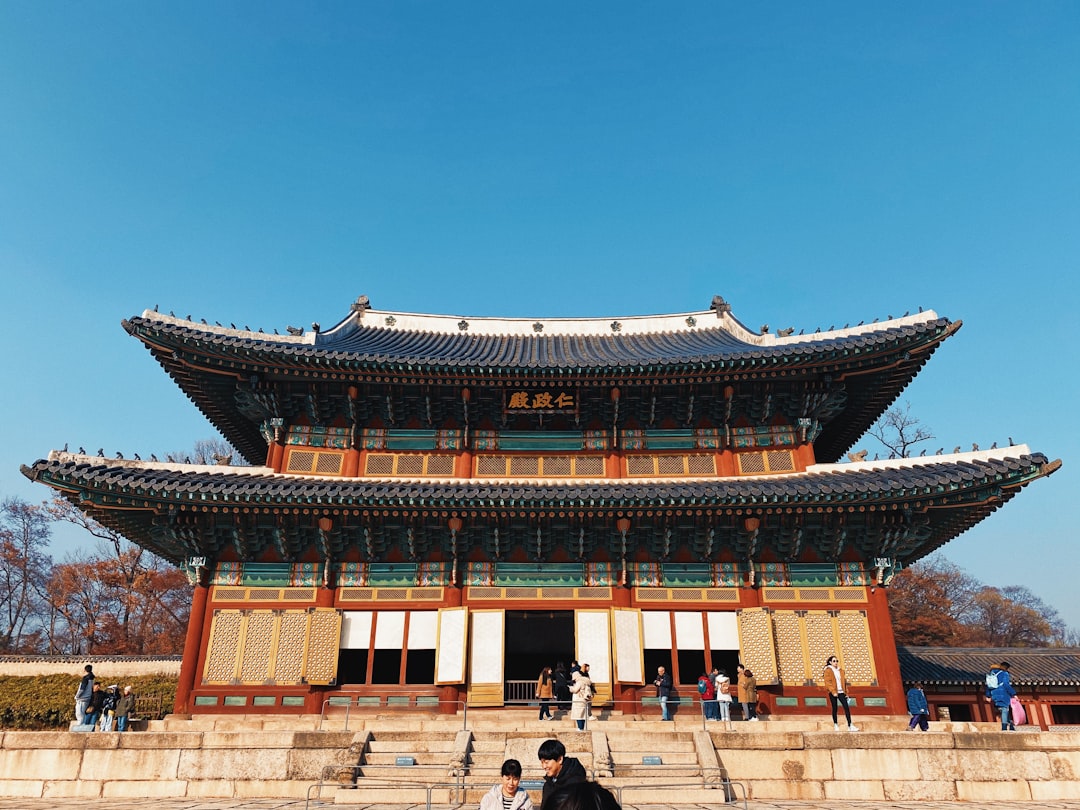
The Injeongjeon, the throne hall, is the most formal building in the complex. The current structure dates back to 1804, after previous versions were destroyed during the Japanese invasions of the 16th century and a subsequent fire. Inside, the throne is topped by a canopy decorated with golden phoenixes and a mural depicting the sun, the moon, and five mountain peaks — traditional symbols of Korean royal power. The brick floor and unpainted wooden columns still show the signs of time, giving the environment a rare authenticity.
The Secret Garden: Huwon and its Pavilions
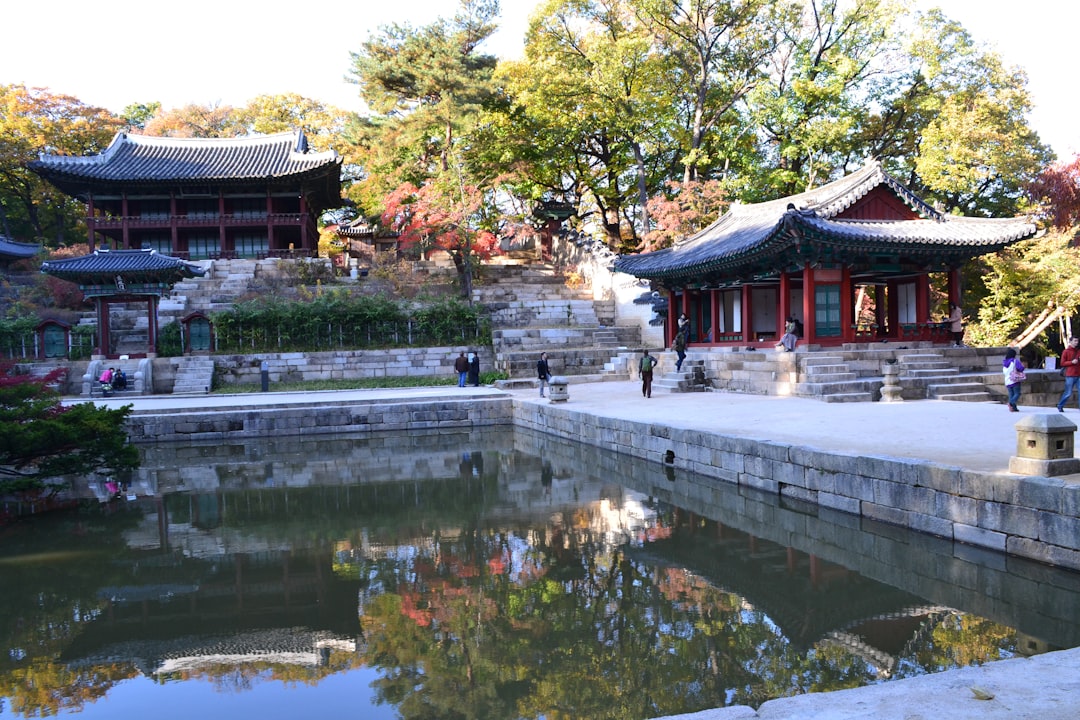
The most famous and least accessible part of the complex is the Huwon, the rear garden known as the Secret Garden. Covering about 32 hectares, or nearly three-quarters of the entire palace area, Huwon was reserved for the royal family and court officials. Even today, access is only allowed with limited guided tours, which start at fixed times and require a separate reservation from the regular entrance ticket.
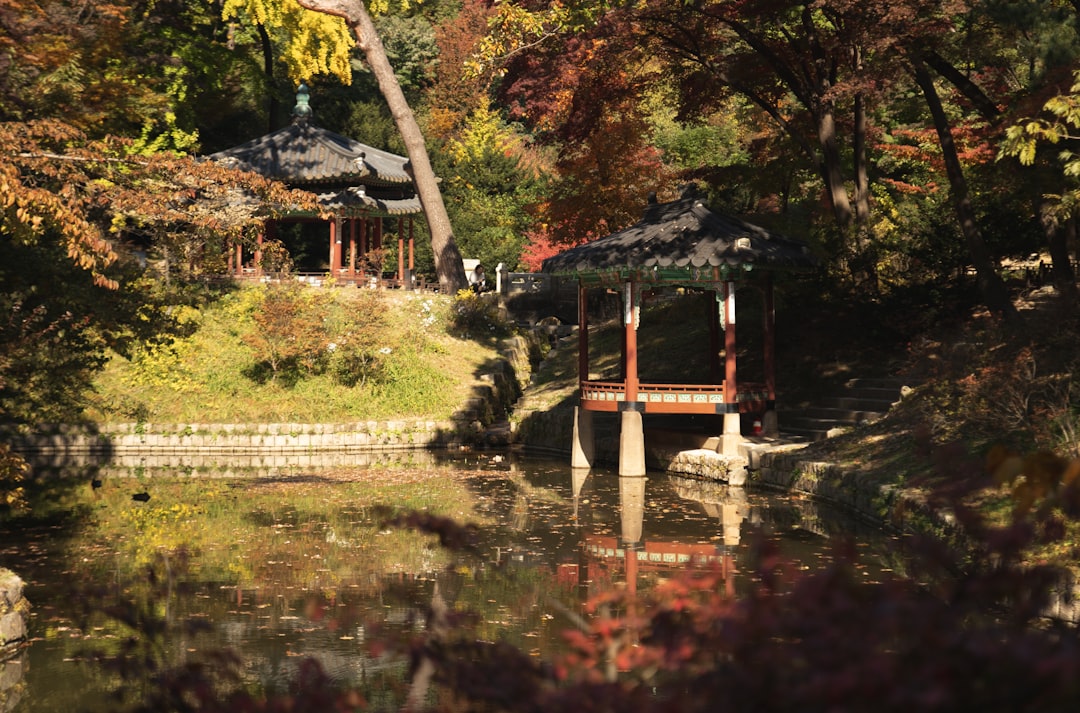
The visual centerpiece of the garden is the Buyongji, a rectangular pond dug in 1707 during the reign of Sukjong, surrounded by wooden pavilions including the famous Buyongjeong, a cross-shaped pavilion that partially extends over the water. Nearby stands the Juhamnu, a two-story library built in 1776 at the behest of King Jeongjo, who used it as a place of study and collection of Confucian texts. The green and red painted beams and the wooden lattice windows are exactly as they appear in prints of the time.
Practical tips for the visit
The entrance ticket to the palace costs about 3,000 won for adults, while the guided tour of the Huwon requires an additional fee of about 5,000 won. Guides are available in Korean, English, Japanese, and Chinese, with scheduled departures throughout the day. It is highly recommended to book the visit to the secret garden in advance on the official palace website, especially in April and October, when the cherry blossoms and autumn foliage attract the largest number of visitors.
The nearest subway station is Anguk on line 3, about ten minutes' walk from the main entrance. Allow at least two and a half hours to see both the palace and the garden with the guided tour. Visitors wearing the traditional hanbok, available for rent nearby, enter for free — an opportunity that many tourists gladly take, turning the visit into a photographic experience.


