
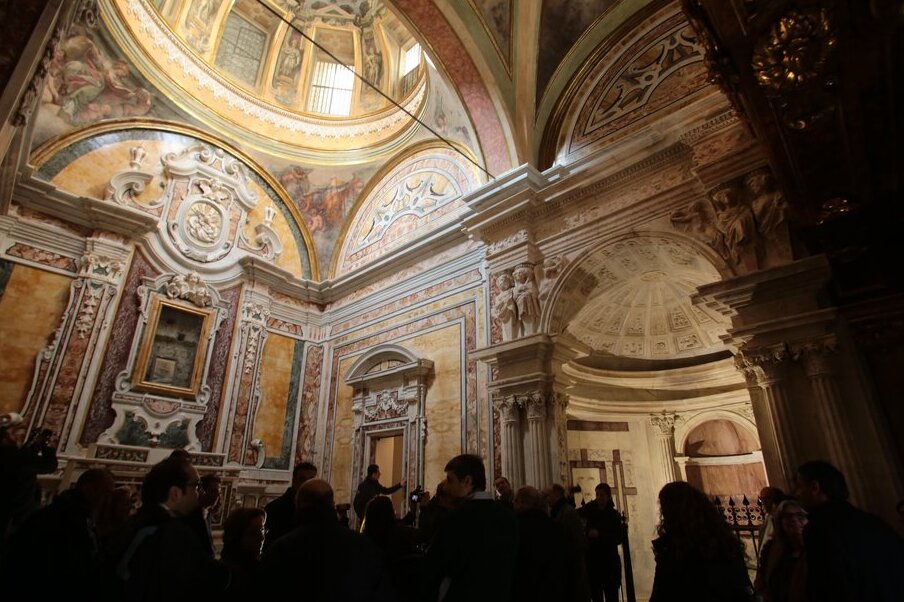

{"title": "Chapel of Santa Maria dei Pignatelli: Renaissance Masterpiece in Naples","description": "Nestled within the historical centre of Naples, the Chapel of Santa Maria dei Pignatelli is a hidden gem that embodies the rich tapestry of Renaissance art and architecture. This stunning chapel, often overlooked by tourists, has remained closed to the public for over fifty years, adding an air of mystery to its already intriguing history. Once a storied site for the worship of Santa Maria, it fell into neglect by the end of the 1960s, even becoming an illegal deposit for chairs. Yet, despite its current inaccessibility, its significance as a rare artifact of Renaissance Naples is undeniable.\n\nHistory and Origins \nThe origins of the Chapel of Santa Maria dei Pignatelli date back to the late 16th century, a time when Naples was a cultural melting pot under Spanish rule. The chapel was commissioned by the Pignatelli family, a noble lineage known for their influence and contributions to Neapolitan society. Built in the Mannerist style, the chapel reflects the transition from the Gothic to the Renaissance, marking a pivotal moment in Neapolitan architecture. Throughout the years, the chapel witnessed various significant events, including religious ceremonies and artistic gatherings, making it a cornerstone of local heritage.\n\nArt and Architecture \nArchitecturally, the chapel is a remarkable example of Renaissance design. Its façade is adorned with intricate stone carvings that depict biblical scenes and local motifs, showcasing the craftsmanship of the era. Inside, the frescoes and altarpieces tell stories of faith and devotion, featuring works by renowned artists of the time. The most notable artwork includes the Madonna dei Pignatelli, an exquisite depiction of the Virgin Mary that adds a spiritual dimension to the chapel's atmosphere. The chapel's overall layout, with its harmonious proportions and delicate details, exemplifies the artistic brilliance of Neapolitan Renaissance architecture.\n\nLocal Culture and Traditions \nThe cultural significance of the chapel extends beyond its walls. It is situated near Piazzetta Nilo and San Biagio dei Librai, key areas in Naples known for their vibrant street life and traditional crafts. The surrounding neighborhoods celebrate numerous festivals throughout the year, including the Feast of San Gennaro, where locals gather to honor their patron saint with processions, music, and food. The chapel, though not currently open for worship, remains a symbol of the deep-rooted Catholic traditions that permeate Neapolitan culture.\n\nGastronomy \nNo visit to Naples would be complete without indulging in its famous gastronomy. The area around the chapel is home to some of the city's best culinary delights. Local dishes such as pizza margherita, with its fresh mozzarella and basil, and sfogliatella, a flaky pastry filled with ricotta, are must-tries. Pair your meal with a glass of Limoncello, a traditional lemon liqueur that captures the essence of the Amalfi Coast. These flavors not only reflect the city's rich culinary heritage but also enhance the experience of exploring its historical sites.\n\nLesser-known Curiosities \nDespite its historical significance, the Chapel of Santa Maria dei Pignatelli is shrouded in lesser-known stories. For instance, it is said that the chapel once served as a secret meeting place for artists and intellectuals during the Renaissance, fostering a creative dialogue that shaped the artistic landscape of Naples. Additionally, the chapel's location on the ancient decumanus, a remnant of the Greco-Roman layout, adds another layer of historical intrigue, linking it to the foundational roots of the city itself. Visitors might also be surprised to learn that the chapel's name, "


