

As you step into the hallowed halls of San Domenico Maggiore, a sense of reverence and history envelops you. This monumental church, founded in 1233 by the Order of Preachers, stands as a testament to centuries of devotion, artistry, and the rich tapestry of Neapolitan history. Nestled in the heart of Naples, it has witnessed the rise and fall of dynasties, the fervor of religious devotion, and the passage of time.
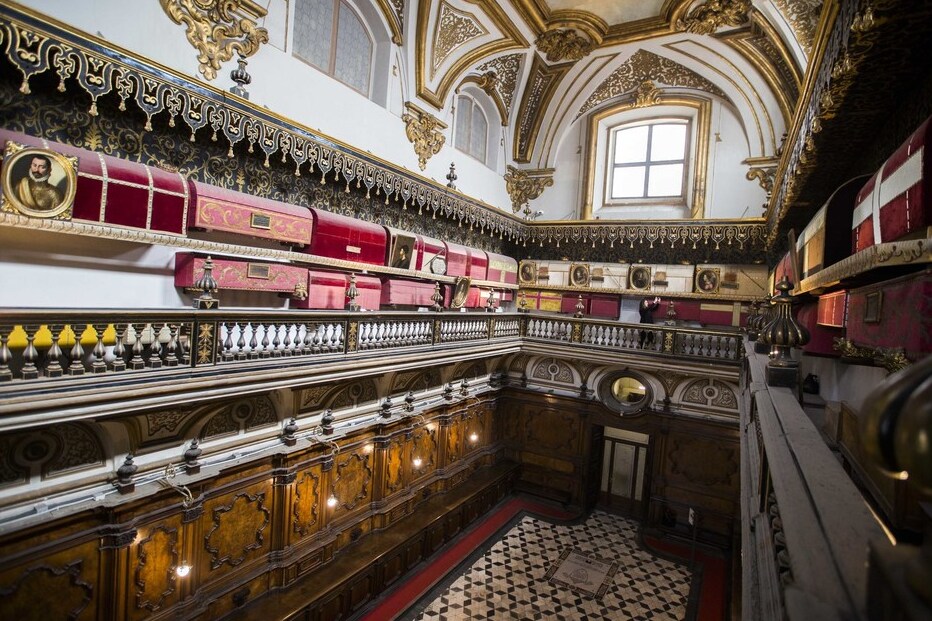
The church's architectural style reflects a blend of Gothic and Renaissance influences, characterized by its soaring vaults, intricate frescoes, and grand chapels. Among its many treasures, the Sacristy is particularly striking. Here, visitors gaze upon a hanging corridor known as the Passage of the Dead. Elevated about 4-5 meters, this corridor holds 42 sarcophagi adorned in silks and brocades, housing the mummified remains of some of Naples' most illustrious figures.
The history of these sarcophagi is as fascinating as the figures they contain. Originally scattered throughout the basilica, they were reconfigured in the late 1500s under the orders of King Philip II of Spain. The bodies of King Ferrante I of Aragon, Queen Giovanna IV, and Isabella of Aragon, among others, rest here, their garments and adornments restored and displayed in the adjacent Hall of Sacred Furnishings. Notably, the empty funeral ark of Alfonso V the Magnanimous, who founded the Neapolitan dynasty, whispers tales of migration and change; his body now lies in Catalonia.

The significance of San Domenico Maggiore extends beyond its architectural grandeur and historical artifacts. It is a focal point of local culture, embodying the spirit of the Dominican Order that has shaped Naples' religious landscape. Festivals and processions, particularly during Holy Week, draw locals and visitors alike, celebrating the rich traditions that have been passed down through generations. The church serves not only as a place of worship but as a gathering space for the community, where the echoes of prayers blend with the laughter of children playing in the surrounding square.
Food is another integral part of the Neapolitan experience, and while visiting San Domenico Maggiore, one cannot miss indulging in local delicacies. The area is famous for its pizza, often regarded as the best in the world. A classic Margherita, with its simple yet delectable toppings of fresh mozzarella, basil, and tomatoes, captures the essence of Naples. Another must-try is the sfogliatella, a flaky pastry filled with sweet ricotta, which pairs beautifully with a cup of strong Neapolitan coffee.
Yet, beyond the well-trodden paths, San Domenico Maggiore holds lesser-known curiosities that pique the interest of the inquisitive traveler. For instance, the Cloister, adorned with beautiful arches, often escapes the notice of many visitors, yet it offers a tranquil escape filled with lush greenery and moments for reflection. Additionally, the Treasure Room houses an enigmatic painting, the Salvator Mundi, attributed to Leonardo da Vinci's school, inviting questions about its origins and significance.
To truly appreciate San Domenico Maggiore and the Aragonese Arches, timing your visit can enhance your experience. The best time to explore is during the morning or late afternoon when sunlight streams through the stained glass, casting vibrant colors across the stone walls. Weekdays tend to be less crowded, allowing for a more intimate encounter with the art and history.
Practical tips for visitors include taking note of the dress code, as this is a place of worship; modest attire is appreciated. Don't forget to bring a camera to capture the stunning architecture and intricate details, but also take moments to simply absorb the atmosphere. Engage with local guides, who often share stories and insights that breathe life into the historical narrative of this sacred space.
As you leave San Domenico Maggiore, with its echoes of the past resonating in your heart, consider the myriad experiences Naples has to offer. A personalized itinerary could help you uncover hidden gems throughout the city.


