
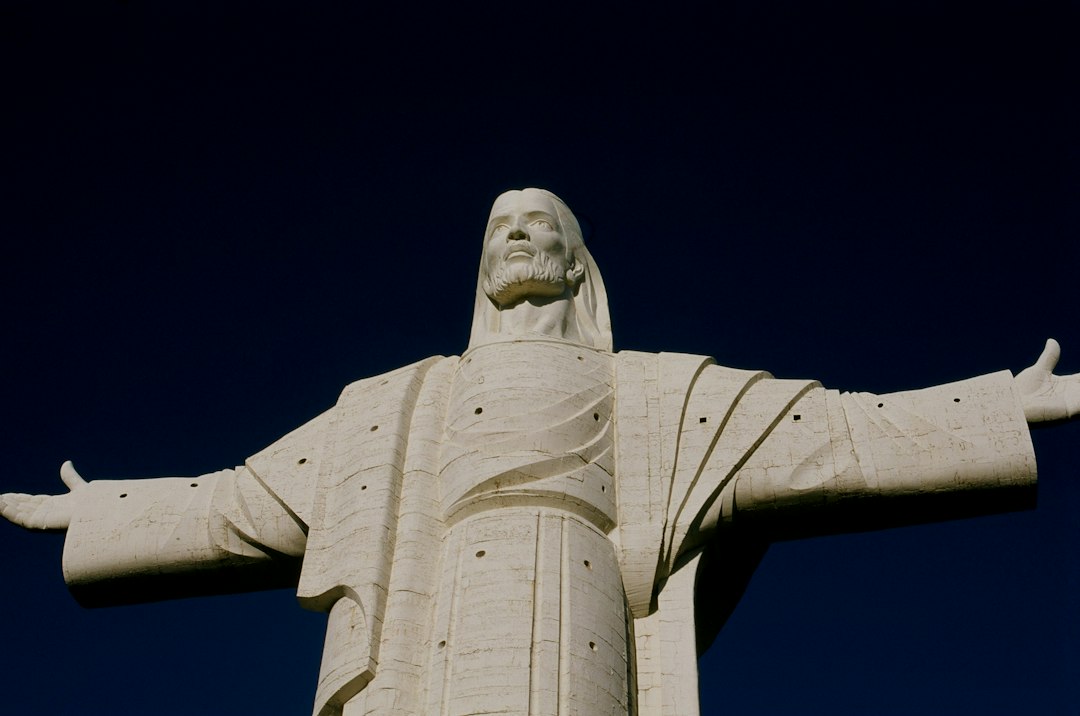

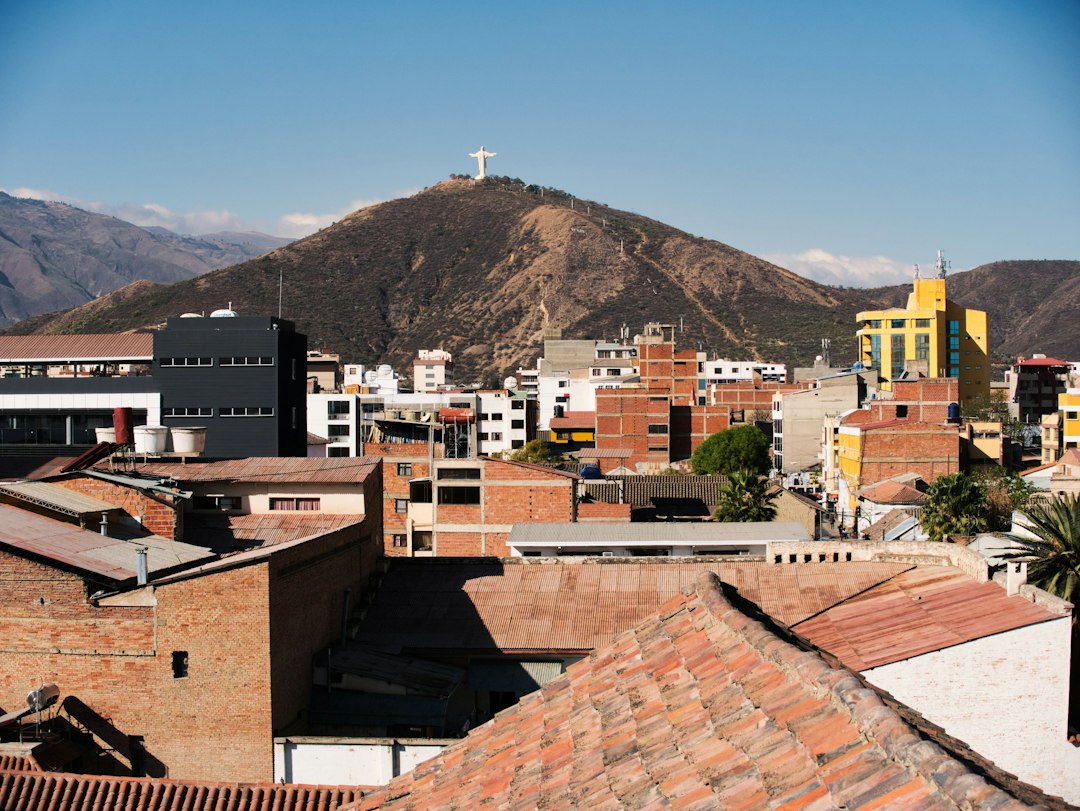
At the foot of Cerro San Pedro, at a 2,840 meters above sea level, a white figure stands out against the Andean sky with arms open towards the valley of Cochabamba. The Cristo de la Concordia is not just a statue: it is a hollow structure that can be climbed from the inside, following a spiral staircase of 1,499 steps that leads up to the arms of Christ, where small windows open to a 360-degree view of the Bolivian city and the surrounding mountains.
With a total height of 40.44 meters — including the pedestal — the Cristo de la Concordia surpasses the more famous Christ the Redeemer of Rio de Janeiro, which measures 38 meters. This officially recognized height supremacy is one of the facts that visitors find engraved on informational panels at the base of the statue. The construction was completed in 1994, after years of work that began in the previous decade, and the work was entrusted to the Bolivian sculptors César and Huáscar Ugarte, brothers originally from Cochabamba.
The ascent: internal stairs and views of the high plateau
Those who choose to ascend inside the statue — and not everyone does, because the staircase is narrow and steep — experience something unusual. The concrete steps twist into the darkness of the structure, illuminated by artificial lights, and the sound of footsteps echoes between the walls. The ascent takes about 15-20 minutes at a moderate pace, and in the arms of the statue, one finds themselves in a confined space, with openings that frame the panorama like windows of a belvedere suspended in the sky.
From the top, one can clearly see the urban grid of Cochabamba, the third largest city in Bolivia by population, spread out in its fertile valley. On clear days — frequent during the dry season, from May to October — the mountain ranges surrounding the basin can be distinguished. It is one of the few places in Bolivia where one can visually understand the geography of the region at a single glance.
How to get to Cerro San Pedro
The most frequented way is the cable car that departs from the Cala Cala neighborhood, in the northeast part of the city. The cable car operates during weekends and holidays, with schedules that vary seasonally — it is advisable to check on-site or at the local tourist office before planning the visit. The cable car ride lasts a few minutes and already offers an interesting perspective of the city.
Alternatively, there is a road that leads up to the hill: it can be reached by taxi from the city in about 20-30 minutes depending on traffic. Some visitors choose to hike up the hill along the trails, but the path is challenging for those not accustomed to the altitude. The entrance ticket to go inside the statue is modest — on the order of a few bolivianos — and includes access to the internal staircase.
The context: Cochabamba and its identity
Cochabamba is located in the geographical heart of Bolivia, at about 2,550 meters above sea level, in a position that has earned it the nickname "city of eternal spring" for its temperate climate. The Cristo de la Concordia was conceived as a symbol of unity for a city and a country marked by deep social divisions. The very name — Concordia — reflects this intention, although the recent history of the country has shown how fragile that concord can be.
Around the base of the statue are open spaces frequented by Cochabambans during the weekend: families, street vendors, couples. It is a place of religious devotion but also of secular socializing, which makes it an interesting observatory on everyday Bolivian life. The informational panels at the base, written in Spanish, tell the story of the construction and provide technical data about the structure.
Practical tips for the visit
The best time to go up is in the early morning on sunny days, when the light is side and clear and the valley is not yet shrouded in afternoon mist. On weekends, the cable car may have queues, so arriving by 9:00 AM helps avoid waiting. Those who suffer from claustrophobia should carefully consider the internal ascent: the staircase is narrow and has no windows until reaching the arms of the statue.
Bringing water is advisable, as at nearly 2,840 meters the Andean sun is intense even on cool days. The overall time for the visit — cable car, internal ascent, panorama, and descent — is around 2-3 hours. It is not necessary to book in advance: access is free upon arrival, except for changes in the cable car's opening hours.


