
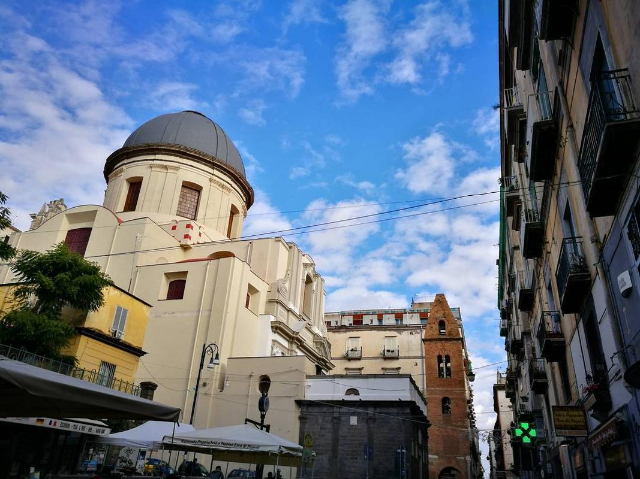

Walking through the historic center of Naples, among narrow streets echoing with history, stands a jewel of unparalleled beauty: the Church of Santa Maria Maggiore alla Pietrasanta. This extraordinary basilica, steeped in layers of time, whispers stories of devotion, art, and the resilience of a city that has stood the test of centuries.
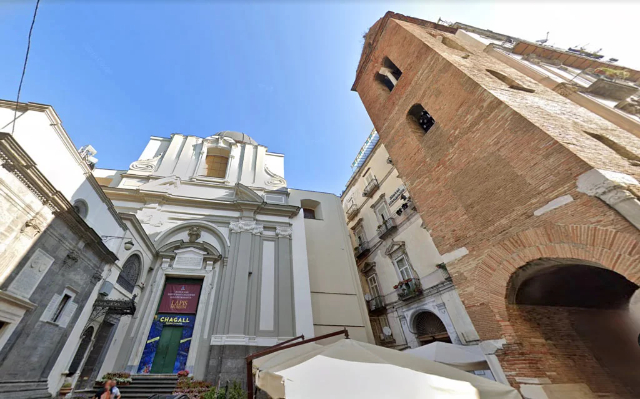
The origins of Pietrasanta trace back to the episcopate of Saint Pomponio in the 6th century, where it rose on the remnants of a Roman structure—likely a temple dedicated to Diana. It was the first church in Naples to be dedicated to the Virgin Mary, and its significance is etched into the very stone of its walls. Over time, the modest paleochristian basilica was transformed into the baroque masterpiece we see today, thanks to the genius of Cosimo Fanzago, who undertook its redesign in 1653. Yet, Pietrasanta is no mere church—it is a chronicle of Naples itself, embodying the city’s ability to evolve while holding steadfast to its sacred roots.
The facade, though marred by the tragedies of World War II, still greets visitors with a grandeur that is hard to ignore. Once crowned with an elaborate pediment, lost to bombings, the facade now emphasizes its imposing marble portal, carved by Pietro Sanbarberio in 1675. To one side stands a majestic Romanesque bell tower, its bricks holding ancient Roman fragments—a silent nod to the temple that once stood here.
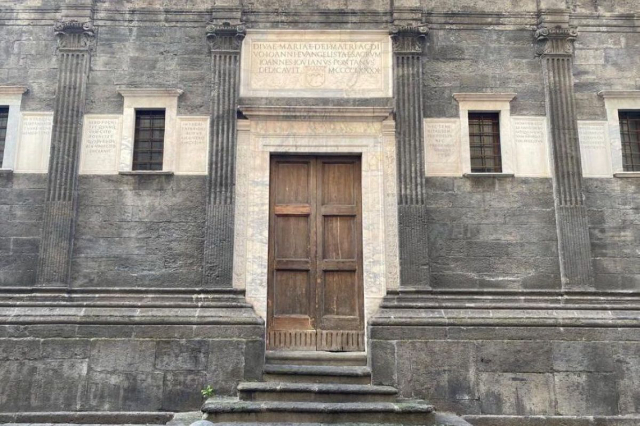
Step inside, and you’re greeted by a soaring interior that celebrates space and light. The interplay of domes and barrel vaults draws your gaze upward, where stucco Corinthian pilasters rise like sentinels. The floor, an exquisite 18th-century majolica creation by Giuseppe Massa, is a tapestry of Neapolitan craftsmanship. The chapels are adorned with sculptures by artists such as Matteo Bottiglieri, their delicate forms exuding a timeless grace.
Yet, the magic of Pietrasanta does not end here. Beneath its marble floors lies a treasure trove of history: the crypt. Here, fragments of the original paleochristian basilica remain, alongside the remnants of a Roman mosaic that once adorned the ancient temple. It’s a space that feels like stepping into another time, where every stone carries whispers of faith and antiquity.
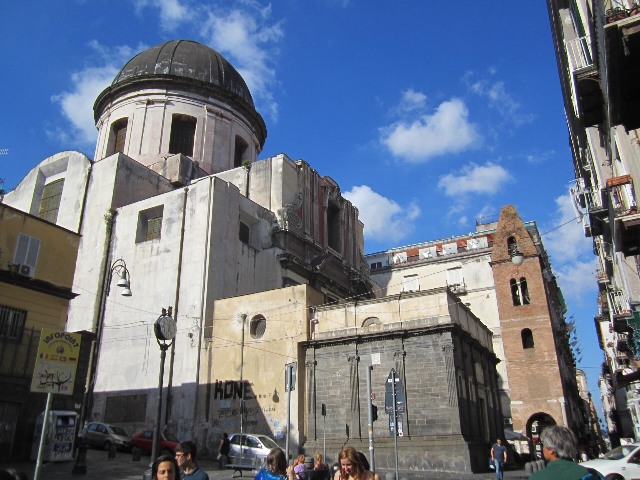
The church is not without its mysteries. Explorations beneath its foundations have revealed enigmatic cross-shaped carvings, which some attribute to the Templars—though this theory has been debunked as symbolic devotional marks made by workers over the centuries. True or not, the legends add an irresistible layer of intrigue to this already fascinating site.
Closed for decades following its wartime destruction, Pietrasanta has been reborn as an auditorium, its sacred spaces now resonating with music and cultural events. Walking its aisles today, one feels the pulse of Naples itself—a city that has weathered storms, embraced change, and still offers treasures to those who seek them.
Santa Maria Maggiore alla Pietrasanta is more than a monument; it’s an experience. It’s a meeting point of art, faith, and history, where the past isn’t just preserved but continues to breathe. To visit is to witness the heart of Naples—a city that holds its past as dearly as its present.


