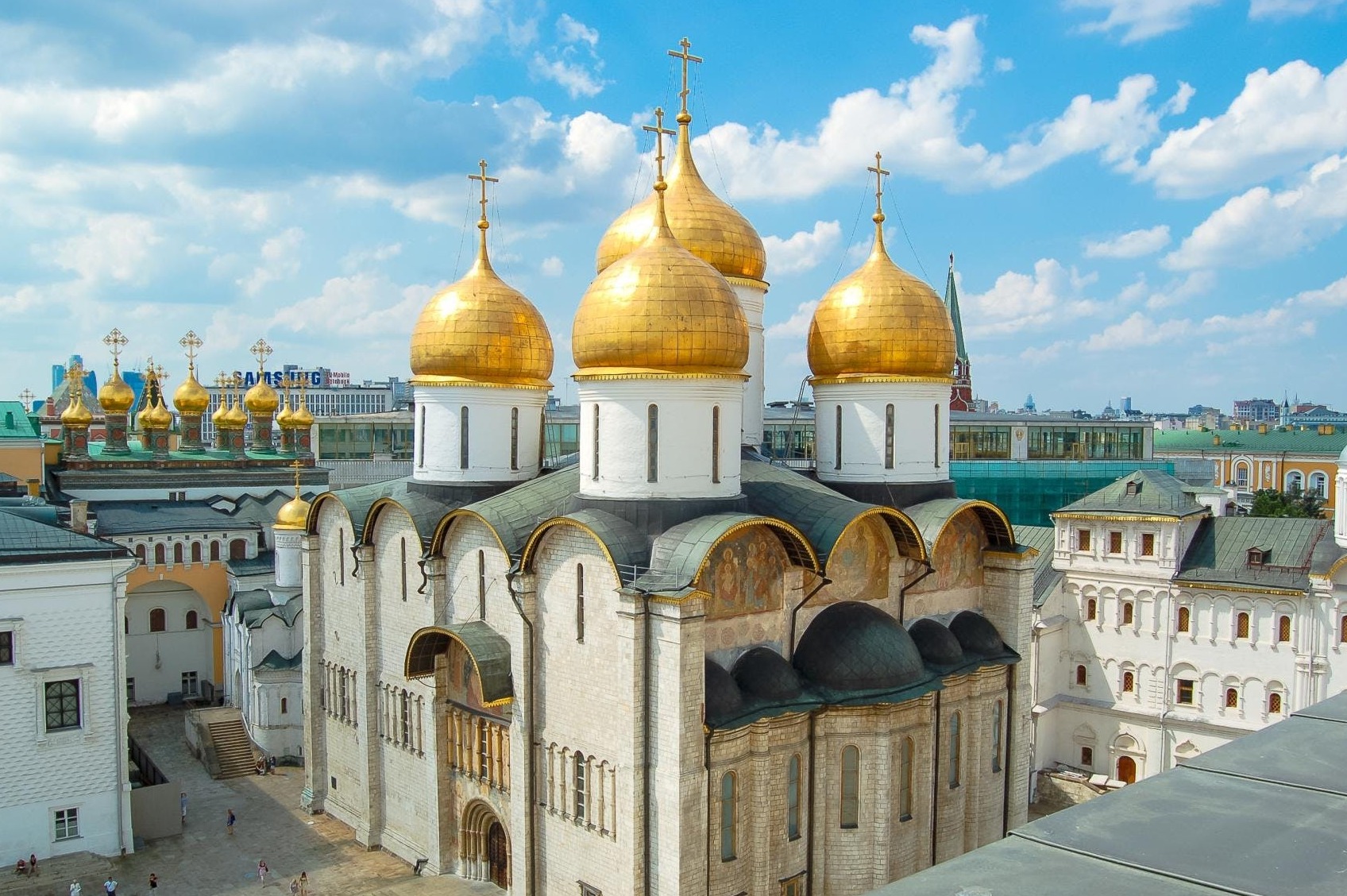

Nestled within the imposing walls of the Kremlin, the Churches and Cathedrals are not mere places of worship; they are monumental testaments to Russian history, culture, and spirituality. Each cathedral has its own unique story, reflecting the evolution of Orthodox Christianity in Russia and the nation's tumultuous past. Visiting these sacred sites is akin to stepping into a living museum where every stone has a tale to tell.
### History and Origins The Kremlin itself has roots dating back to the 2nd century, but the churches within its walls were primarily constructed during the 15th and 16th centuries, a period marked by significant political and religious transformation. The Cathedral of the Dormition, completed in 1479, stands as a crown jewel of this architectural ensemble. Designed by the Italian architect Aristotele Fioravanti, it became the Mother Church of the Grand Duchy of Muscovy, symbolizing the power of the Orthodox Church and the Russian state.
The Cathedral of the Annunciation, built between 1484 and 1489, served as the private church for the Moscow princes and later the tsars. Its beautiful frescoes and golden domes evoke an atmosphere of divine royalty. Meanwhile, the Cathedral of the Archangel, consecrated in 1508, became the burial site for the Grand Dukes and Tsars, including Ivan the Terrible.
### Art and Architecture The architectural styles of these cathedrals reflect a blend of Byzantine, Russian, and Renaissance influences. The Cathedral of the Dormition features stunning frescoes by the renowned artist Andrei Rublev, whose work is considered a high point of Russian religious art. The intricate icons and gilded interiors of the Cathedral of the Annunciation also showcase the artistry of this era, depicting biblical scenes that invite contemplation and reverence.
The complex's architecture is characterized by soaring domes, intricate carvings, and vibrant murals, each telling a story through its design. The Kremlin cathedrals are not only places of worship but also masterpieces of art that reflect the spiritual aspirations of the Russian people.
### Local Culture and Traditions The Kremlin churches are central to many Russian Orthodox traditions. Major festivals such as Easter and Christmas see the cathedrals filled with worshippers, and their significance extends beyond mere religious observance. These celebrations are marked by unique rituals, including the midnight service on Easter Sunday, where the faithful gather to witness the resurrection of Christ.
Visitors may also encounter traditional Russian customs, such as the singing of hymns and the lighting of candles, which imbue the atmosphere with a sense of sacredness. The rich tapestry of cultural heritage that surrounds these churches continues to thrive today, making them vital to the identity of Moscow.
### Gastronomy While the Kremlin is a religious and historical site, it also plays a role in the culinary landscape of Moscow. Nearby, visitors can indulge in traditional Russian cuisine. Dishes like pelmeni (dumplings), borscht (beet soup), and blini (thin pancakes) are popular choices. Additionally, sampling kvass, a fermented beverage made from rye bread, can be a refreshing accompaniment to any meal.
For a sweet treat, try prjaniki, Russian gingerbread cookies, which often come beautifully decorated and are popular souvenirs for visitors.
### Lesser-Known Curiosities Among the many stories surrounding the Kremlin cathedrals is the legend of the Tsar Bell, which, despite never ringing, stands as the largest bell in the world. Another fascinating detail is the Cathedral of the Annunciation's unique altar dedicated to the Annunciation of the Mother of God, which is said to have been the site of numerous royal weddings.
Additionally, the Kremlin cathedrals reveal layers of history through their architecture. For instance, the Cathedral of the Archangel features tombstones of various Russian rulers, and the inscriptions provide insight into their reigns and legacies.
### Practical Visitor Information The best time to visit the Kremlin churches is during the spring and early autumn when the weather is mild, and the gardens surrounding the site are in full bloom. Aim to arrive early in the day to avoid crowds and take your time exploring the intricate details of each cathedral.
When visiting, be sure to dress modestly, especially if you plan to enter the churches. Photography is generally permitted, but be respectful of worshippers and avoid using flash.
### Conclusion The Churches and Cathedrals of the Kremlin are not only architectural wonders but also vital threads in the fabric of Russian history and culture. Each visit unveils layers of spirituality, artistry, and tradition that continue to resonate today. For a personalized experience that captures the essence of Moscow, using the Secret World app can help you craft an unforgettable itinerary.
