
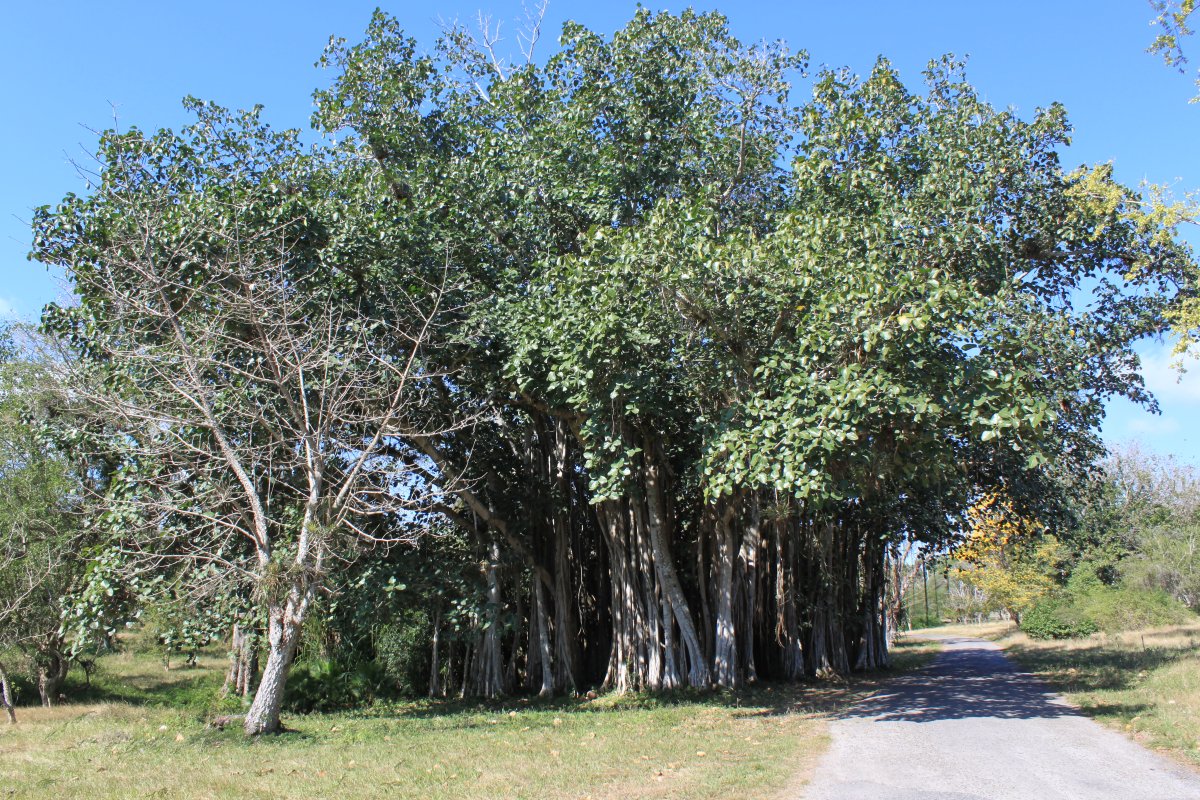

Along the shaded avenues of the Cienfuegos Botanical Garden, the air smells of damp earth and tropical resin. The bamboo fronds intertwine above, forming natural arches, while rows of royal palms — the very symbol of Cuba — stand out against the Caribbean sky. This garden, founded in 1899, is the oldest in Cuba and still bears the imprint of its origin: it was established as a private agricultural experimental station by Edwin Atkins, an American entrepreneur who owned the surrounding sugar plantation and wanted to transform part of his land into an open-air botanical laboratory.

What strikes you from the very first steps is the density of the vegetation: this is not an ornamental garden in the European sense of the term, but a living collection designed for study and conservation. Today, the garden is managed by the Academy of Sciences of Cuba and hosts over 2,000 tropical species, spread over an area of about 97 hectares. Every corner tells a different story: here a grove of giant bamboo, there a section dedicated to medicinal plants used in traditional Cuban medicine.
The history: from sugar plantation to botanical heritage
The transformation of the site from agricultural land to scientific garden occurred gradually starting from the late nineteenth century. Edwin Atkins collaborated with botanists from Harvard University, who used the garden as a base for research on Caribbean tropical flora. This connection with North American academic research lasted for decades and helped build the scientific foundations of the collection. After the Cuban Revolution of 1959, management passed to the State, which entrusted the garden to national scientific institutions.
Walking through the avenues, one can notice some original colonial structures still standing: small brick and wooden buildings that once served as laboratories or storage. These architectural details give the place a temporal layering that goes well beyond the simple plant collection. The garden has never been completely renovated according to modern criteria, and this imperfection is part of its authentic charm.
The most spectacular collections not to be missed
The palm section is probably the most impressive: the garden houses dozens of different species of palms from all over the tropical world, some of which are extremely rare. Walking in this area means moving under a canopy of leaves that filters sunlight in a thousand different ways. Equally remarkable is the bamboo forest, where some specimens reach considerable heights and create a cool, shady microclimate even during the hottest hours.
The medicinal plants section deserves careful attention: the species are often labeled with their scientific name and traditional use, offering a glimpse into Cuban popular botanical knowledge. There are also cacti and succulents from arid regions, showcasing the breadth of the collection. Those with a keen eye may also spot wild orchids clinging to the trunks of the oldest trees.
How to organize the visit practically
The garden is located about 15 kilometers from the center of Cienfuegos, towards Trinidad, along the road that crosses the peninsula. The most convenient way to reach it is to rent a taxi or a car: public transport does not serve the site directly. Some hotels in Cienfuegos organize combined excursions that include the garden along with other stops in the area, such as the Palacio de Valle or the bay.
The best time to visit is early in the morning, preferably before 10:00 AM, when the temperature is still bearable and the light is optimal for photographing the vegetation. The garden generally opens every day, but it is advisable to check the updated hours directly on-site or at the Cienfuegos tourist office, as they may vary. Allow at least two hours for a satisfying visit, three if you want to explore all sections at a leisurely pace. Wear comfortable, closed shoes, as the dirt paths can be slippery after rain. Bring water with you: inside, the refilling options are limited.
Why the trip to Cienfuegos is worth it
The Botanical Garden of Cienfuegos is not a postcard stop, and this is its strength. You will not find crowds of tourists or souvenirs for sale on every corner. Instead, you will find silence, shade, and the concrete feeling of being in a place that exists primarily for scientific reasons and not for spectacle. It is a place that requires a bit of active curiosity from the visitor.
For those traveling to Cuba with an interest in nature, botany, or simply for those looking for a different break from the more beaten paths, this garden represents one of the most genuine experiences in the entire region of Cienfuegos. The fact that it has remained relatively authentic over more than a century of Cuban history — through regime changes, embargoes, and social transformations — makes it a place capable of telling much more than it seems at first glance.


