
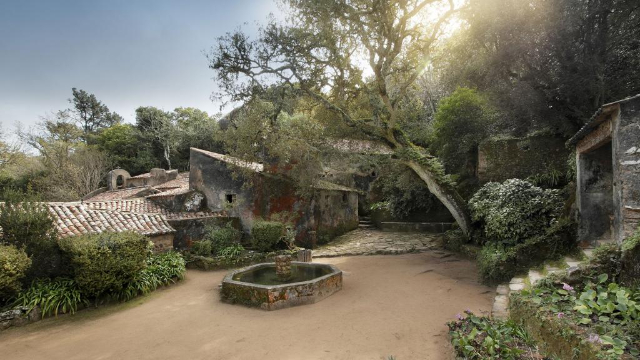

Tucked away in the serene landscape of the Sintra Mountains, the Convent of the Frairs Minor Capuchin, or simply the Convent of the Capuchos, is a hidden gem that offers a unique glimpse into a life of austere devotion. Founded in 1560 by D. Álvaro de Castro, a nobleman and counselor to King John III of Portugal, this convent was established as a place of reflection and simplicity for the Capuchin friars. Its creation was inspired by a dream that D. Álvaro's father had, urging him to build a sanctuary that embodied the Franciscan ideals of poverty and connection with nature.
The history of the convent is marked by its commitment to these principles. For centuries, the friars lived in harmony with their natural surroundings, residing in cells carved into rock, with minimalistic interiors that were a testament to their vows. The convent remained active until 1834 when a decree of secularization led to the dissolution of many religious orders across Portugal, including the Capuchos. Despite this, the site survives as a testament to its original purpose and continues to evoke a sense of spiritual tranquility.
Architecturally, the convent is an extraordinary example of Manueline architecture, a style that blends late Gothic and early Renaissance elements unique to Portugal. However, unlike the grandiosity often associated with this style, the Convent of the Capuchos is marked by its modesty. The use of local materials, such as cork and stone, reflects the friars' dedication to environmental integration. Visitors can walk through the small, cork-lined cells and chapels that provide a stark but powerful experience of the friars' humble existence.
Art within the convent is not opulent but deeply meaningful. Simple frescoes and religious iconography adorn the walls, crafted by the hands of the friars themselves. These works, while not masterpieces of the Renaissance, convey a profound spirituality and a deep connection with their faith. The artistic significance here lies in the purity and sincerity of the expressions found within these sacred spaces.
The local culture surrounding the convent is deeply intertwined with the natural landscape and the traditions of the region. The nearby town of Colares is known for its vineyards, producing some of Portugal's most unique wines, including the rare and robust Ramisco. This wine is made from grapes grown on sandy soils, a technique that dates back centuries and is a source of local pride.
Cultural events in the region often celebrate this rich heritage. The annual Festival of Nossa Senhora da Pena in nearby Sintra features traditional music, dance, and cuisine, and reflects the area's deep-rooted religious and cultural traditions. Such events offer a vibrant insight into the lives of those who dwell in the shadows of the Sintra Mountains.
When visiting the convent, one should not miss the opportunity to indulge in the local gastronomy. Typical dishes from the area include bacalhau à Brás, a flavorful codfish dish, and travesseiros de Sintra, a delightful pastry filled with almond cream. Pairing these with the distinct wines of Colares makes for an unforgettable culinary experience.
Amidst the well-trodden paths of Sintra's historical attractions, the Convent of the Capuchos holds lesser-known curiosities. One such detail is the convent's reliance on water from a natural spring, ingeniously channeled through a series of aqueducts and cisterns that reflect the friars' resourcefulness. Another intriguing fact is the legend that the convent was built on a site of Celtic worship, chosen for its mystical energies, adding an aura of ancient spirituality to the area.
For those planning to visit, the best time is during the spring or early autumn, when the weather is mild, and the surrounding foliage is at its most vibrant. Visitors should wear comfortable shoes, as the terrain is uneven, and allocate at least a couple of hours to explore the site thoroughly. Look for the Chapel of the Crucifixion with its cork-lined interior, offering a moment of contemplation amidst its quiet beauty.
In summary, the Convent of the Capuchos is not just a historical site but an experience of ascetic beauty, deeply rooted in the natural and cultural tapestry of the Sintra region. Its simplicity and serenity offer a unique window into a bygone era, inviting visitors to reflect on the profound connection between humanity, faith, and nature.


