
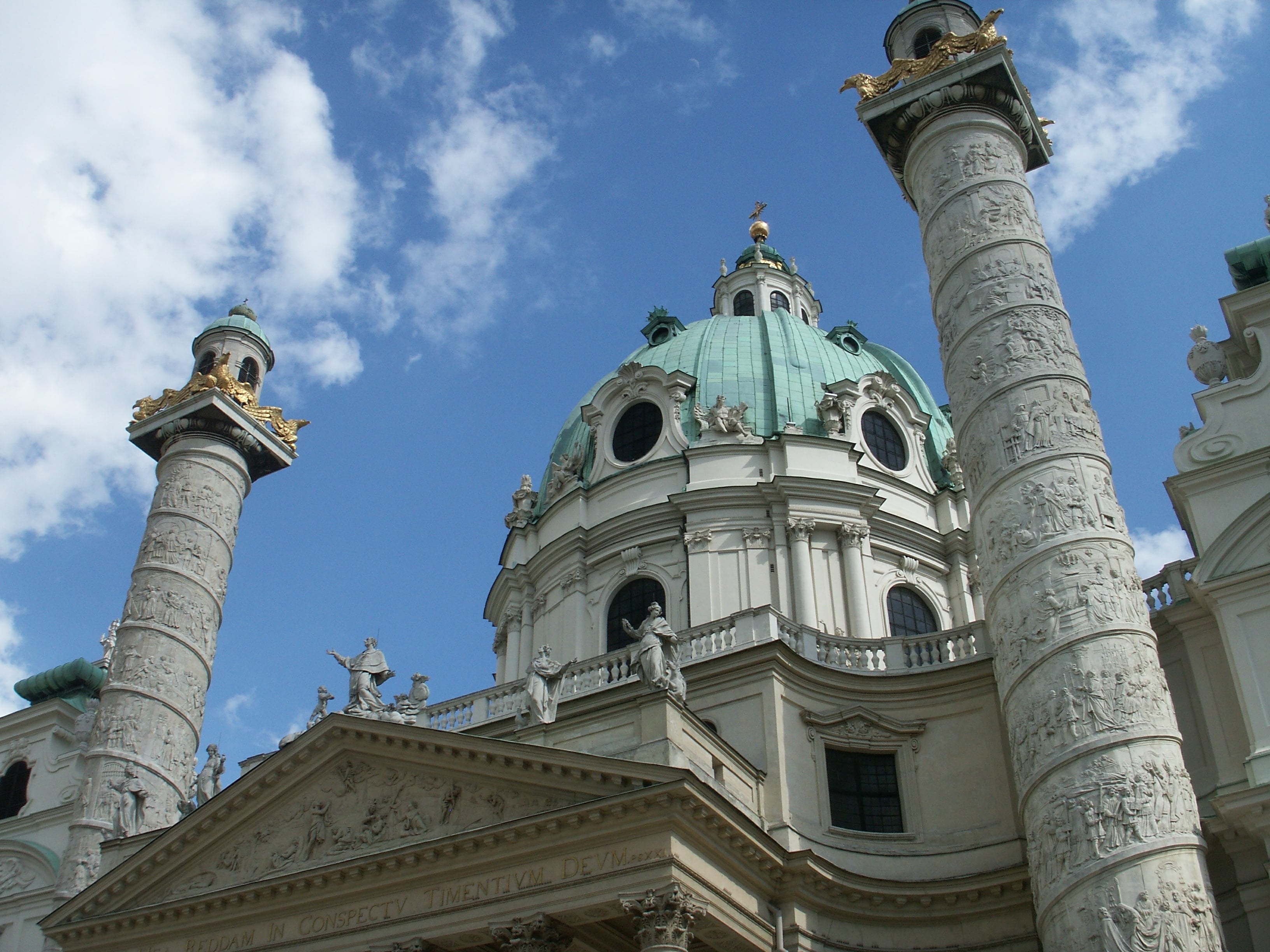

In the heart of Vienna, a city steeped in imperial grandeur and artistic legacy, stands the magnificent Karlskirche, a striking emblem of baroque architecture. Its most captivating features are the Columns at Karlskirche, which rise with elegant grandeur, narrating stories from the past and capturing the imagination of every visitor who steps into their shadow.
The history of Karlskirche is deeply rooted in a promise made by Emperor Charles VI in 1713. Following the last great plague epidemic, he vowed to erect a church dedicated to Saint Charles Borromeo, a revered figure known for his role in combating the plague in Milan. This act of faith and gratitude culminated in the construction of Karlskirche between 1716 and 1737, with the church being consecrated in 1737, marking a pivotal moment in Vienna’s architectural evolution.
The architectural narrative of the Columns at Karlskirche draws inspiration from the Trajan's Column in Rome. Designed by the architect Johann Bernhard Fischer von Erlach and completed by his son Joseph Emanuel, these columns are a testament to baroque artistry, enveloped in spiraling reliefs that depict scenes from the life of Saint Charles Borromeo. The intricate carvings are not just decorative; they serve as a visual scripture, inviting observers to trace the saint’s journey and his acts of piety and service.
A closer look reveals the artistic finesse that characterizes the columns. Each relief is meticulously detailed, revealing a blend of Christian iconography and classical motifs. The spiraling structure draws the eye upwards, symbolizing the ascension of the soul towards the divine—a common theme in baroque art that emphasizes movement and grandiosity. As a result, the columns stand as a bridge between heaven and earth, embodying the religious fervor and artistic ambition of the era.
Beyond the architectural marvels, the Karlskirche holds a special place in Vienna's cultural tapestry. The church is not only a site of worship but also a venue for classical music concerts, particularly during the Vienna Music Festival. These events echo through the church's vast interior, offering an auditory feast that complements the visual splendor, creating an immersive cultural experience for visitors and locals alike.
Gastronomy in the vicinity of the Karlskirche offers a delightful taste of Vienna’s culinary heritage. A visit is incomplete without sampling Wiener Schnitzel, a traditional dish that reflects the city's penchant for hearty, flavorful fare. Nearby cafes serve Apfelstrudel and Sachertorte, pastries that are as rich in history as they are in flavor, providing a sweet conclusion to any exploration of the area. For a refreshing drink, the local Almdudler herbal lemonade is a must-try, offering a taste as vibrant as the city itself.
While tourists often admire the grandeur of the church and its columns, few notice the subtle quirks and lesser-known details that enrich the visit. For instance, one of the columns features a small, almost hidden carving of a salamander, symbolizing rebirth and transformation—a nod to the church's emergence from the ashes of the city's plague-stricken past. Another intriguing feature is the optical illusion created by the columns: from a distance, they appear to be straight, but upon closer inspection, one can appreciate their slight curvature, a masterful architectural trick that adds to their dynamism.
For those planning a visit, the best time to experience the Karlskirche is during the spring or early autumn, when the weather is mild, and the city is alive with cultural activities. Arriving early in the morning or late in the afternoon allows for a more serene experience, avoiding the mid-day crowds. As you explore, take a moment to ascend the elevator to the dome, offering panoramic views of Vienna and a closer look at the frescoes that adorn the church’s ceilings.
In conclusion, the Columns at Karlskirche are more than just architectural elements; they are storytellers, cultural icons, and symbols of resilience. They encapsulate the essence of Vienna—a city where history and art intertwine, creating a timeless narrative that continues to inspire and captivate visitors from around the world.


